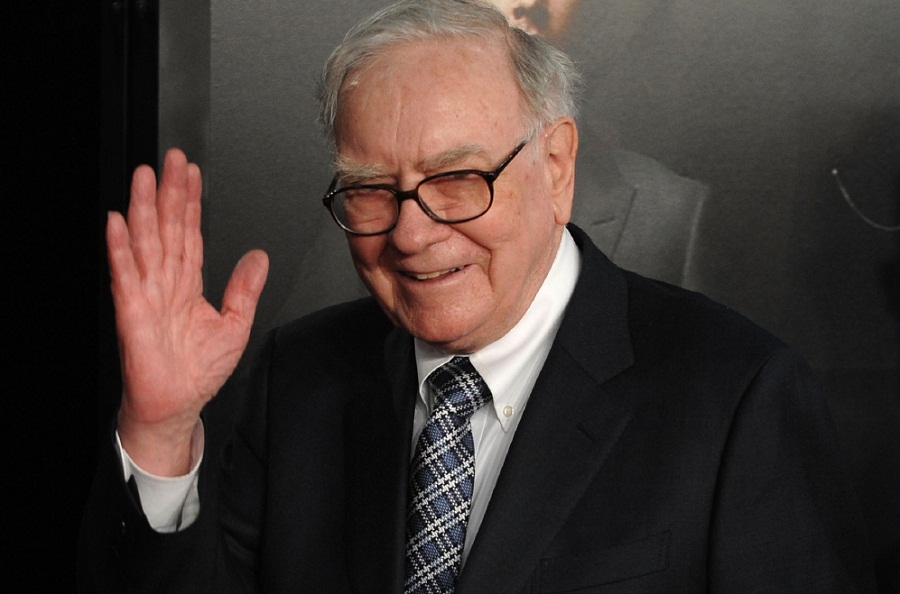
Warren Buffett crooned one of his greatest hits for groupies attending Berkshire Hathaway's annual meeting in Omaha last weekend: “Just buy an S&P
index fund and sit for the next 50 years.”
Mr. Buffett has a well-deserved reputation as a legendary investor, but if ordinary folks want to mimic the master, the last place they should be parking their funds is the S&P 500.
Mr. Buffett is a big fan of the S&P 500. He has already declared that 90% of the money he leaves to his wife will be invested in Vanguard's S&P 500
index fund. He also wagered a million dollars that Vanguard's S&P 500
index fund would beat a basket of hedge funds over ten years from 2008 to 2017. (The S&P 500
index fund is currently crushing the hedgies.)
Mr. Buffett's enthusiasm for the S&P 500 is a wee bit odd because he has spent an entire career guided by the investment principles of his teacher, Ben Graham, who can genuinely be called the godfather of active investing. Mr. Graham's investment approach, in a nutshell, is to buy quality companies at a cheap price. That's the furthest thing from just throwing your money into an S&P 500
index fund.
Berkshire's portfolio of publicly traded U.S. stocks bears all the hallmarks of Mr. Graham's classic value-quality approach. Berkshire's portfolio is cheaper than the S&P 500, with a price-to-book ratio of 2.4 versus 2.8 for the S&P 500; a price-to-earnings ratio of 16.5 versus 19.1 for the S&P 500; and a price-to-cash flow ratio of 9.8 versus 11.1 for the S&P 500.
At the same time, Berkshire's portfolio is also higher quality than the S&P 500. The companies in Berkshire's portfolio have an average return on equity of 13.1% versus 12% for the S&P 500, and Berkshire's companies' earnings are less volatile than the earnings of the S&P 500.
The magic lies not so much in picking the best stocks as in avoiding the worst ones. Of the companies in the S&P 500 with a positive P/E ratio, for example, 43 have a return on equity less than 3%, and those 43 companies have an average P/E ratio of 62! Why would you pay so much for a company that earns so little? You wouldn't, of course, and neither does Mr. Buffett.
Sidestepping those bad stocks has historically paid off. A simple 50-50 blend of the MSCI USA Value Index and the MSCI USA Quality Index has beaten the S&P 500 with less risk. This value-growth blend returned 11.8% annually from December 1975 to April 2016, with a standard deviation of 14.4% (the longest period for which data is available; those returns include dividends). The S&P 500, by comparison, returned 11.2% annually over the same period, with a standard deviation of 14.9 percent. (Standard deviation reflects the performance volatility of an investment; a lower standard deviation indicates a less bumpy ride.)
It's no wonder Berkshire's money isn't in an S&P 500
index fund.
Mr. Buffett is certainly and admirably looking out for average investors who lack his many analytical gifts when he steers them toward the S&P 500. Why pay someone to manage your money who underperforms a simple benchmark?
But we're moving into a post-plain-vanilla-indexing-world as well, and investing exactly like Mr. Buffett has become just as easy today as buying an S&P 500
index fund.
For example, investors can invest equal parts in the iShares MSCI USA Value Factor ETF and the iShares MSCI USA Quality Factor ETF, and have the same value-quality portfolio that Mr. Buffett is after. And it would cost only modestly more than the Vanguard S&P 500 ETF. This iShares value-growth portfolio would cost 0.15% versus 0.05% for the Vanguard ETF.
There is one last, surprising, detail about Berkshire's portfolio. Contrary to Mr. Buffett's well-known admonition — “Just about the only way a smart person can go broke is to borrow money” — the companies in Berkshire's portfolio are more levered than the S&P 500. Berkshire's portfolio has an average debt-to-equity ratio of 1.6 versus 1.2 for the S&P 500.
So if you really want to invest like Mr. Buffett, take your shiny new value-quality portfolio and lever it up 33%. Just don't tell Mr. Buffett about it, unless you're in the mood for a sing-along about the S&P 500.
Nir Kaissar is a Bloomberg Gadfly columnist covering the markets. He is the founder of Unison Advisors, an asset management firm. He has worked as a lawyer at Sullivan & Cromwell and a consultant at Ernst & Young.