
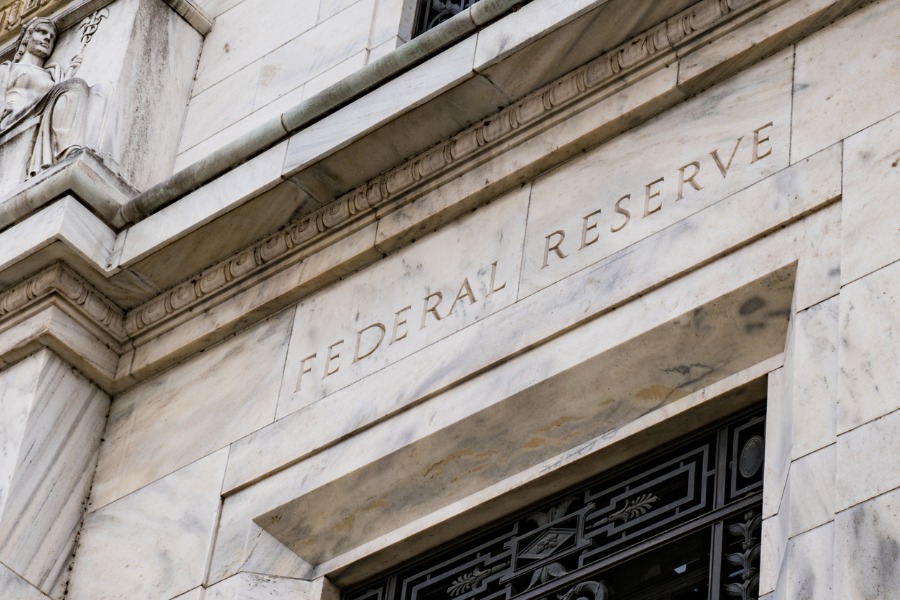
Federal Reserve officials held interest rates at the highest level in more than two decades but signaled they are moving closer to lowering borrowing costs amid easing inflation and a cooling labor market.
The Federal Open Market Committee voted unanimously to leave their benchmark federal funds rate in a range of 5.25% to 5.5%, a level they have maintained since last July.
Policymakers also made several adjustments to the language of a statement released after their two-day meeting in Washington. Notably, the committee shifted to saying it is “attentive to the risks to both sides of its dual mandate,” rather than prior wording focused just on inflation risks.
“In recent months, there has been some further progress toward the committee’s 2% inflation objective,” the committee said in a statement released Wednesday. “The committee judges that the risks to achieving its employment and inflation goals continue to move into better balance.”
Officials also tempered their assessment of the labor market, noting job gains had moderated and the unemployment rate has moved up, but is still low. They said inflation has eased over the past year but remains “somewhat elevated.”
Still, policymakers retained language that they didn't expect it would be appropriate to lower borrowing costs until they had gained “greater confidence” that inflation is moving toward their target sustainably.
The changes in the statement solidify a shift in tone among several policymakers, including Chair Jerome Powell, recognizing growing risks to the labor market.
They are also likely to reinforce expectations among economists and investors for a rate cut at the central bank's Sept. 17-18 gathering. Powell will hold a press conference with reporters at 2:30 p.m. in Washington.
Balancing Risks
Officials have increasingly emphasized the US central bank's responsibility for fostering maximum employment, following over two years of an outsized focus on their other mandate, keeping prices stable. They now see the risks to achieving those two goals as being more balanced.
“Elevated inflation is not the only risk we face,” Powell said earlier this month.
While the job market remains on solid footing overall, the unemployment rate has inched up in each of the past three months, reaching 4.1% in June, the highest level since 2021.
Additionally, hiring has slowed and become more concentrated in a handful of industries and the number of job openings relative to unemployed workers has returned to 2019 levels.
Such trends have caused some Fed policymakers to warn that any further slowing in the labor market could lead to higher unemployment, an outcome the central bank aims to avoid.
The US economy has remained remarkably resilient in the face of high rates, growing at a solid pace amid healthy consumer spending. That resilience has been key to hopes the central bank can tame inflation without sparking a downturn.
Inflation figures have also been more encouraging as of late, having resumed a downward trend toward the central bank's 2% target. Powell previously noted the figures added “somewhat to confidence” that they will continue to cool.
The Fed's preferred gauge of underlying inflation rose a tame 0.2% in June and 2.6% from a year earlier.
A number of former Fed officials and economists had urged the Fed to cut rates at this meeting, including former Fed Vice Chair Alan Blinder and former New York Fed President William Dudley.

Salespeople at the firm often went beyond the matching algorithm to recommend network advisors on its Zoe Wealth platform, according to the regulator.

The Protect College Sports Act would cap school payments and codify NIL rights, with implications for advisors guiding young athletes.

"I know the number that I want to be able to retire on, and now I just want out," says Wilmington Trust's Marguerite Weese, describing a common refrain among business-owner clients.

Bessemer and Brown Brothers Harriman veteran Robert Ludricks III and private markets specialist Olof Akesson join the ultra-high-net-worth push on the East Coast.

765 investors were promised 260% annual returns on truck leases
As AI makes financial information more accessible than ever, Lana Hock explains why human judgment, trust, and empathy remain the qualities clients value most in a financial advisor
Northern Trust’s Ken Lassner shows advisors how to convert volatility into after-tax portfolio gains

