
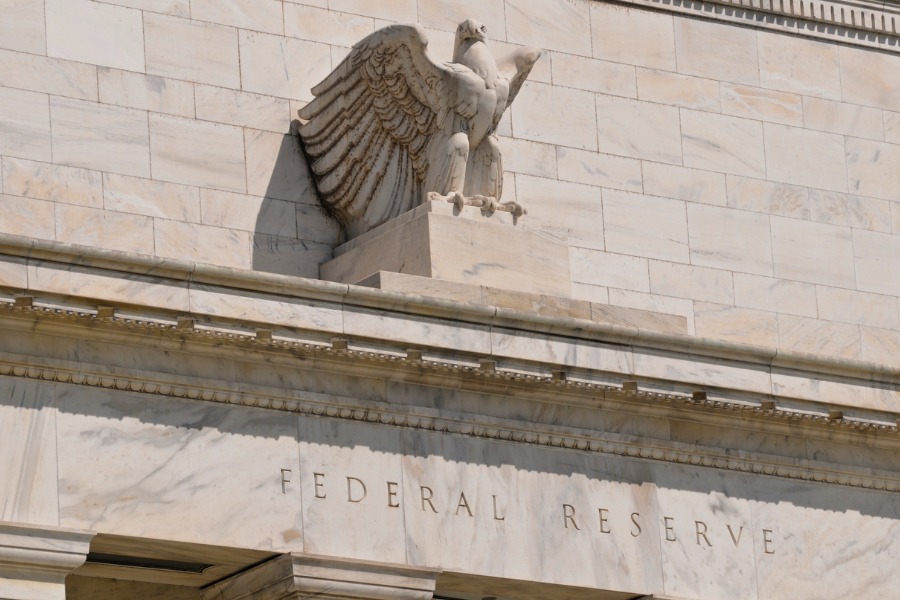
Following financial markets' hopeful expectations of further easing on interest rates, the Federal Reserve has revealed its last monetary policy decision for the year.
In its much-anticipated announcement, the central bank said it would adjust rates by a quarter percentage point, setting the target range at 4.25 to 4.5 percent to cap off 2024.
"Recent indicators suggest that economic activity has continued to expand at a solid pace," the Fed said in a statement Wednesday afternoon. "The Committee judges that the risks to achieving its employment and inflation goals are roughly in balance."
While the central bank has made great strides in its efforts to rein in inflation from its mid-2022 peak, recent readings from the Department of Labor suggest progress has stalled.
A data snapshot from the Bureau of Labor Statistics last week revealed the consumer price index inched up 0.3 percent for the month, contributing to a 3.3 percent rise year-on-year. Core CPI, which strips out food and energy costs, went up 2.7 percent. A separate report the same day showed real hourly earnings grew 1.3 percent from a year ago, lending some credence to the idea that the labor market isn't as much a factor in inflation as some had feared it would.
"Inflation has made progress toward the Committee's 2 percent objective but remains somewhat elevated," the Fed statement read.
The picture was further muddled by signs of a robust labor market. A data release from the BLS Friday showed nonfarm payrolls rising 199,000 last month, accelerating from 150,000 in October. Meanwhile, the unemployment rate declined to 3.7 percent, and workforce participation inched up.
"Since earlier in the year, labor market conditions have generally eased, and the unemployment rate has moved up but remains low," the Fed's December decision said.
Investors had counted on a steady cutting pace after the Fed's emphatic half-percentage point move in September, but those hopes dampened quickly after President-elect Donald Trump's victory at the polls on November 5.
Experts and strategists have warned of a potential inflationary outcome from Trump's tax and tariff policy proposals, adding another item to the already-demanding list of items for Fed Chair Jerome Powell and other policymakers to watch.
"In assessing the appropriate stance of monetary policy, the Committee will continue to monitor the implications of incoming information for the economic outlook," the statement said. "The Committee would be prepared to adjust the stance of monetary policy as appropriate if risks emerge that could impede the attainment of the Committee's goals."

LPL Financial and Raymond James also add independent advisors from Osaic and Edward Jones in Michigan and Arizona.

The SEC-registered RIA advises on more than $1 billion in client assets, with no advisory fee through 2027 and no human financial advisors.

The four wirehouse firms lost 1,449 experienced advisors and recruited 932 in the first six months of the year, according to Diamond Consultants.

Merit's 10th Commonwealth addition deepens its Western New York reach, while another Hightower partner joins its Signature Wealth platform in Michigan.

Report on Climate Action 100+ signals risk for passive managers' 13G status heading into the 2027 proxy season.
Knighthead Life entered the market with a competitive MYGA. A strong launch earned advisor confidence and paved the way for FIAs.
As AI makes financial information more accessible than ever, Lana Hock explains why human judgment, trust, and empathy remain the qualities clients value most in a financial advisor

