
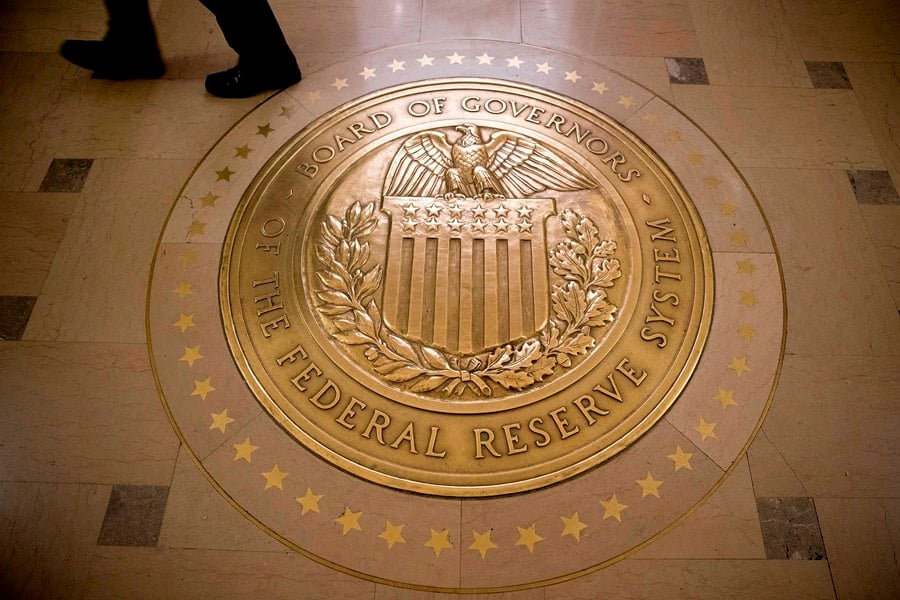
Two senior Federal Reserve officials signaled Thursday that the central bank is in no rush to adjust interest rates as it assesses the impact of rising economic uncertainty, including a sharp shift in US trade policy.
Federal Reserve Governor Lisa Cook and Vice Chair Philip Jefferson, speaking separately, emphasized the need for a cautious approach amid potential risks to both inflation and economic growth.
Their remarks followed President Donald Trump’s unexpected move to escalate tariffs on a wide array of imports, which prompted concern among economists and rattled global markets.
“Amid growing uncertainty and risks to both sides of our dual mandate, I believe it will be appropriate to maintain the policy rate at its current level while continuing to vigilantly monitor developments that could change the outlook,” Cook said in prepared remarks for an event at the University of Pittsburgh.
Jefferson, addressing a forum hosted by the Atlanta Fed, echoed the sentiment. “In my view, there is no need to be in a hurry to make further policy rate adjustments,” he said in his own prepared statement.
Both officials pointed to an economic outlook complicated by evolving federal policies on trade, immigration and regulation.
The Fed held interest rates steady at a range of 4.25 to 4.5 percent during its last policy meeting. At the time, the Federal Open Market Committee cited a “very uncertain” economic environment.
Cook reiterated that outlook on Thursday, noting that the economy entered the year on solid footing, though she expects a slowdown in growth and a modest rise in unemployment over the coming months.
“Inflation progress will stall in the near term, in part because of tariffs and other policy changes,” Cook said. She added that she sees a greater likelihood of inflationary pressure alongside weaker growth, which “could pose challenges for monetary policy.”
Jefferson said labor market conditions remain “solid,” but warned that persistent policy uncertainty could weigh on household and business sentiment.
“It’s still the case that there remains a substantial amount of uncertainty around trade and this level of uncertainty, of course, can weigh on households’ and businesses’ investment and spending decisions,” he said during a Q&A following his speech.
While Jefferson declined to offer a detailed assessment of the administration’s latest tariff measures, he said he is focused on the broader effect of the policy environment. He noted that inflation has stopped falling and is now “moving sideways,” but longer-term expectations remain anchored near the Fed’s 2 percent target.
Market participants are increasingly pricing in multiple rate cuts later this year, though both Cook and Jefferson gave no indication of an imminent shift.
“For now, we can afford to be patient but attentive,” Cook said. “I believe that policy is well situated to respond to developments.”

The financial advice industry has been facing inquiries into its cash sweep programs for years now.

Investor money allegedly went to strip clubs, exotic cars, and landscaping

Procyon adds $415 million in assets under management in New Jersey while Savant picks up a $213 million Southern California planning firm

With a growing number of real estate-rich Baby Boomers aging into retirement, some advisors may be failing to consider all the options available for those clients' assets.

Cornerstone Advisors study reveals compliance bottlenecks stall campaigns weeks after customer opportunities close.
As AI makes financial information more accessible than ever, Lana Hock explains why human judgment, trust, and empathy remain the qualities clients value most in a financial advisor
Northern Trust’s Ken Lassner shows advisors how to convert volatility into after-tax portfolio gains

