
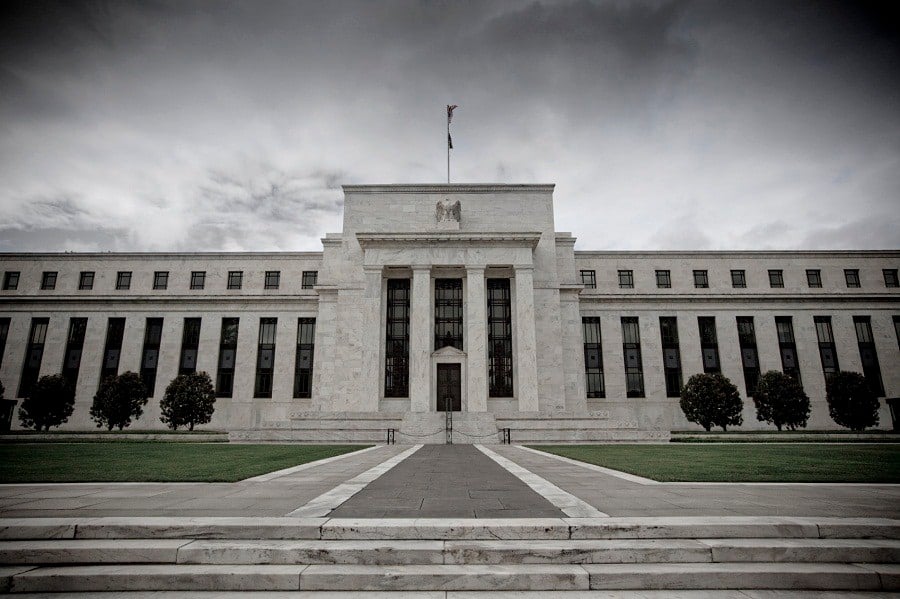
Financial advisers are scrambling to keep up with the rolling waves of government stimulus efforts aimed at keeping the economy afloat during the COVID-19 pandemic.
When the Federal Reserve announced a record $2.3 trillion aid package on Wednesday that included access to four-year business loans, most advisers were still working with clients to digest the first stimulus package that included smaller forgivable loans under a Paycheck Protection Program.
“I was literally just on the phone with a client who was asking about the loans,” said Kashif Ahmed, president of American Private Wealth.
“I have spoken to many clients, reaching out to business owners proactively to alert them to these resources, and frankly none of them seem interested partly because their personal finances are in great shape and also their business segments remain resilient,” he added. “One client had to shutter their business because they own a party supply store, and all of them had ground to a halt. They are waiting it out, but I told them to apply for the stimulus money even if they don't need it yet. They can always prepay it, but it’s better to have it in case they need it.”
The Fed rescue efforts are so large and fast developing that most advisers are having to adjust on the fly as the programs roll out and evolve.
“It’s a great program, but only if you can access the funds,” said Jim Dickson, chief executive officer at Sanctuary Wealth.
“If you had a relationship with a bank it felt easier to gain access to funds, but if you didn’t it’s been hard to find a bank and start the relationship,” he added.
Dickson, who oversees an advisory business that includes 40 partner firms in 15 states, said the second stimulus package is a good sign, but also represents how quickly the rescue efforts are changing.
“This new program is hard to digest, and it feels like things keep moving around,” he said. “As with PPP, what it was said to be and what it became has already changed, but the Fed is saying they’re going to do what is necessary to keep this economy afloat.”
The financial markets responded favorably to the Fed’s second stimulus package on the last trading day of the week before the markets closed for Good Friday, but the unprecedented nature of it all has industry veterans wondering where such an open-ended effort could lead.
“This week, for the first time ever, the Fed bought junk bonds, and last week for the first time ever the Fed bought corporate investment grade bonds,” said Scott Colyer, chairman and chief executive of Advisors Asset Management.
“We’ve never seen anything like this, even during the Great Depression the Fed never bought corporate obligations,” he added. “They’re certainly being creative.”
The Fed’s creativity, which includes leveraging loans from the U.S. Treasury, is forcing advisers and their clients to also wade into uncharted territory.
“Advisers should unequivocally become experts on the stimulus measures because their clients, particularly business owners, are looking for guidance in this period of unprecedented uncertainty,” said Vance Barse, founder of Your Dedicated Fiduciary.
Dickson of Sanctuary Wealth said the initial reaction from potential borrowers falls into three camps.
“There are businesses that absolutely have to have the money to survive and will have to accept the conditions, and then way on the other end are businesses that haven’t been affected as much and would only take the loans if the terms are right,” he said. “And then, like a normal bell curve, there’s everyone in the middle.”
Dennis Nolte, vice president at Seacoast Investment Services, said helping clients navigate the new lending process has become a special kind of challenge, and everyone is working harder.
“I spoke with one of our bank’s commercial lenders yesterday and he’d mentioned that he was up doing loans till 3 a.m. the first two days of the program,” he said. “Our department head today talked about how to work with the clients that are both wealth and banking clients, so they don’t get stuck in the application process. There is so much demand.”
Jim Caron, head of global macro strategies at Morgan Stanley Investment Management, gives the Fed credit for opening up its wallet and trying to send the message that help is on the way. But he admits execution will continue to be a challenge for the large and swelling stimulus programs.
“The lending program covers just about everything under the sun, and it’s just part of the support facilities out there, because the Fed is trying to create an asymmetric risk profile and give confidence to people like myself to come in and invest,” he said. “If the government is buying it, I know where the floor is.”
In terms of the various lending programs, Caron believes the process could be messy and confusing at first, but that the effort should help provide a sense of security to consumers and the financial markets.
“This is all unprecedented and these are numbers that aren’t even in the ballpark of what was done in the past,” he said. “One reason why these programs have been able to be created very quickly is because the metric is very clear. It is jobs lost. In 2008 it was the banks, leverage and whoever else was to blame. This time it’s nobody’s fault, but it’s pretty clear where the pain is and what needs to be done.”

InvestmentNews reported in 2017 that the IRS was scrutinizing the tax shelter land deals, called syndication conservation easements.

Advisors gain a second workflow for 401(k) guidance as the fintech expands beyond bulk rebalancing, backed by new policy research on advice access.

New data shows most people do not have enough saved to cover costs and are not fully utilizing their accounts.

Firms announce new recruits this week, with teams overseeing hundreds of millions in client assets switching affiliations.

It’s the 12th deal for Stratos since SEI's investment and follows 11 acquisitions worth $4.8B in 2025.
Northern Trust’s Ken Lassner shows advisors how to convert volatility into after-tax portfolio gains
Dan Biagini of American Equity says the steady decline of pensions, longer lifespans and a reset in interest rates are rewriting how advisors build retirement income

