
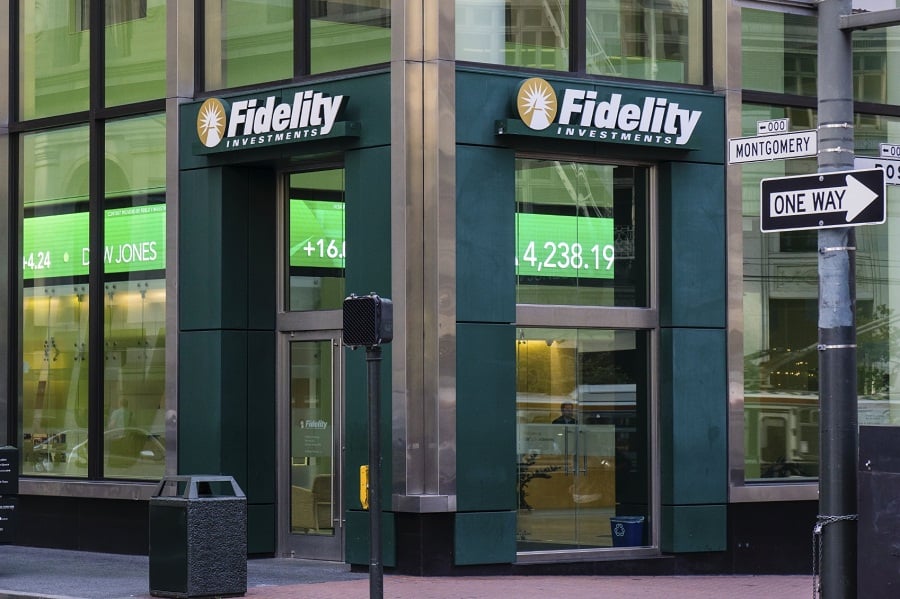
Fidelity Investments is banking on an appetite for direct indexing among financial advisers who custody client assets with the company.
On Monday, the financial services conglomerate announced that it was expanding access to direct indexing beyond retail clients to registered investment advisers.
“Financial advisers are increasingly looking to help improve client outcomes and deliver personalized investment solutions, and we see custom SMAs as an opportunity to address these needs with scalable yet highly customizable solutions,” Gary Gallagher, head of Fidelity Institutional Wealth Management & Advisory Solutions, said in a statement.
“What sets our offering apart from others is our ability to leverage the expertise, technology and resources of both our quantitative and active fundamental investment teams to develop a wide range of strategies,” Gallagher said. “We also are focused on streamlining the digital experience with enhanced brokerage integration to help improve the friction many advisors face when managing direct indexing in their businesses today.”
The new Fidelity Institutional Custom Separately Managed Account offering will be made available to select wealth management firms and institutions, according to the announcement.
The platform will enable financial advisers to build and manage equity portfolios customized to investors’ needs and preferences. The lineup currently includes 10 tax managed equity strategies across domestic, international, global and sustainable equity exposures.
According to the announcement, as the offering continues to expand, it will target a range of different market exposures and can be tailored by applying tax management, excluding certain securities, sectors or industries, and applying a sustainable overlay for security selection to incorporate personal values.
Fidelity's announcement coincides with doubts over the ultimate potential and value of what some critics say is a repurposed version of separately managed accounts.
“It’s another classic example of smoke-and-mirrors marketing obfuscating what the real impact on clients will be,” said Sara Grillo, an industry consultant who's a vocal critic of direct indexing.
“Of course Fidelity is rolling this out to their clearing and custody clients first, so they can benefit from breaking up accounts into hundreds if not thousands of positions,” she added.
Grillo also took issue with the Fidelity announcement for being “very murky as to where this falls on the spectrum between direct indexing, a passive strategy and an actively managed strategy.”
A report last month from Charles Schwab Corp. described direct indexing as “the next frontier” and claimed that 46% of ETF investors are interested in learning more about it.
Nate Geraci, president of The ETF Store, suggested that much of the direct indexing hype is coming from the firms offering it.
“There’s no question that interest in direct indexing is increasing, though assets haven’t exactly equaled the hype,” Geraci said. “Direct indexing is fighting against three major trends that took hold over the past decade-plus and still appear intact: a shift from active to passive management, a move from higher-cost to lower-cost investments, and a preference for simplicity over complexity.”
Eric Balchunas, fund analyst at Bloomberg Intelligence, describes himself as the “most bearish person on my team” when it comes to direct indexing.
“I can see why the industry wants it to succeed because it’s more money for the industry,” he said.
Fidelity, which already manages about $3 billion worth of direct indexing assets, remains bullish.
“Investors’ needs and preferences are evolving while at the same time data is proliferating, and the technology required to harness it and deliver products that meet our clients’ expectations is growing at a rapid pace,” Neil Constable, head of Fidelity’s quantitative research and investments division, said in the statement.
“Fidelity sees quantitative and systematic investing, which uses technology, data science, and empirical research, as a game changer in the asset management space to help improve investor outcomes, achieve personalization at scale, and create solutions that are cost-effective for investors,” he added.

Cullen marks the fourth firm the New York-based RIA aggregator has bought in 2026 as deal volume heads for a record year.

The quality of AI ROI measurement depends on pre-deployment decisions around business outcomes, leadership alignment, and establishing trusted information, among other factors.

A state-by-state analysis of retail investor behavior reveals AI-powered research tools are reshaping how clients approach investment decisions.

LPL picks up $1.1B from Wells Fargo's independent channel as the wirehouse gains a $410M family team from UBS.

Most Americans want to age at home but few have a financial plan to pay for it, according to new research.
Knighthead Life entered the market with a competitive MYGA. A strong launch earned advisor confidence and paved the way for FIAs.
As AI makes financial information more accessible than ever, Lana Hock explains why human judgment, trust, and empathy remain the qualities clients value most in a financial advisor

