
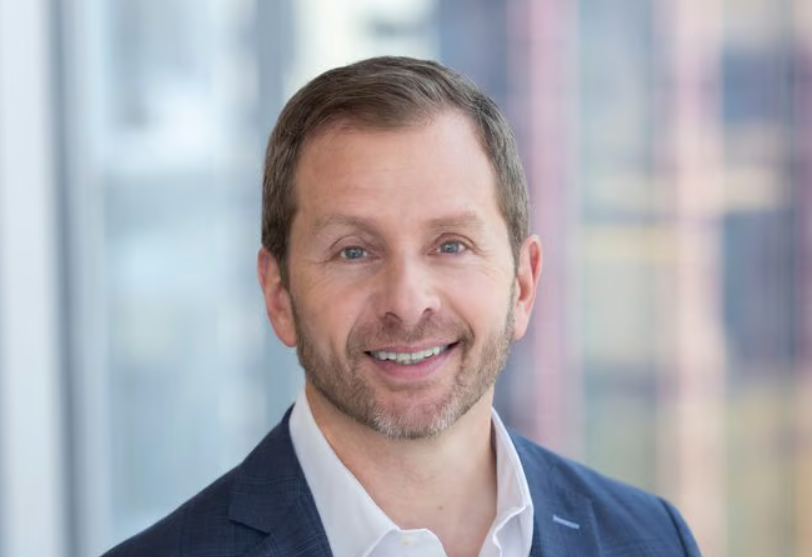
When Focus Financial Partners debuted on the Nasdaq in July 2018, the Wall Street Journal described its IPO as “the first opportunity for stock investors to get in on the booming market for independent financial advice.”
After five years on the public market, Focus returned private in 2023 via its $7 billion deal with private equity giant Clayton, Dubilier & Rice (CD&R) and minority investor Stone Point. For the largest RIA aggregators considering going public, Focus CEO Michael Nathanson warns of negative market reactions to debt financing viewed as a necessity to M&A activity.
“As a public company, at least the experience for Focus was there was generally a limitation on the ability to utilize leverage. And when leverage levels went too high for the public markets, the public markets pushed the stock price down, and that was a constraint on a firm that was very much involved in regular acquisitive activity,” Nathanson told InvestmentNews in Denver on Tuesday ahead of the Schwab Impact 2025 conference.
Nathanson has been Focus’s CEO since April 2024, when he was elevated from the role of the firm's president. He previously was CEO of The Colony Group, an RIA acquired by Focus in 2012.
“Focus was able to access capital at attractive rates and attractive terms, but the equity markets did not fully appreciate the need to do that,” he said. “In the private markets, Focus maintains an excellent discipline around leverage. We will not allow our leverage to go too high, but we're less constrained because we don't have to worry about the public markets.”
Focus was acquired by CD&R at $53 per share, which marked a premium of 36% over the average share price in the 60 days before the firm announced it was in negotiations to go private. Nathanson says that speaking about organic growth was a challenge for Focus as a public company, and that Focus now expects typical organic growth rates between 5-7%.
“Focus grew well, it had decent organic growth as well, but it was in a position where the analysts wanted more guidance constantly about organic growth, and that was just a challenge for Focus to deliver on,” said Nathanson. “So a firm that's going public needs to be prepared to measure what organic growth is, to articulate how they're measuring organic growth, and be held accountable for performance on organic growth, not just inorganic growth going forward.”
Focus now spans over $500 billion in assets under advisement across its three main divisions: Focus Partners for firms it fully owns; Focus Network consisting of about 55 affiliated RIAs that operate autonomously; and its TAMP, known as Focus Partners Advisor Solutions. In terms of envisioned “revenue and earnings,” Nathanson targets Focus Partners and Advisor Solutions to account for 80 percent, while 20 percent rests with Focus Network firms.
“Another thing I would say about being public from Focus's perspective is, we were effectively an association of 90 firms, and I think the markets looked at it that way,” Nathanson said. “The markets ultimately saw that it was really a holding company that was operating a finance function, as opposed to a single company. I think it's important that any company that accesses the public markets can be seen as a company, regardless of its constituent parts.”
Among the few mega-RIAs that operate at the scale of Focus Financial are Creative Planning, whose CEO Peter Mallouk said last month that some RIAs could soon become too big for private markets. Nathanson agrees, adding that being private allows Focus to have a longer-term perspective on building scale opposed to quarterly earnings expectations as a public company.
“I think that the public markets are certainly an option for larger firms, and at some point it'll be an option for Focus again. We have no current plans to pursue anything like that, but it will be an option for us again at some point,” said Nathanson. “Focus actually had a good experience being a public company. We did really well, the equity appreciated nicely, but I don't know that Focus ultimately achieved its full potential as a public company.”

Iowa's Greenwood Wealth Partners exits D.M. Kelly as UBS and Ameriprise win Merrill Lynch recruits in California and Florida

Less than 1% of pool funds went to actual trading, CFTC says

Plus, SEIA builds a governed data foundation for its in-house AI and Snappy Kraken debuts a read-only marketing coworker for advisors.

He owes $364 million but pays $100 a month

Broadridge, Wedbush and Alaris Acquisitions have also filled senior wealth management roles with hires from J.P. Morgan, Osaic and SageView.
As AI makes financial information more accessible than ever, Lana Hock explains why human judgment, trust, and empathy remain the qualities clients value most in a financial advisor
Northern Trust’s Ken Lassner shows advisors how to convert volatility into after-tax portfolio gains

