
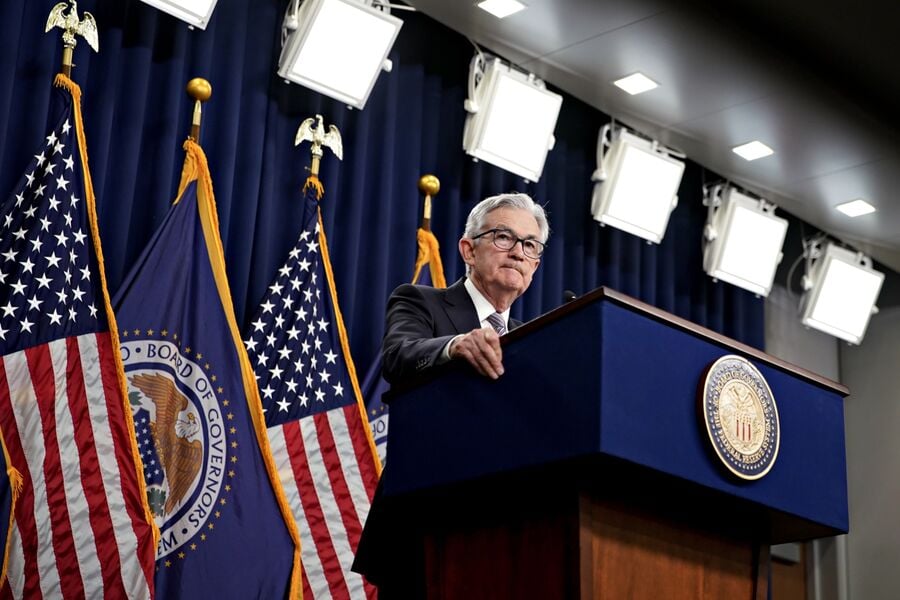
The country’s largest banks are well positioned to weather a severe recession, according to the results of the Federal Reserve Board’s annual bank stress test.
All 23 banks tested remained above minimum capital requirements during a simulated recession that projected total losses of $541 billion. The results of the test, which the Fed released Wednesday, are used to determine how much capital banks need to set aside as a cushion, potentially clearing the way for dividends and stock buybacks as requirements are met.
The balance sheets of JPMorgan Chase and Wells Fargo both demonstrated more resiliency than in previous years’ tests, making the banks likely to see capital requirements eased, according to Bloomberg.
"The market will look at this as good news," said Christian Conner, a partner and financial advisor at Prime Capital Investment Advisors in Springfield, Missouri. "This will allow banks to pay out higher dividends or be able to buy their stock back, thereby increasing the value to shareholders. Given the importance of the financial industry as a whole, this should deepen investor confidence and broaden their desire for financial equities."
Not everyone agrees with the Fed’s assessment. The stress test doesn't include smaller regional banks like the ones that fell into turmoil during the spring, said Thomas Balcom, founder of 1650 Wealth Management, an independent registered investment advisor headquartered in Lauderdale-by-the-Sea, Florida.
“This test did not include a number of regional banks such as Silicon Valley Bank, Signature Bank, and First Republic who did not make it through the rate hike cycle unscathed,” Balcom said. However, the results appeared positive for the stock market, which jumped on Thursday, he added.
While the results confirm that the banking systems is “strong and resilient,” the stress test is only one way to measure the financial system’s strength, said Michael Barr, vice chair for supervision at the Federal Reserve Board.
“We should remain humble about how risks can arise and continue our work to ensure that banks are resilient to a range of economic scenarios, market shocks, and other stresses,” Barr said in a statement.
The Fed’s test estimates banks’ capital levels, losses, revenue and expenses under a hypothetical recession and stock market shock. The 2023 version included a 40% decline in commercial real estate prices, a substantial increase in office vacancies, a 38% decline in housing prices and a spike in the unemployment rate, resulting in a significant decline in economic output. The goal was to measure banks’ ability to continue lending in such a scenario.
Despite passing the test, banks may hold off on announcing payouts until they get more clarity on new capital requirements that are already in the works, Bloomberg reported. The Fed is also weighing an overhaul of its supervision efforts.

A Nationwide survey finds 47% of GLP-1 users have never discussed the drugs’ financial impact with an advisor, even as many dip into savings.

The hundreds of millions of dollars from a sale of Inspired Healthcare properties does not mean an immediate windfall for investors.

Its SEC filings said one thing - a congressional probe said another.

Sham agreements allegedly padded revenue by 345%.

"Most pre-retirees are uncomfortable making key retirement income decisions without an advisor's help," said Chris Bailey of Cerulli.
Knighthead Life entered the market with a competitive MYGA. A strong launch earned advisor confidence and paved the way for FIAs.
As AI makes financial information more accessible than ever, Lana Hock explains why human judgment, trust, and empathy remain the qualities clients value most in a financial advisor

