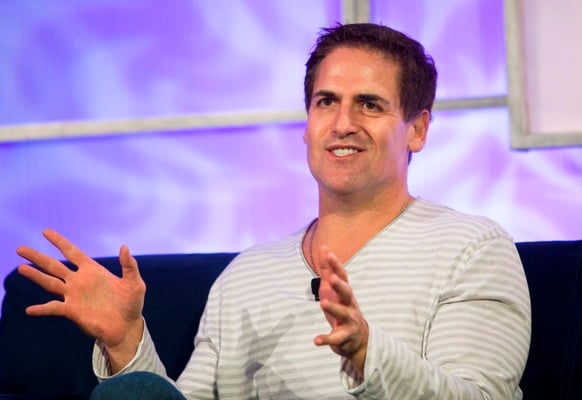
Now that George Steinbrenner no longer walks the earth, Mark Cuban is arguably the one sports owner that fans love to hate more than any other. (Unless of course you're a Dallas Mavericks fan, in which case Cuban is no doubt a beloved figure in the same way that Steinbrenner was a hero to almost every Yankees' fan, save for
Frank Costanza). Loud, brash, egotistical and some—okay, many—would say overexposed, Cuban seems to have an opinion on pretty much any and every topic.
But it's hard to argue with Cuban's success, or the fact that he is almost always good for a quote. The 53-year-old Cuban, who is reportedly worth about $2.5 billion, attained his wealth through several computer and technology ventures. In January 2000 he bought a majority ownership stake in the Dallas Mavericks for $285 million. Last year, the Mavericks won the franchise's first NBA title by defeating the much hyped-about Miami Heat.
A well-known (and widely-read) blogger, Cuban has recently taken some time away from his
own site to answer readers' questions on a range of topics over at the
Freakanomics' blog. The Q&A covers everything from this season's NBA lockout (Cuban gives a thumbs down to the collective bargaining agreement that the owners and players hashed out), to career advice (“Never follow your dreams,” he tells one reader).
Cuban also addresses the influx of bright college graduates into the world of finance, which he sees as being a “huge problem.” According to Cuban, there are too many smart grads that are “concentrating on ‘financial engineering' rather than actually making something and contributing to society.”
So what would Cuban do to reverse this alleged trend? Raise taxes! Cuban may be successful at many things, but he would no doubt be an utter failure as a Republican candidate for president. Anyway, the Mavericks' owner supports the Tobin Tax—which would place a tax on all spot conversions of currency—and also thinks taxes should be raised on carried income.
The reason finance has become such a hot career choice for graduates, Cuban opines, is because a number of young people have become very wealthy through the pursuit of financial engineering. Per the Q&A:
“I think we will see tax and regulatory policy that will reduce the incentives and increase the friction for those who ‘hack' the stock market and focus on financial engineering. Which, in turn, will hopefully incentivize [college graduates] to enter other disciplines.”
Cuban also goes on to argue that the stock market should be returned to its “original purpose of being a market designed to raise capital for growing businesses of any size.”
To read more from the Q&A with Cuban, go
here.