Its economy is contracting and the nation's largest lenders are a mess. And yet banks from BNP Paribas to JPMorgan Chase & Co. are scrambling to win business from Germany's ultra-wealthy.
Deutsche Bank,
Goldman Sachs and Rothschild & Co. are also among those planning to beef up in Europe's largest economy.
Several tout the country's industrial backbone, known as the Mittelstand, and the expectation that aging owners will want to sell their businesses. Others are betting that armies of advisers will be needed to move cash from negative-yielding accounts.
The efforts are taking place amid a global battle to manage the ballooning money and affairs of the top 1% and 0.1%. Other wealth hot spots include Brazil, China, Dubai, California and Singapore, but the focus on Germany surprises some industry experts, and not just because of its slumping growth.
Private banking is already fiercely competitive in Germany, with about 1,500 firms. What's more, foreign institutions have tried and failed to crack the market.
"Too many banks are investing in German private banking," said Hans-Juergen Walter, head of financial services at Deloitte Germany. "Some wealth managers will disappear."
[More: $21 billion advisory firm is expanding to Europe]
North America dominates
Bankers acknowledge the competition, but want a bigger piece of a country with 6,800 people worth at least $50 million, the third-highest figure in the world after the U.S. and China, according to
Credit Suisse Group's latest wealth report.
![]()
BNP Paribas added 90 people to the team over the past year, according to Vincent Lecomte, the lender's co-head of global wealth management. A key element is to attract company owners by tapping relationships built through its investment bank and real estate arm.
Deutsche Bank and Goldman Sachs declined to disclose staff levels for Germany, but Goldman said its local team servicing ultra-high-net-worth individuals — those with at least $30 million — has grown by a quarter over the past three years and will expand another 50% over the next two years.
Deutsche Bank is on track to hire 100 front-office staff for wealth management across Europe, it said.
[More: Goldman CFO eyes wealth management acquisitions in Europe]
JPMorgan increased head count at its local unit last year and plans to continue hiring, as does Rothschild, which added nine people for its private wealth division in 2018.
On Friday, UniCredit's German unit announced two new private banking locations in the northern part of the country.
"More players in the German market should mean more professional service for clients overall," Claudio de Sanctis, Deutsche Bank's head of wealth management in Europe, the Middle East and Africa, said by email.
For some firms, including Deutsche Bank and Goldman, the move is part of a broader plan to pivot their business toward more stable and predictable sources of revenue.
[Recommended video: Financial planners may find states are better route for meaningful standards than Reg BI]
Several lenders in Germany have also announced they're intensifying efforts to get clients to move money out of checking accounts — which incur costs for banks because of the negative interest rates set by the European Central Bank — into assets that traditionally are closer to wealth management services, such as
private equity or hedge funds.
"Many banks are turning their focus to wealth management as retail banking is becoming even less profitable," said Philipp Koch, a senior partner with consultant McKinsey & Co. "There are few good alternatives if banks want to grow."
Banks cite growing prosperity in cities such as Munich and Stuttgart as reasons for their optimism, even as the country's economy has been rattled by trade tensions and slumping confidence.
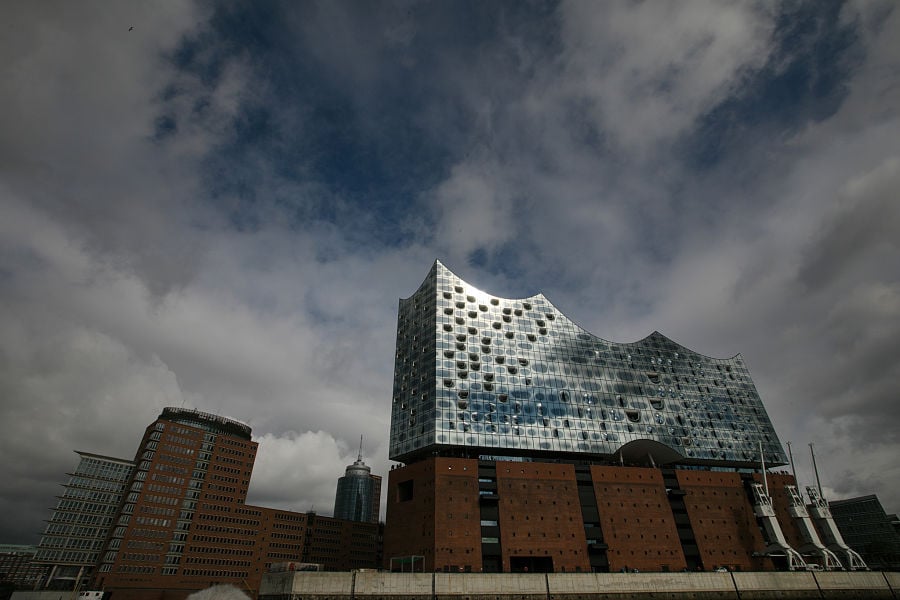
Hamburg, where a new steel-and-glass concert hall is testament to the city's growing affluence, is home to at least five of the 30 richest Germans, including Michael Otto, according to the Bloomberg Billionaires Index. Vontobel Holding and BNP Paribas have expanded in the city, while local companies Frankfurter Bankgesellschaft and Feri have recently opened offices.
What's more, the liquid assets of Germany's rich — the part they can entrust to professional money managers — will reach 1.4 trillion euros ($1.55 trillion) in 2022 from 1.2 trillion euros two years ago, according to consulting firm Zeb.
Some of this could be driven by company owners who seek to sell their businesses as they retire. This might put millions or even billions or euros into the hands of individuals who previously had all their money tied up in one investment and now seek a place to invest it.
There's still plenty of skepticism about how many private bankers in Germany will benefit from this growth. Competition and low interest rates have already driven margins significantly lower than in neighboring countries.
![]()
What's more, Germany's economy has been deteriorating as it gets hit with a global slowdown and upheaval in its auto industry. While economists see a return to modest growth at the end of the year, the nation is expected to slip into technical
recession in the third quarter.
"The margins in wealth management aren't sustainable," said Axel Sarnitz, a partner with Zeb. "The industry isn't weatherproof."