
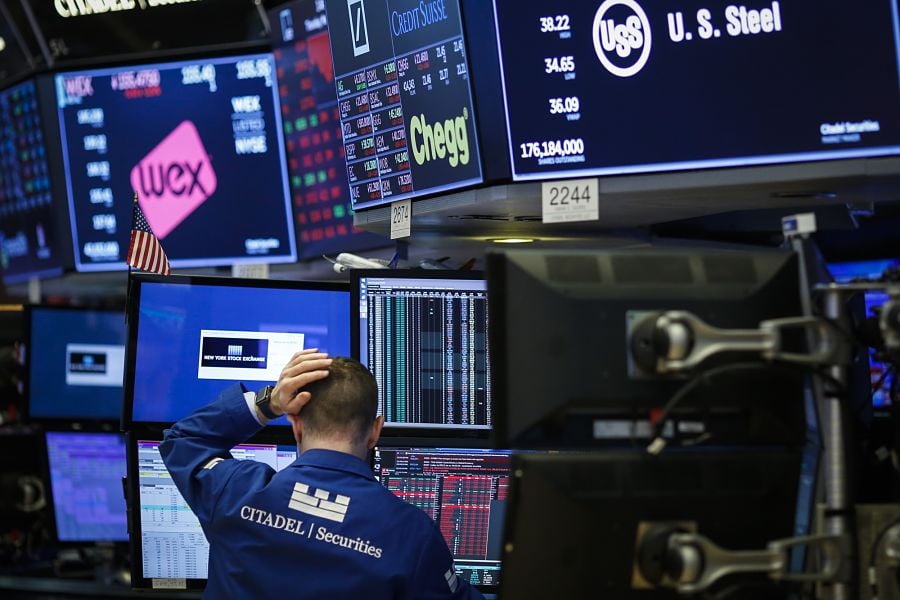
The risk-off sentiment on Wall Street fueled the third-worst weekly outflow on record from U.S. equities, with technology shares falling out of favor.
U.S. stock funds bled $25.8 billion in the week through Sept. 23, according to Bank of America Corp. and EPFR Global data, in a reversal from the previous week’s biggest inflow in more than two years. Investors exited the hottest sector of the rebound, pulling the most money out of tech funds since June 2019.
While traders were buying the dip just a week ago, sentiment has switched firmly to risk off in recent sessions, with pessimism seeping in about the prospect of further fiscal stimulus to support the world’s biggest economy.
The S&P 500 Index is on course for its fourth straight weekly drop, its longest losing streak in more than a year. That’s fueling U.S. equity underperformance versus Asia and Europe in September.
In a flight to haven assets, investors are pulling out of equities as well as cash to put their money into debt and gold. Bond funds received $1.3 billion in the most recent week, while the precious metal attracted $1.4 billion in inflows — the most since the flash crash in early August — according to the Bank of America report. Stocks overall bled $22.8 billion, the most since March.
Still, strategists led by Michael Hartnett view this month’s market moves as a “healthy rather than dangerous correction.”

Meanwhile, DPL Financial Partners adds two annuity executives and Prime Capital Financial hires a Mid-Atlantic retirement plan consultant

Andrew Komarow pleaded guilty Thursday in federal court in Hartford to defrauding three financial services companies of close to $3.3 million.

Elsewhere, Cetera picks up a $210 million Connecticut team from MML, while Wells Fargo FiNet adds a San Diego family practice from LPL

Celebrity endorsements, $500M in claimed assets, and a state regulator stepping in.

“We needed to become a more agile and efficient organization,” said American Express CEO Stephen Squeri.
Knighthead Life entered the market with a competitive MYGA. A strong launch earned advisor confidence and paved the way for FIAs.
As AI makes financial information more accessible than ever, Lana Hock explains why human judgment, trust, and empathy remain the qualities clients value most in a financial advisor

