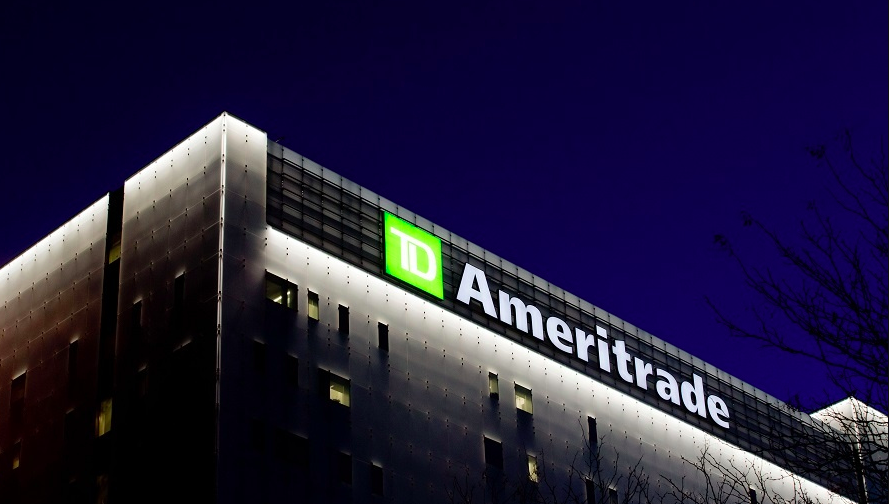
Just 10 hours after
Charles Schwab announced it was eliminating trading commissions on U.S. stocks, exchange traded funds and options starting Oct. 7, rival TD Ameritrade Holding Corp. upped the ante by
cutting the same commissions starting Oct. 3.
TD's announcement late on Tuesday, which
mimics the Schwab news right down to the 65-cent option contract fee, followed a day that saw the company's stock price lose 25.8% in a market reaction to anticipated reduced commission revenue.
A TD spokesman responded via email Tuesday evening that the company is not accepting interview requests, but a statement from president and chief executive Tim Hockey suggested TD is not backing down from Schwab's low-fee challenge.
"We are committed to giving our clients the best possible investing experience, with cutting-edge technology and award-winning investor education and service teams. And now, that experience just got better," Mr. Hockey's statement reads. "We've been taking market share with a premium price point, and with a $0 price point and a level playing field, we are even more confident in our competitive position, and the value we offer our clients."
With approximately 25% of its total revenue coming from commissions, TD is viewed by analysts as being particularly
vulnerable to a commission price war.
Etrade Financial Corp., which derives about 18% of its revenues from commissions, saw its stock price fall more than 16.4% on the Schwab announcement.
At Schwab, meanwhile, where commissions represent about 4% of total revenues, the stock price lost 9.7% on a day that saw the S&P 500 Index drop by 1.2%
"Every time commissions get cut there's a similar reaction, and each time the reaction is proportionate to the impact on commission revenues," said equity analyst Cathy Seifert of CFRA, when discussing the Schwab announcement prior to the TD announcement.
"ETrade and TD will be forced to counter the commission-free trades," she prophetically added.
Josh Brown, financial adviser and chief executive of Ritholtz Wealth Management, also predicted earlier Tuesday that "commission rates are going zero anyway."
"I would be shocked if Schwab didn't have a response by the end of the year," he added.