
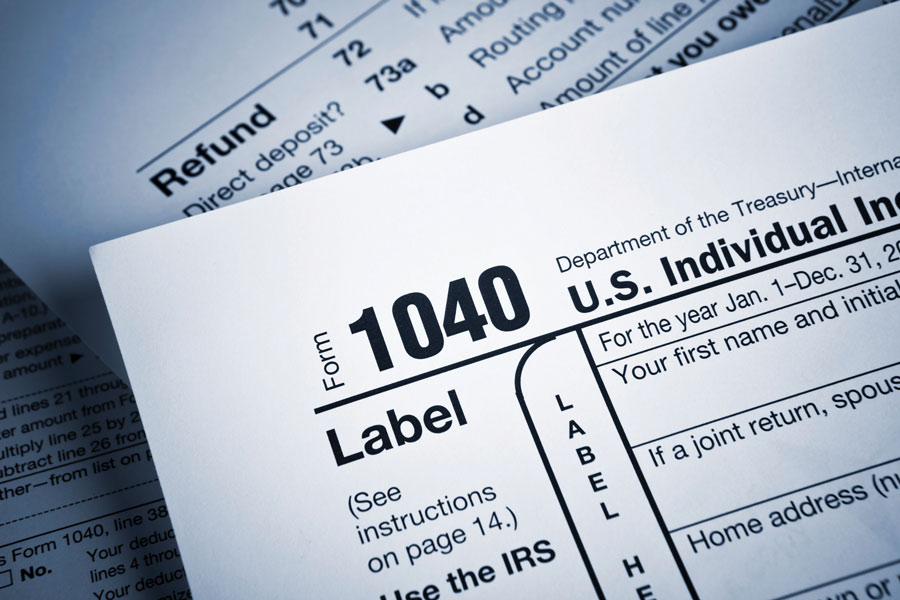
President Donald Trump is reportedly seeking to eliminate federal income taxes for Americans earning less than $150,000, a move that could provide significant tax relief but also raise concerns over its broader economic impact.
US Commerce Secretary Howard Lutnick recently outlined the proposal in an interview, suggesting that Trump's tax agenda could allow some individuals to keep up to $24,000 annually that would otherwise go to federal income taxes.
"How about no tax on tips? How about no tax on overtime? How about no Social Security? How about all those things – these are the kind of thoughts that will change America," Lutnick told CBS. "I know what his goal is ... no tax for anybody who makes less than $150,000 a year. That's his goal. That's what I'm working for."
That vision, if it comes to pass, could have wide-ranging effects on both individual taxpayers and the overall fiscal landscape. Currently, a single filer earning $150,000 falls under the 22 percent federal tax bracket; those that fall in the upper end of that range could potentially save up to $24,000 per year.
While eliminating income taxes for middle-class earners would provide a major financial boost for households and encourage consumer spending, some economists and financial experts caution that the policy could add to a ballooning federal deficit.
Alex Beene, a financial literacy instructor at the University of Tennessee at Martin, told Newsweek that while such a measure could provide immediate relief, it would leave a hole that must be filled.
"Eliminating income tax on those making less than $150,000 would obviously be a huge economic stimulus to a group of taxpayers who have been on the smaller end of recent tax cut efforts," Beene said. "The new administration is betting new tariffs and other international taxes could fill in the gap of this lost tax revenue, but history shows that assumption isn't always a sound one."
Some analysts suggest that the plan may also have unintended benefits for corporations. Kevin Thompson, founder of 9i Capital Group, noted that while the measure could put more money into workers’ pockets, it could also shift financial responsibility in unexpected ways.
"Eliminating income taxes for those under $150,000 removes the pressure for companies to provide livable wages," Thompson told Newsweek. "Instead of corporations stepping up with higher wages, the burden shifts back onto taxpayers."
Beyond income tax implications, some experts have raised concerns about the potential effect on payroll taxes, which fund Social Security and Medicare.
One commentary published by Forbes pointed out how payroll taxes accounted for $1.23 trillion in revenue in 2023, making up roughly 90 percent of Social Security’s funding.
It argued that putting payroll taxes on the chopping block for workers making $150,000 – coupled with plans to extend and expand the 2017 Tax Cuts and Jobs Act, which largely benefits high-income households – would significantly cripple government services.
"[I]t raises the obvious question of who will be left shouldering the tax burden. The answer is either the middle class or no one—because both Social Security and Medicare will be shut down," the Forbes commentary noted.

The financial advice industry has been facing inquiries into its cash sweep programs for years now.

Investor money allegedly went to strip clubs, exotic cars, and landscaping

Procyon adds $415 million in assets under management in New Jersey while Savant picks up a $213 million Southern California planning firm

With a growing number of real estate-rich Baby Boomers aging into retirement, some advisors may be failing to consider all the options available for those clients' assets.

Cornerstone Advisors study reveals compliance bottlenecks stall campaigns weeks after customer opportunities close.
As AI makes financial information more accessible than ever, Lana Hock explains why human judgment, trust, and empathy remain the qualities clients value most in a financial advisor
Northern Trust’s Ken Lassner shows advisors how to convert volatility into after-tax portfolio gains

