
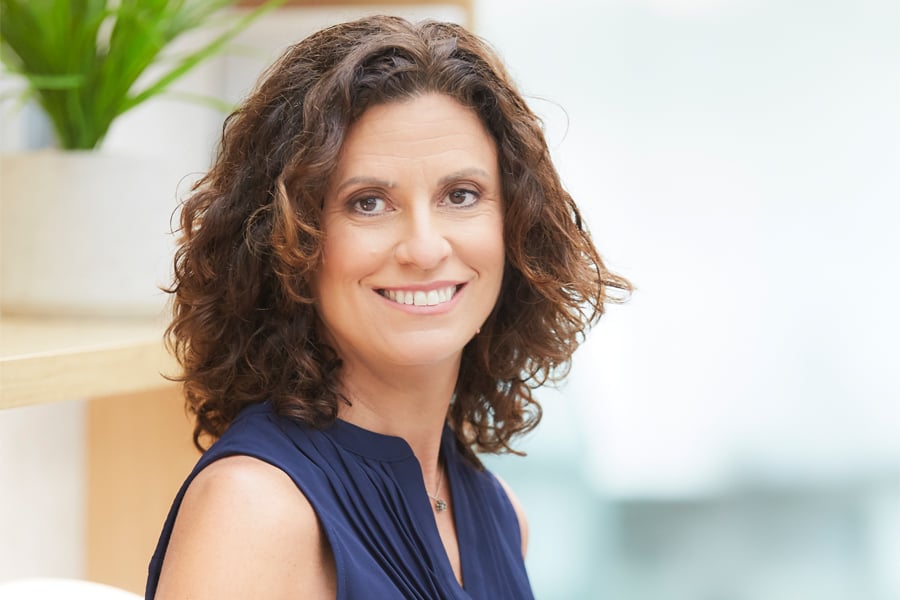
Maria Lettini recently took the helm at US SIF: The Forum for Sustainable and Responsible Investment. Lettini was previously the executive director of UK-based FAIRR Initiative, which addresses the risks and opportunities of animal agriculture for institutional investors. As the new leader of one of the major industry groups in the country promoting ESG disclosure and sustainable investing, she spoke with InvestmentNews about the challenges in the current environment and the need to engage financial advisors.
InvestmentNews: You're taking over at US SIF at a pivotal time for sustainable investing and ESG. Why did you want this job? What is at stake in the space right now?
Maria Lettini: ESG and sustainable investing have been around for several decades, and those were some really formidable years. But now it's an interesting time, when we have had it becoming much more mainstream, becoming part of the quilt of how we invest, generally. For me, coming to the US SIF and coming back to the U.S. was a thoughtful career move. Because now is the moment. ESG is receiving some headwinds, particularly in the U.S.
And you can say that across sectors — it's not just about sustainable investing. It's transition risk. It's the energy sector and the auto sector. It’s the agricultural sector. We need the U.S. to essentially fall in line, collaborate and cooperate.
I had a career in finance and in the institutional investor space. I then went back and studied sustainable development and finance, and that's kind of the avenue I wanted to go. That opportunity fell in my lap to work at the UN Principles for Responsible Investment and literally grow that organization to a point where there was a substantial critical mass of investors that were incorporating those principles.
U.S. policy and U.S. corporations can lead the way. And the leadership in the U.S. has to be there. If U.S. leads, many will follow.
I really saw it as an opportunity to make a difference, personally.
IN: There are so many efforts at state and federal level to tamp down on the use of ESG factors. It doesn't really look like any of those efforts are slowing down. If there are more restrictions that are put in place, how effective do you think these laws can be?
ML: The premise by which institutional investors are considering environmental, social and governance issues is backed by fiduciary duty. And that has been the premise for decades in some of the communities here in the U.S. Investors need to be following materiality and fiduciary duty.
I don't see that this is going to really put a huge cooling effect on what investors are doing. I think they’re doing it on behalf of their clients, and they're doing it because they know that these risks and opportunities will translate into value destruction or be a value-add.
IN: What do you want financial advisors to know? How does US SIF communicate with them?
ML: One of the things that I’m optimistic about at US SIF is that we have a strong financial advisor membership community. And that puts us in a unique position.
Institutional investors have been a bit quieter these past few months, given the backlash against ESG. But financial advisors are very opinionated about where they stand when it comes to responding to their clients. They have a higher level of comfort in having an opinion on ESG either way — they are literally responding to their clients’ wishes. That sets US SIF apart from some of the other investor coalitions or membership organizations in the U.S. and globally, frankly, that have a large group of financial advisors. They are very active in US SIF — they want to learn more.
We have educational courses for financial advisors. We work with other educational leaders like Kaplan to ensure that we have ESG as part of those curricula. And I see it as one of our major pillars going forward, to ensure that financial advisors are all educated on at least a level of what ESG is. Because as we know, it can be not so clear to people outside of the institutional community.
IN: What else should our readers know about you?
ML: One thing most people who know me in this space is that I like to be a collaborator. I'm here because I know US SIF cannot do this alone. Across the sustainability community, none of these challenges can be overcome by one organization or one actor. This is a challenge that's going to have to be approached in a collaborative manner — not just from institutional investors, but by academics, by financial advisors, by regulators and by policymakers. That's how the financing is going to come in. When we think of some of the world's biggest challenges — climate, nature and the innovation that's needed to overcome those challenges — we're not going to get there if financing is not injected in these sectors to incentivize any sort of transition.
I hope that people see me as someone who can bring people together to drive a positive outcome, and that's what I see as my biggest challenge here in the U.S. I’m here to try and drive change but do it in a collaborative way.
IN: It seems hard to ignore climate change right now, with all of the recent rain, the flooding, the wildfires and the seven hottest days on record. Most folks in the U.S. have been affected by that in some way or another.
ML: It's interesting that this week has been the hottest week of many years, and the amount of particulate contaminants in the air has been so high — and these House Finance Committee meetings are happening, and we're discussing some of the most obvious, in-your-face issues of our time.
Companies will have to be prepared for this. It’s not like you can just say, 'I believe this is still going to be the trajectory for the next 200 years,' but this certainly seems to be for the next 10.
That translates into strategic management. This does highlight areas of risk mitigation. Are we sure we can mitigate and adapt to these risks? But it also helps to unpack some opportunities too. And that's what you're looking for in the long-term strategic plan in the companies with whom you’re investing — so I think it goes both ways.

Wells Fargo adds two bank-channel recruits, UBS lands a JPMorgan Chase veteran, and a multi-family office lifts Atlas past $1B

“The state comes down on you in years when you make 40% returns for clients,” said Bill Swayne, the advisor and son of Candace Swayne.

The Independent broker-dealer giant has had “active conversations” with the Claude maker, which is days away from its expected IPO

For Gen X clients entering life after work, answering the financial question isn't enough to solve the entire retirement equation.

Tools from Grantd, Income Lab and Healthspan Wealth aim to keep RIAs involved in clients’ biggest money decisions
Growing wealth, evolving priorities, and untapped opportunities are reshaping how women approach long-term investing.
Knighthead Life entered the market with a competitive MYGA. A strong launch earned advisor confidence and paved the way for FIAs.

