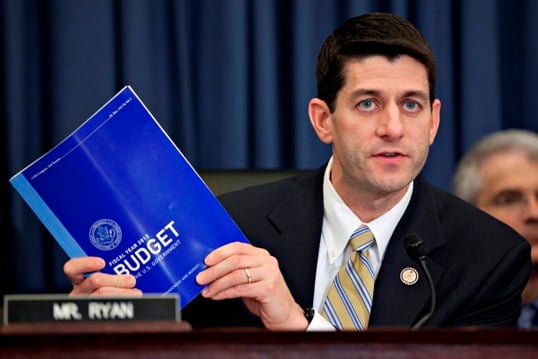
As fans of the Paul Ryan addition to the Republican ticket praise Mitt Romney's decision to partner with such a pure budget wonk, you can't help but wonder if the Ryan factor might end up being too much reality for most voters.
A common theme among those supporting Mr. Ryan as the Republican running mate is the idea that he will help elevate the conversation toward more “real issues” like budgets, debt and taxes.
The House Budget Committee Chairman, perhaps best known for his “Roadmap, path to property” budget proposal designed to reduce federal government spending, is being hailed as the kind of numbers guy who can remind voters what a presidential election is really all about.
“President Obama can only speak about the economy when he's on teleprompter, but Paul Ryan isn't like that – he really knows this stuff,” said Dawn Bennett, chief executive of Bennett Group Financial Services LLC.
George Schwartz, president of Schwartz Investment Counsel Inc., had similar praise for the Wisconsin conservative, saying that Mr. Ryan “treats voters like adults.”
“He's big on reforming the entitlement mess,” Mr. Schwartz added. “Entitlements will bankrupt this country if they aren't reformed.”
It's a fair argument, but it's also hard to imagine most voters fully embracing and then reacting to the concept of the United States eventually going bankrupt.
“Most financial advisers would probably say Paul Ryan is a good V.P. choice, because I think most advisers like the fact that we might now start focusing on the budget and the deficit,” said Adrian Day, president of Day Asset Management.
Mr. Day added that, while financial advisers and other budget wonk-types might appreciate the economic discussions, such cold truth could send some voters looking for a rosier story.
One needs to only look at a place like Greece to realize that recognizing a problem is often the first step toward avoiding dealing with the problem.
“I think more people like the idea of fixing the budget than actually doing it,” Mr. Day said. “For Paul Ryan, as part of the presidential election, it gets kind of tricky now because he's been very specific, and that means the Democrats can go through it with a fine tooth comb and come up with things that can really frighten people.”