
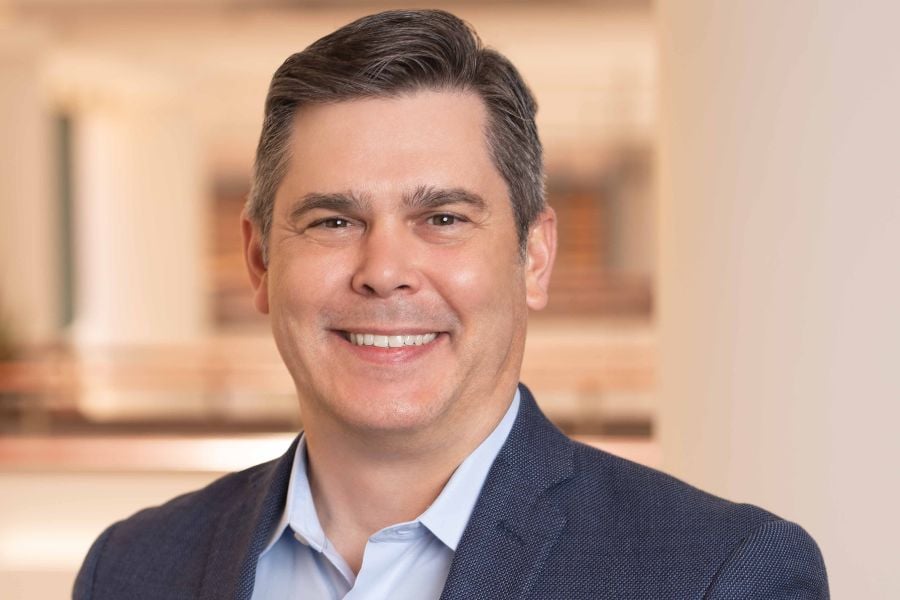
When you ask EP Wealth CEO Ryan Parker how the RIA firm managed to grow its assets to $21.4 billion and serve 13,000 households across the country over the span of 25 years, he’ll say it all comes down to having a laser-focused mission.
“That is to enrich people's lives, but to do it one relationship at a time,” Parker says.
That matters, he added, because clients are looking for “total financial advice.
“We really pride ourselves on combining financial planning with tax planning and estate planning and trust services that really wrap around the investment management that we do to really focus in on what people's goals are,” Parker said. “While investments are certainly important, the firm and the clientele that we serve are people who want that more full-service, almost like a family office type of services.”
The former CEO of Edelman Financial Engines admits while there have been a few surprises during his career in the industry, the one that’s surprised him the most is the slow pace at which the RIA industry goes out to capture more clients.
“We just haven't seen more rapid market share gains by the RIA space,” Parker says. “Even though it's the fastest growing part of the industry, it surprises me sometimes that some people who aren't being served, [even though] they really deserve to be, haven't yet made a change to find someone.”
A possible solution, he notes, is that some of the larger players in the RIA space could come together in concert with the CFP Board, for example, to amplify simple communications and marketing that’s easy to understand, especially since wirehouses spend hundreds of millions of dollars on marketing and advertising.
“What do we do to tell a better story that gets people to understand there might be a better way for them to have their finances served? We’ve got to think about a way to get that message across where that half a billion dollars of cash flow isn’t sitting on the old balance sheet,” he says. “Part of the solution is A: to be intentional, and B: just to think about ways consumers are bombarded by advertising and marketing and sales pitches all the time.”
Getting that out to consumers and investors would help them understand that “they do have a choice between someone who puts their best interests first, and other ways that they can be served,” he added.
Parker, who’s based out of EP Wealth’s Salt Lake City location, notes that he’s part of a group of CEOs from large RIAs who get together in a study group.
“Some of the things we talk about are, how do we band together as an RIA industry and tell our story a little bit better, and a little bit clearer than individual firms? There really isn’t yet a singular voice that's out there that’s helping consumers make an even more educated choice,” he added.
EP Wealth has 40 offices across the country, and Parker says while their clientele varies, the typical, “down the middle” clients are those he describes as “the millionaire next door”: someone in their late 50s who’s focused on whether they’re on track for retirement.
The other side of the client base is those who have more than $5 million, he says. “We now have about a third of our revenue that comes from these clients. They're increasingly looking for not only that type of suite of services, but to have access to alternative investments and some of the other things that those people who can tolerate, either more risk or more illiquidity, that that they use.”
At the end of the day, the key thing Parker highlights is that EP continues to be a humble and hungry firm that is solely focused on being a trusted advisor and acting with high integrity, both for its clients and its employees.
“Two of our core values are really embracing diversity and inclusion, and really, of all types,” he says. “We try to be that laser-focused company but [also] be authentic and genuine. Let's make sure that our actions, and ultimately, the results, reflect not only the values of the founders and me, but everyone who has joined this idea of what EP Wealth can become.”

LPL Financial and Raymond James also add independent advisors from Osaic and Edward Jones in Michigan and Arizona.

The SEC-registered RIA advises on more than $1 billion in client assets, with no advisory fee through 2027 and no human financial advisors.

The four wirehouse firms lost 1,449 experienced advisors and recruited 932 in the first six months of the year, according to Diamond Consultants.

Merit's 10th Commonwealth addition deepens its Western New York reach, while another Hightower partner joins its Signature Wealth platform in Michigan.

Report on Climate Action 100+ signals risk for passive managers' 13G status heading into the 2027 proxy season.
Knighthead Life entered the market with a competitive MYGA. A strong launch earned advisor confidence and paved the way for FIAs.
As AI makes financial information more accessible than ever, Lana Hock explains why human judgment, trust, and empathy remain the qualities clients value most in a financial advisor

