
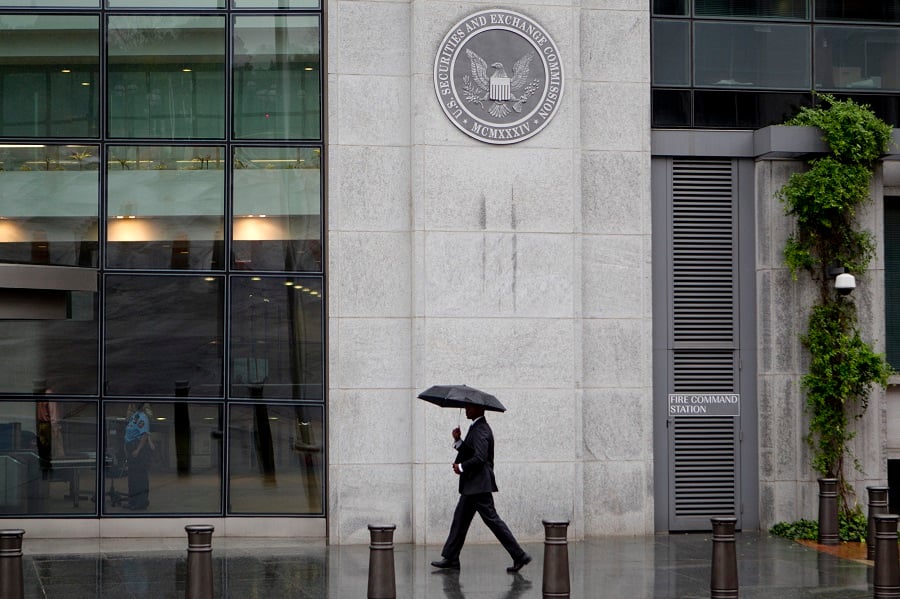
As wrap fee accounts grow more complex, they’re likely to continue to draw attention from the Securities and Exchange Commission, compliance experts said after the agency imposed a hefty penalty on a major brokerage.
The agency announced Tuesday a $5 million settlement with Morgan Stanley for giving clients misleading information about its retail wrap fee programs.
The brokerage marketed its wrap accounts as providing investment advice, trade execution and other services for a single fee. It implied that there would be no additional charges for trading.
But for about five years through July 2017, the SEC found Morgan Stanley managers routinely directed wrap fee clients’ trades to third-party broker-dealers for execution, which in some instances resulted in the clients paying additional transaction fees that were not transparent.
Morgan Stanley did not admit or deny the charges. The $5 million civil penalty will be paid to the government and then distributed to harmed investors through a Fair Fund.
The SEC knows that not every transaction in a wrap-fee program can be executed within the sponsor broker, as the range and complexity of financial products within the wrapper grows, said Amy Lynch, president of FrontLine Compliance.
“This is an increasing phenomenon, which is why the SEC is interested in ensuring firms have the proper disclosures in their wrap-fee accounts and in their marketing materials,” Lynch said.
For many years, the SEC included wrap-fee programs among its annual examination priorities. The agency didn’t put them on the list this year. But ferreting out hidden fees for retail investors is an ongoing theme of agency examinations and enforcement.
“The message they’re trying to send is there has to be complete transparency,” said Howard Fischer, a partner at Moses & Singer.
Fischer, a former SEC trial counsel, sees a similarity between wrap-fee enforcement and the SEC’s targeting of inadequate disclosure of mutual fund expenses. The agency recently concluded an initiative on share-class selection disclosure.
As is the case with share classes, wrap program violations involve many small charges that can be aggregated into a large volume, Fischer said. They also can be less costly for firms to settle than to litigate, lending themselves to a mass enforcement action.
“The SEC is always looking for sweeps, especially those that hit the sweet spot,” Fischer said. “It doesn’t make the defendant look too bad, but if you bring enough of them, it makes the SEC look good.”
While the SEC scrutinizes wrap accounts, market forces also are working against them, said Steven Thomas, chief compliance officer at SGL Financial. Trading costs are dropping to zero, which makes including trading fees in a wrap account superfluous.
“Less than a year from now, you won’t see a wrap fee in existence,” Thomas said. In the meantime, “if you’re advertising [a wrap account] as a benefit to a client, you better be able to substantiate it with documentation saying these are the fees we’re covering.”
But wrap accounts are popular among brokers because the fee is based on assets under management, said James W. Watkins III, chief executive of InvestSense, a fiduciary oversight firm.
Reverse churning can occur when a buy-and-hold client who doesn't do much trading, such as an elderly investor, is put into a wrap account.
“They’re oversold,” Watkins said. “They’re more often than not marketed to people who don’t need what the wrap-fee program provides.”
Jeff Benjamin contributed to this story.

Iowa's Greenwood Wealth Partners exits D.M. Kelly as UBS and Ameriprise win Merrill Lynch recruits in California and Florida

Less than 1% of pool funds went to actual trading, CFTC says

Plus, SEIA builds a governed data foundation for its in-house AI and Snappy Kraken debuts a read-only marketing coworker for advisors.

He owes $364 million but pays $100 a month

Broadridge, Wedbush and Alaris Acquisitions have also filled senior wealth management roles with hires from J.P. Morgan, Osaic and SageView.
As AI makes financial information more accessible than ever, Lana Hock explains why human judgment, trust, and empathy remain the qualities clients value most in a financial advisor
Northern Trust’s Ken Lassner shows advisors how to convert volatility into after-tax portfolio gains

