
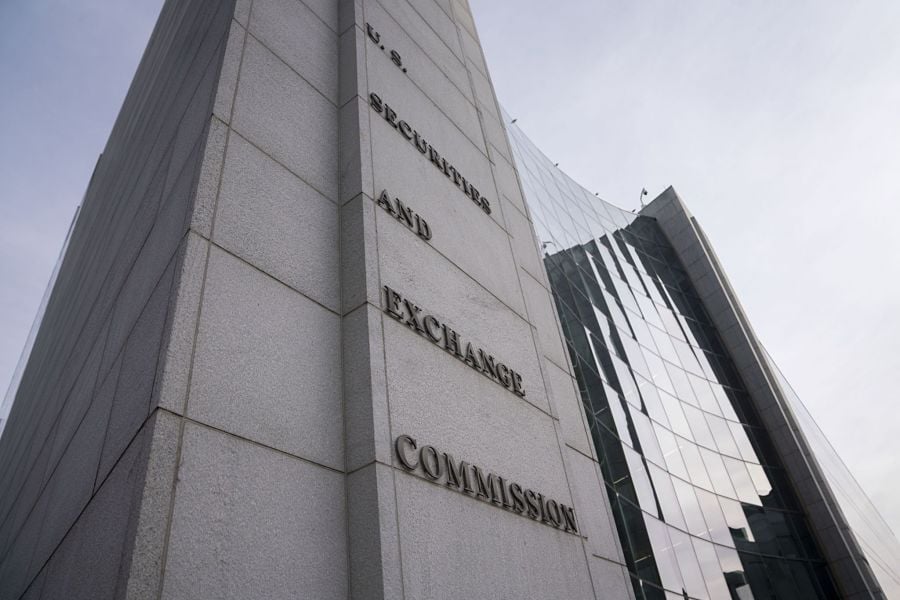
The Securities and Exchange Commission announced fraud charges against Equitable Financial Life Insurance Co. for providing false statements to approximately 1.4 million variable annuity customers.
The SEC order states that that since at least 2016, Equitable had given investors the incorrect impression that their quarterly account statements showed all the fees they had paid during the period. According to the SEC’s findings, the statements actually listed only certain types of fees that investors rarely experienced. The statements tended to list fees of $0.00 when that wasn't truly the case.
The SEC’s order finds that Equitable violated the antifraud provisions of the Securities Act of 1933.
Equitable consented to settle the charges by providing $50 million in compensation to affected investors, most of whom are public school teachers and other employees of public school districts who invest in Equitable’s proprietary Equi-Vest variable annuities within 403(b) or 457(b) defined-contribution retirement plans.
Since 2016, approximately 60% to 65% of Equitable’s annual revenue from Equi-Vest variable annuities originated from investments made by teachers or other employees of K-12 public school districts, according to the SEC order.
"When considering how to invest their hard-earned money and save for retirement, it is essential that investors not be misled about the fees they are paying," Gurbir S. Grewal, director of the SEC’s Division of Enforcement, said in the statement. "This case should serve as an important reminder to investment firms to carefully review their statements to ensure fee information is disclosed properly."
In addition to the $50 million civil penalty, Equitable agreed to cease and desist from committing or causing any future violations without admitting or denying the SEC’s findings. The company also agreed to modify the presentation of its fee information in its variable annuity account statements.
“We didn’t live up to our own high standards and our clients expect more from us. We are committed to learning from this, continuously enhancing our clients’ experience, and always providing clear and transparent communications,” said an Equitable spokesperson.

Chicago-based Mesirow Fiduciary Solutions adds flexPATH's plan-level outsourced fiduciary book, boosting its retirement market reach to $164 billion.

Also, Raymond James's employee advisor channel adds breakaways from Wells Fargo and Stifel, while UBS welcomes an ex-Morgan Stanley duo in Indiana.

It promised guaranteed principal and 10% monthly returns. The SEC says it invested nothing.

Ten years after entering the fee-based annuity market, MassMutual Ascend says nearly half its lifetime sales came in the past two years alone – but barriers remain among fee-only advisors.

Amplify, WealthReach, Zeplyn and Zocks have unveiled partnerships aimed at automating portfolio management, content creation, account opening, and client communication.
Northern Trust’s Ken Lassner shows advisors how to convert volatility into after-tax portfolio gains
Dan Biagini of American Equity says the steady decline of pensions, longer lifespans and a reset in interest rates are rewriting how advisors build retirement income

