
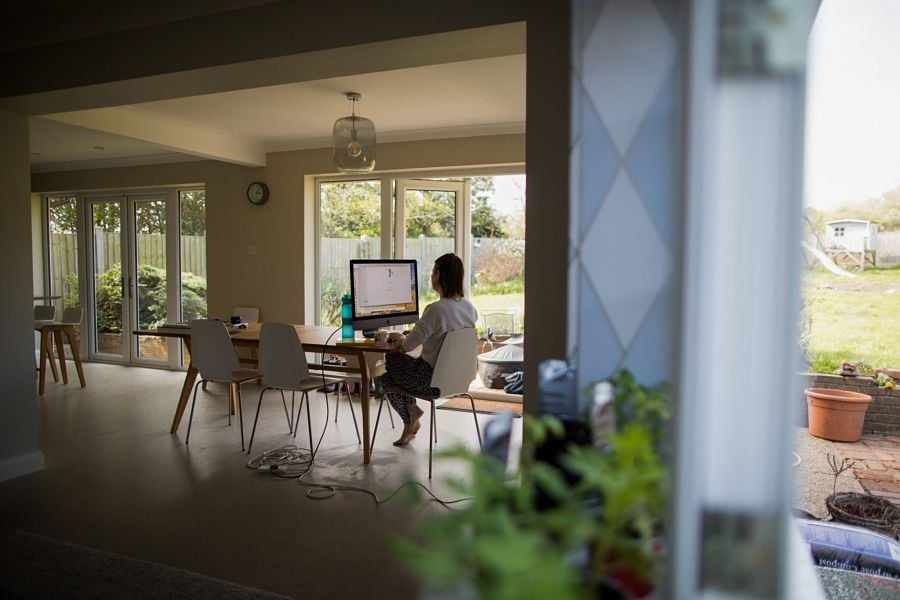
Finra is trying to update its rules to accommodate the work-from-home trend that's impacting its member brokerages, but the SEC wants more input on whether allowing remote supervision could lead to investor harm.
In July, the Financial Industry Regulatory Authority Inc. filed a proposal with the Securities and Exchange Commission that would allow a broker working remotely to supervise other brokers without the broker’s home being designated as a branch office.
The so-called residential supervisory location would be subject to examination by the parent brokerage once every three years instead of the annual inspection that must be performed at an office of supervisory jurisdiction.
The SEC, which must approve Finra rules, put the proposal out for an initial comment period over the summer. The agency heard from firms and industry groups that supported the measure. But it also received letters from the North American Securities Administrators Association, which represents state regulators, and the Public Investors Advocate Bar Association, which both warned that remote supervision would undermine investor protection.
On Monday, the SEC opened another comment period on the proposal that will run for 21 days after the agency's regulatory notice is published in the Federal Register.
It’s unclear whether the SEC will eventually approve the proposal, but it isn’t satisfied that it has collected enough information.
“I would think the SEC wants to be very careful with this, that they’re thinking of all the ramifications,” said Steven Hurwitz, director of compliance consulting in the financial services practice at Kroll.
The residential supervisory location, or RSL, proposal complements a separate proposal that was filed with the SEC to establish a three-year pilot program for remote supervision of branch offices. On Monday, Finra asked the SEC to allow firms to continue doing remote inspections through 2023, an option they’ve had throughout the Covid pandemic.
Finra is “trying to come up with something in the middle” to address the “new reality of work,” Hurwitz said of the RSL proposal. “I think it’s as far as they really can go.”
Among the restrictions on an RSL would be that only one broker can work from there. The broker could not meet with customers or handle securities or customer funds at an RSL. The broker at the RSL also would have to use the parent firm’s electronic communication system.
“Finra believes that home offices can be effectively supervised under this proposal, and the proposed limitations on which locations would qualify to be designated as [a residential supervisory location] provide important safeguards to allow the frequency of inspections potentially to be reduced only for lower risk locations,” Finra said in a letter Monday responding to the RSL comments over the summer.
Finra said that it won't make any changes to the RSL proposal. It might have to be modified, though, if the SEC rejects it.
AdvisorHub first reported on the SEC’s additional comment request.

Elsewhere, Wells Fargo Advisors adds a $400 million Morgan Stanley veteran in Naples as an ex-Cetera advisor goes independent with LPL

According to a federal charges Bradley Heppner, 60, received more than $150 million in payments through funneling money from GWG Holdings to a shell company.

A $1B fund allegedly skimmed 30% off the top, then swapped cash for locked-up stock.

Insiders allegedly rewrote projections three times in four days.

TCI Wealth Advisors also has also tapped JIFFYAI to unify onboarding and servicing, while TradePMR adds ICE market data to its Fusion advisor platform
Knighthead Life entered the market with a competitive MYGA. A strong launch earned advisor confidence and paved the way for FIAs.
As AI makes financial information more accessible than ever, Lana Hock explains why human judgment, trust, and empathy remain the qualities clients value most in a financial advisor

