
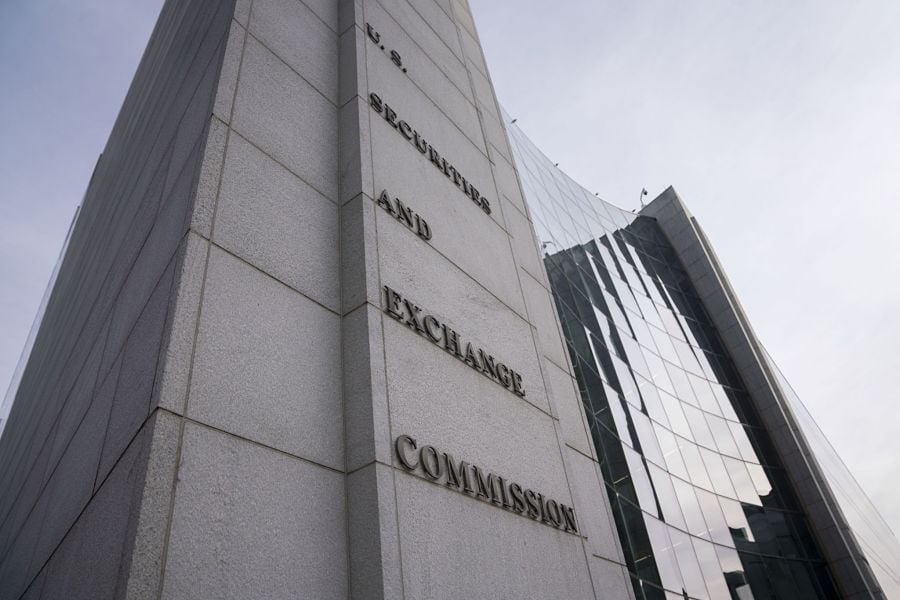
Recent Securities and Exchange Commission examinations of investment advisers, investment companies and funds show shortcomings in how they are pitching, constructing and monitoring investment products and strategies that utilize environmental, social and governance factors.
A risk alert issued Friday by the SEC’s Division of Examinations said the agency found instances of misleading claims as well as inadequate policies, procedures and documentation regarding ESG investing.
The agency said some advisers’ compliance programs and internal controls were not adequate to prevent inaccurate ESG disclosures and marketing and might lead to violations of securities laws.
The SEC asserted some investment advisers were overpromising and underdelivering on ESG, as investor demand for sustainable investing — as well as related products and services — rapidly grows.
“[T]he staff observed a lack of adherence to global ESG frameworks despite claims to the contrary, unsubstantiated claims regarding investment practices (e.g., only investing in companies with 'high employee satisfaction'), and a lack of documentation of ESG investing decisions and issuer engagement efforts,” the alert states. “In addition, the staff observed failures to update marketing materials timely (e.g., an adviser continuing to advertise an ESG investment product or service it no longer offered).”
Among the shortcomings, the SEC found that advisers were not adequately monitoring and updating ESG investments to ensure that they satisfied client preferences.
“[T]he staff observed that advisers did not have adequate controls around implementation and monitoring of clients’ negative screens (e.g., prohibitions on investments in certain industries, such as alcohol, tobacco, or firearms), especially if the directives were ill-defined, vague, or inconsistent,” the alert states. “Nor did advisers have adequate systems to consistently and reasonably track and update clients’ negative screens leading to the risk that prohibited securities could be included in client portfolios.”
The alert also highlighted best practices the SEC has observed regarding ESG investing. It praised firms that made “disclosures that were clear, precise and tailored to firms’ specific approaches to ESG investing and which aligned with the firms’ actual practices” and employed “compliance personnel that are knowledgeable about the firms’ specific ESG-related practices.”
Last week, state regulators also weighed in on ESG investing, when the North American Securities Administrators Association released an investor advisory.
The SEC risk alert is the latest step the agency has taken to emphasize ESG oversight.
Over the last several weeks, the agency has ramped up reviews of corporate climate disclosures, formed an enforcement task force on ESG and climate issues and released a request for public comment on ESG and climate-risk disclosures, among other moves.
The agency’s laser focus on ESG will continue under the Biden administration’s nominee for SEC chairman, Gary Gensler, who is likely to be confirmed by the Senate Monday. In his nomination hearing last month, Gensler indicated support for expanding ESG disclosures.
Even though it’s an independent agency, the SEC is poised to play its part in an administration-wide emphasis on climate policy. Elevating ESG in examinations is part of that effort.
“[L]ack of standardized and precise ESG definitions present certain risks,” the alert states. “The staff will continue to examine firms to evaluate whether they are accurately disclosing their ESG investing approaches and have adopted and implemented policies, procedures, and practices that accord with their ESG-related disclosures.”
Bloomberg News contributed to this story.

Federal prosecutors say the scheme used fake investment accounts and a fictitious financial advisor to lure victims into romance-fueled fraud.

Morgan Stanley sought to claw back recruiting bonus money from Darryl Cohen.

Referrals from centers of influence may open the door, but the real key to success for advisors comes from clarity about their ideal clients and where they want to show up.

Three advisor groups overseeing more than $700M in combined client assets head to new firms.

New research finds most Americans fear a US retirement crisis, while skepticism grows toward AI financial advice and crypto in retirement plans.
Northern Trust’s Ken Lassner shows advisors how to convert volatility into after-tax portfolio gains
Dan Biagini of American Equity says the steady decline of pensions, longer lifespans and a reset in interest rates are rewriting how advisors build retirement income

