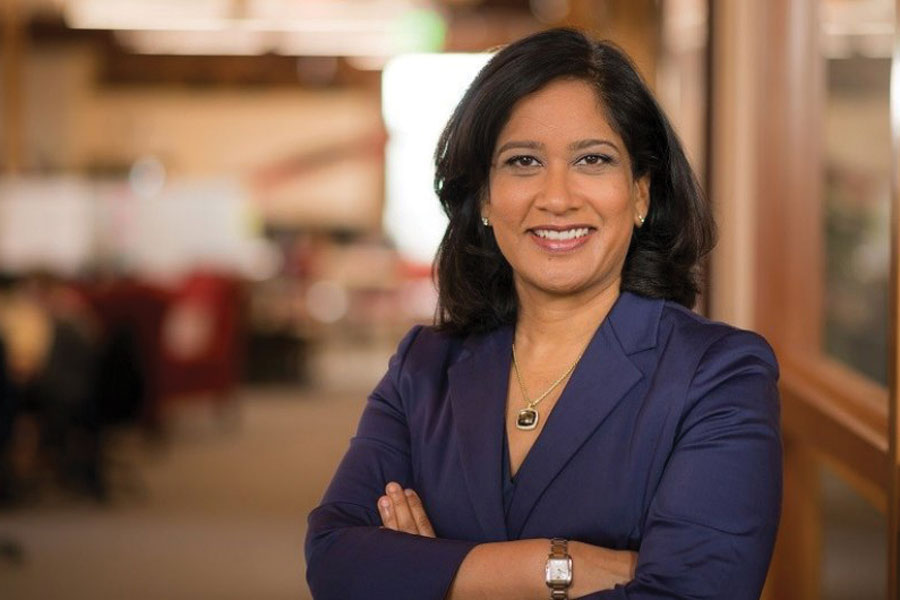
Over the past few weeks, Morgan Stanley has been busy publicizing its new suite of integrated wealth management technology.
Andy Saperstein, co-head of wealth management at Morgan Stanley,
showcased the firm's account aggregation capabilities in May, which aim to help brokers gain access to client assets held outside of the firm. Last week, the focus was on
new tools for digital account opening, risk analytics, artificial intelligence and
financial planning to help reps pivot from the brokerage model to comprehensive wealth management.
It's the culmination of a serious investment by Morgan Stanley (which would not provide a specific dollar amount) to bring its technology system up to date and into a leadership position in the industry. One of the executives at the helm is chief digital officer Naureen Hassan, who
joined Morgan Stanley in January 2016 after helping Charles Schwab & Co. Inc. launch its retail robo-adviser.
What's the latest with Morgan Stanley's technology strategy?
InvestmentNews spoke with Ms. Hassan about integration, aggregation and retaining brokers.
Ryan W. Neal: Where was Morgan Stanley with technology when you came on board, verses now?
Naureen Hassan: Our tech portfolio over the last couple of years has been a mix. There are areas where we are clearly in a leadership position, and I would highlight our Next Best Action platform as one of those,
bringing the power of AI to our advisers, along with the distributed marketing capability that we partnered with Salesforce on.
[More: Naureen Hassan brings deep tech expertise to guide UBS digital shift]
There are clearly areas where we were playing catch-up, and we have. Like opening an account online … we didn't have that two years ago, and we do now.
RN: Integration is a big talking point in the industry. What makes the technology you're building more attractive than an integrated system at someone like Envestnet or one of the custodians?
NH: What we see as distinctive is that breadth of capabilities. The machine learning, the artificial intelligence, the
risk management analytics with Aladdin, our digital servicing capabilities. Our goals planning system gets the data from asset aggregation, and that feeds into Aladdin. All of this needs to work together.
We were open-minded when we started this and looked to see if there was something we could buy off the shelves, because obviously that would be faster and cheaper. There wasn't anything.
RN: One area of focus is aggregation and helping brokers gain a bigger share of clients' wallets by bringing in outside assets. But why would clients want to do this?
NH: I think it comes down to that goals-based and financial planning relationship that a client has with their adviser. Your adviser should be your partner in meeting your financial goals. In order to do that effectively they need to know all of the assets you have in order to meet your goals. Asset aggregation isn't an end in itself, it's a way to help clients meet their financial goals through our platform.
Let me give you the example of myself. My financial adviser believes one of the most important things is how you manage your cash flow and your spending and your budget. Before we had our integrated asset aggregation capabilities, I used to have to download information on outside accounts into a spreadsheet and securely figure out how to get that over to my financial adviser, who would then key all of that info in to create a cash-flow and budgeting statement for me. That was a complete waste. Now, it's all linked so the feed from Yodlee — all of my transactions, how much I'm paying my nanny, utility bills and all that — automatically goes to my financial adviser's desktop. This fall, we're launching cash-flow and budgeting capabilities so he can create a cash-flow statement for me and I can see that online. It was a pretty easy sell to me.
RN: In light of Morgan Stanley exiting the broker protocol, how important is technology in both attracting new advisers and retaining current ones?
NH: I think a technology platform that makes it easy and robust for financial advisers to serve and support their clients is a critical component of our business model more broadly. I think it has always been that way and will continue to be that way.
RN: How much of the tech is designed to encourage Morgan Stanley reps to move away from the brokerage model in favor of the new digital financial planning?
NH: We are a firm believer in a goals-based relationship and conversations with our clients. That doesn't exclude the portfolio — the portfolio is still an important component. It's necessary but not sufficient. It has to be toward an end goal of not how am I beating a benchmark, but how am I meeting my financial goals. The [goals planning system] clearly supports the planning part of it. The Aladdin component supports the
portfolio management, the risk analysis; that's part of that holistic wealth management.
What's driving this is our advisers and their clients, and what clients want from their relationship with the financial adviser — particularly if you look at our client base, who is far more sophisticated and wealthier. They have the complexities of a house, children, taxes,
trust and
estate planning.