
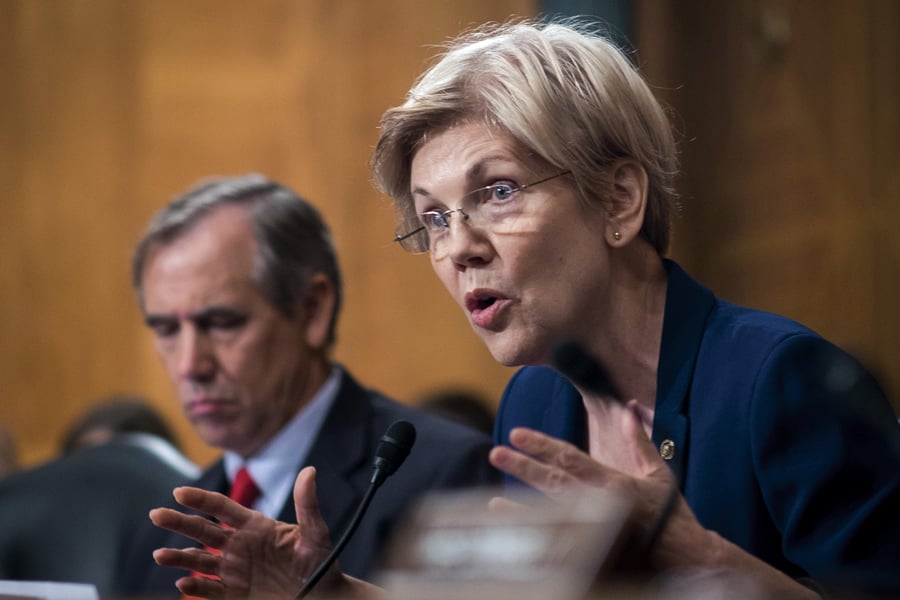
Sen. Elizabeth Warren, D-Mass., pressed Finra on Thursday to review whether Robinhood’s use of mandatory arbitration to settle customer disputes is hurting investors who suffered due to the platform’s trading restrictions put on some shorted stocks.
In a letter to Financial Industry Regulatory Authority Inc. chief executive Robert W. Cook, Warren urged the broker-dealer self-regulator to assess whether Robinhood’s practices related to the recent market volatility surrounding shares of GameStop and other stocks that experienced a frenzied price surge complied with the organization’s rules.
Warren expressed concern that Robinhood’s use of forced arbitration clauses in customer agreements — a practice that is common across the industry — curbs investors’ ability to obtain relief in court.
Complaints by Robinhood investors are adjudicated in an arbitration system run by Finra. Warren asserted that “secretive arbitration processes” deny customers a fair hearing and undermine public accountability.
“Investors harmed by Robinhood’s trading restrictions should be able to argue their case in court, rather than in closed-door proceedings that are too often rigged against claimants,” wrote Warren, a member of the Senate Banking and Finance committees. “In order to better understand how Robinhood has potentially abused forced arbitration as a way to stifle consumer complaints, Finra must examine the company’s use of these practices in detail.”
Robinhood has been under pressure from lawmakers ever since the trading gyrations surrounding GameStop and other shorted shares began in January. The firm’s chief executive, Vladimir Tenev, testified Thursday afternoon at a hearing of the House Financial Services Committee.
Tenev defended mandatory arbitration in his appearance before the House panel. “We do believe arbitration gives customers a fair and speedier resolution to their claims,” said Tenev, comparing arbitration to court proceedings.
In addition to probing Robinhood’s use of arbitration, Finra should conduct a broader assessment of how arbitration is working, Warren said.
“In reviewing how forced arbitration clauses may have been used to hurt investors, Finra must also review its own arbitration practices and provide the public with information and data on arbitration outcomes, arbitration awards, the demographics of arbitrators and whether wronged investors actually receive their arbitration awards,” Warren wrote.
A Finra spokesperson said the regulator is reviewing the letter and will respond.
Earlier this month, Warren sent a letter to Robinhood asking the firm to explain how it reacted to the market volatility. One of the areas she highlighted was forced arbitration.
In a Feb. 12 letter responding to Warren, a Robinhood official said the firm’s pre-dispute arbitration agreements comply with Finra rules and that 24 arbitrations against the platform were pending as of Feb. 11.
Robinhood is “open to reviewing its use of arbitration and will continue to be guided by what is in its customers’ best interests with respect to resolving customer complaints,” wrote Lucas Moskowtiz, deputy general counsel and head of government affairs for Robinhood Markets Inc.
Recently, a Finra arbitration panel denied a Robinhood customer’s claim that the firm did not process her cancellation of purchases of Kodak stock shares.

Halbert Hargrove senior wealth advisor weighs in on the products' guaranteed income upside, the operational drag and his wish list for carriers.

With 8.6% of advisors set to switch firms in 2026, Cerulli says advisor recruitment hinges on technology, branding and HNW support.

“I’m seeing more disputes like this between advisors and other advisors at the same practice,” said one industry executive.

Longer retirements and steady inflation could drain retiree portfolios before heirs inherit, with 4% net returns running dry by year 34.

A single fintech partner triggered a $68.8M credit hit.
As AI makes financial information more accessible than ever, Lana Hock explains why human judgment, trust, and empathy remain the qualities clients value most in a financial advisor
Northern Trust’s Ken Lassner shows advisors how to convert volatility into after-tax portfolio gains

