
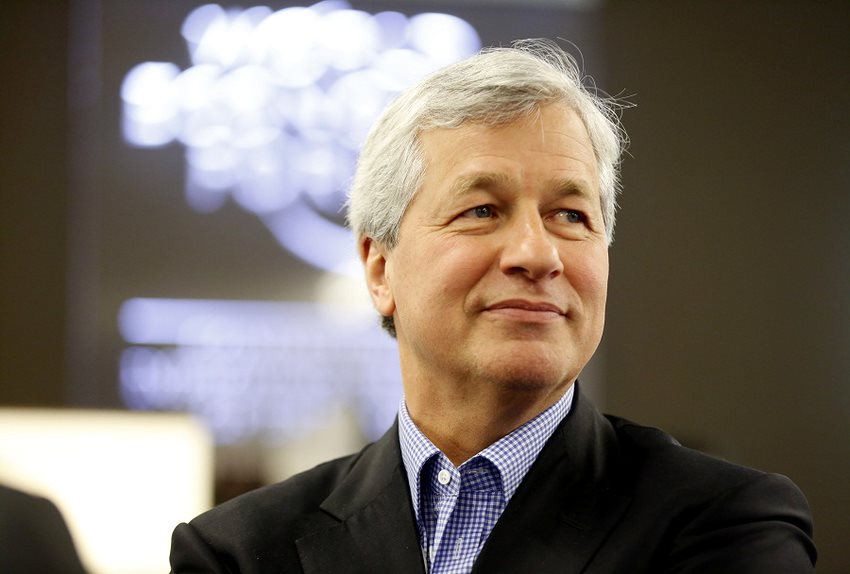
Jamie Dimon, the chief executive of JPMorgan Chase & Co., said Wednesday that the largest U.S. bank by assets could deploy between $10 billion and $20 billion on an acquisition within the next few years.
Speaking at the Bernstein Strategic Decisions Conference in New York, Dimon said the conditions may be ripening for a significant deal.
"I do think there might be opportunities, and so we are on the lookout," he told analysts, as per CNBC. "There might be, in the next couple years, a chance to put $10 [billion] or $20 billion to work buying something."
A transaction at the upper end of that range would be the single largest deal of Dimon's 20-year tenure leading the New York-based bank — and would test the appetite of U.S. regulators for further consolidation among the country's systemically important financial institutions.
Dimon was careful to frame any potential deal as an opportunistic move rather than a sign that JPMorgan's core growth engine is sputtering. In remarks that drew chuckles from the room, he was openly skeptical of executives who reach for dealmaking as a substitute for fundamentals.
"You sit around a lot of management meetings, the first thing they do when they're not doing well in organic growth is they start to bulls**t about [M&A]," Dimon said. "I don't want to hear about M&A. What are you doing to grow your business – sales, branches, tech, profits, products, services?"
Any target, he said, would need to slot cleanly into JPMorgan's existing structure, reflect the bank's culture, and strengthen its core business lines rather than operate as a freestanding unit.
"It can't be just a pie-in-the-sky type of thing," Dimon said.
JPMorgan's most consequential acquisitions under Dimon have largely been forged in moments of market stress rather than periods of calm. The bank acquired Bear Stearns and the retail banking operations of Washington Mutual during the 2008 financial crisis, both transactions facilitated by U.S. regulators.
Then there was JPMorgan's 2023 takeover of First Republic Bank – whose implosion marked the largest U.S. bank failure since Washington Mutual – in a Federal Deposit Insurance Corp.-assisted deal, paying $10.6 billion to the FDIC to complete the transaction.
Outside of those government-brokered deals, the bank's M&A record in calmer times has been more measured. JPMorgan pursued a string of smaller fintech acquisitions in recent years but pulled back significantly after its $175 million purchase of Frank, a college financial aid startup, in 2021. It later came to light that the venture was built on fraudulent data, and its CEO was convicted last year following a six-week trial.
In his April letter to shareholders, Dimon laid out several forces he believes will support the bank and the U.S. economy through the rest of this year.
He cited the fiscal stimulus expected from the One Big Beautiful Bill, which JPMorgan economists estimate will inject approximately $300 billion – effectively 1% of GDP – into the economy. He also noted the positive effects of deregulatory policy, arguing that loosened bank capital requirements will free up lending capacity and has already begun to improve confidence.
JPMorgan reported first-quarter 2026 net income of $16.5 billion and record markets revenue of $11.6 billion, according to the company's earnings release. That kind of profitability gives Dimon what he himself described as flexibility – excess capital that could, under the right circumstances, be redirected toward a deal.
Yet even as Dimon floated the possibility of a landmark deal, his broader public commentary this year has been marked by pointed caution. Among several "tectonic plates" in his shareholder letter, Dimon flagged concern about elevated asset prices across equity and credit markets, warning that high valuations leave little room for error.
He singled out the $1.8 trillion private credit market – which now rivals the $1.5 trillion U.S. high yield bond market in scale – as a potential source of stress in the next credit cycle, particularly given what he described as loosening credit standards, weaker loan covenants, and limited transparency in asset valuations.
He was also candid about the limits of economic modeling. He noted that JPMorgan stress-tests its balance sheet against severe recession scenarios – including a 40% stock market decline and credit losses doubling, in which case the bank would maintain a return on tangible common equity of approximately 10%.
"We are very disciplined in using both actual historical scenarios and very detailed economic models, but we know they do not and cannot accurately predict the future," he said.
On the economy, he pointed to the potential "skunk at the party" from inflation slowly going up this year, which could in a worst-case scenario combine with recessionary conditions to create stagflation.
"[Inflation] could cause interest rates to rise and asset prices to drop. ... And falling asset prices at one point can change sentiment rapidly and cause a flight to cash," he said.

New Allspring research finds 401(k) participants want guidance on income and rollovers, not just portfolio automation.

Aging homeowners hold record housing wealth - but most advisors still aren't bringing it into retirement plans

$1.7M invested from an inheritance. Then the phone went dead.

The pre-IPO platform sold $430M in units while allegedly rigging prices behind the scenes.

A Nationwide survey finds 47% of GLP-1 users have never discussed the drugs’ financial impact with an advisor, even as many dip into savings.
Knighthead Life entered the market with a competitive MYGA. A strong launch earned advisor confidence and paved the way for FIAs.
As AI makes financial information more accessible than ever, Lana Hock explains why human judgment, trust, and empathy remain the qualities clients value most in a financial advisor

