
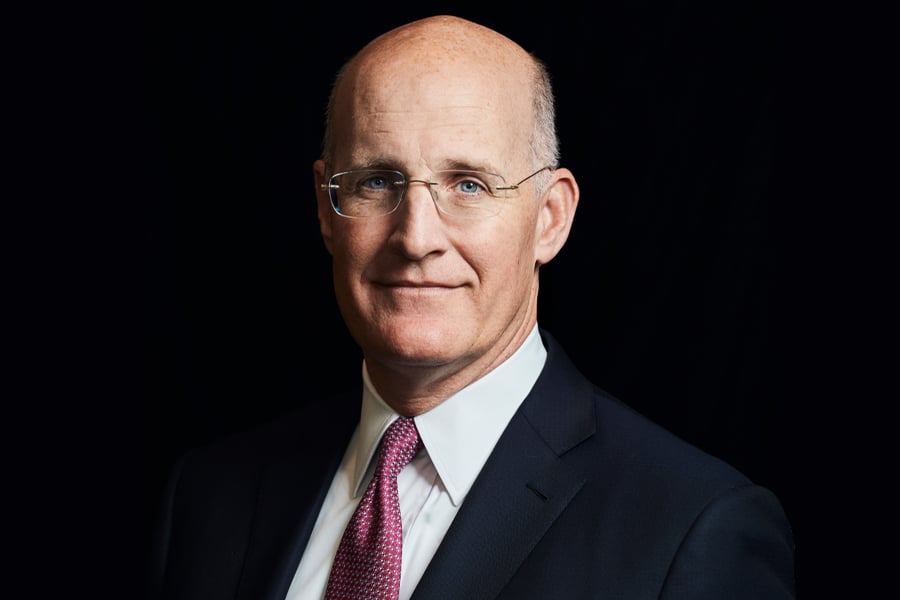
Merrill Lynch Wealth Management president Andy Sieg sees opportunities in the current choppy market and said that financial advisers and their clients need to look forward, rather than get stuck gazing in the rearview mirror at 2022, which saw the S&P 500 skid into bear market territory with a decline of 20.6%.
“I wouldn’t say I've been surprised by the [recent] rebound in the markets," Sieg said Wednesday morning in an interview on business news channel CNBC. "We felt that the sentiment was incredibly bearish a couple months ago. Markets have been sold off."
"We’re very balanced in our view right now, as clients are coming to us with cash we’re suggesting that they step into the market and dollar-cost-average in," Sieg said. "That’s just good, strong, solid advice. But what we’re also doing is trying to help people pivot and think about where you want to have money invested in 2023, 2024 and 2025."
"Now is the time, as we come into the fall, to think about the opportunities ahead of us," he said, listing health care, energy and strong areas of technology as potential sectors for investors to consider. "This is where investors want to be putting cash to work."
Meanwhile, advisers' discussions with clients about long-term financial goals have increased substantially during the up and down market of the past year, Sieg said.
“Financial planning meetings and conversations we had with clients, which we track, were up 60% year-over-year," he said. "And in those meetings, what we find our advisers doing more often than not is helping clients stay anchored to asset allocation."
The global wealth and investment management operations at Bank of America Corp., the parent of Merrill Lynch, recently reported client balances of $3.4 trillion as of the end of June. The bank reported a total of about 18,500 registered reps and financial advisers across its various wealth and advice business channels.

A Nationwide survey finds 47% of GLP-1 users have never discussed the drugs’ financial impact with an advisor, even as many dip into savings.

The hundreds of millions of dollars from a sale of Inspired Healthcare properties does not mean an immediate windfall for investors.

Its SEC filings said one thing - a congressional probe said another.

Sham agreements allegedly padded revenue by 345%.

"Most pre-retirees are uncomfortable making key retirement income decisions without an advisor's help," said Chris Bailey of Cerulli.
Knighthead Life entered the market with a competitive MYGA. A strong launch earned advisor confidence and paved the way for FIAs.
As AI makes financial information more accessible than ever, Lana Hock explains why human judgment, trust, and empathy remain the qualities clients value most in a financial advisor

