
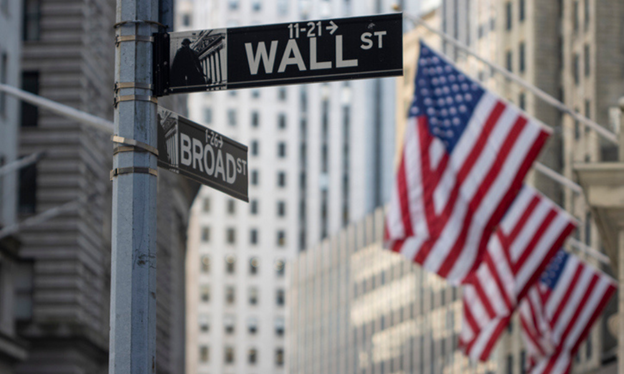
A new wave of US banking consolidation is building that analysts say could fundamentally alter the competitive terrain for wealth management firms and financial advisors.
It could mean the number of trillion-dollar institutions almost doubling by the end of the decade, while smaller banks will be under pressure and may not survive the shifting landscape.
The research published this week by Bain & Company projects that between five and seven US commercial banks will surpass $1 trillion in assets by 2030, up from the current four (JPMorgan Chase, Bank of America, Citigroup, and Wells Fargo).
But that expansion will come at the expense of regional and community banks, which Bain forecasts will shrink substantially in number, with large regional institutions (those holding $50 billion to $1 trillion in assets) declining from 49 to as few as 30, and community banks contracting from roughly 4,200 to between 3,600 and 3,800.
Fewer but larger banking institutions typically means shifts in lending relationships, custodial offerings, and the competitive dynamics between bank-affiliated and independent advisory channels.
Three forces are converging to accelerate deal activity over the next two to three years, according to Bain.
First, a significant capital overhang has accumulated across the banking sector: as of June 30, 2026, 17 US banks each held more than $10 billion in excess capital, with seven individually sitting on more than $20 billion beyond regulatory requirements, based on S&P Capital IQ data cited in the report.
Second, the regulatory environment has turned markedly more permissive. Under the current administration, deal approvals have accelerated, antitrust scrutiny has eased for transactions below $250 billion in assets, and capital requirements have moderated, conditions Bain expects to persist for the next two to three years.
Third, artificial intelligence is increasingly driving M&A logic. Banks are pursuing consolidation not merely to gain scale, but to acquire digital infrastructure, cloud capabilities, and embedded finance platforms, technologies that wealth managers and advisors depend on for client-facing tools and back-office efficiency.
Announced deal value in US commercial banking rose 7% year-over-year in the first half of 2026, according to Refinitiv data cited by Bain, compared to 19% growth in 2025. The firm characterizes the current pace as a temporary pause ahead of a reacceleration it expects through 2028 and 2029.
Bain's research, authored by Joe Lischwe, Dirk Vater, Joe Fielding, and Phil Anselmino, argues that banks relying on traditional M&A screening focused primarily on size and geographic overlap, will systematically overlook the most strategically valuable acquisition candidates.
The firm backtested a more rigorous two-stage framework against nine of the largest and most strategic North American bank deals completed in recent years.
In eight of the nine cases, the eventual target ranked near the top of Bain's screening list of more than 1,000 banking assets — using only data available before each deal was announced.
The first stage evaluates targets across six dimensions: financial scale and returns, business mix and diversification, quality of funding and liquidity, geographic density, product and capability depth, and technological and AI readiness.
The second stage then applies four lenses (strategic fit, standalone attractiveness, value creation potential, and actionability) to filter candidates down to those that can realistically close and create measurable value.
Santander's $12.2 billion acquisition of Webster Financial, announced in February 2026, illustrates both the opportunity and the risk of conventional analysis. Standard screening might have flagged deposit-base cannibalization as a barrier, yet the deal delivered competitive density gains and valuable specialty capabilities, including health savings account administration; the kind of niche product synergy that wealth-focused advisors tracking institutional moves should note.
Bain's report flags a fast-developing dynamic with banks that have historically been reluctant to pursue fintech acquisitions being urged to reconsider.
The firm warns that "the most dangerous bidder for a regional bank's capabilities may not be another bank," as fintech firms increasingly move to acquire banking infrastructure of their own.
Capital One's $5.15 billion acquisition of AI-native software platform Brex, completed in April 2026, is cited as a model for how banks can acquire scope capabilities beyond traditional balance-sheet targets.
Meanwhile, SmartBiz completed the purchase of Centrust Bank in March 2025, and Enova announced its acquisition of Grasshopper Bank in December 2025; moves that signal fintechs are as eager to enter banking as banks are to acquire technology.
Bain's analysis of US banking deals over the past two years found that transactions combining scale with scope, bringing in new capabilities alongside expanded market share, delivered 14 to 18 percentage points higher total shareholder returns compared to scale-only deals or remaining independent.
Bain projects the consolidation wave will be most pronounced between 2028 and 2029, giving advisors and their firms a window to assess which banking relationships and platform dependencies to prioritize — and which to diversify away from — before the landscape narrows.

A Nationwide survey finds 47% of GLP-1 users have never discussed the drugs’ financial impact with an advisor, even as many dip into savings.

The hundreds of millions of dollars from a sale of Inspired Healthcare properties does not mean an immediate windfall for investors.

Its SEC filings said one thing - a congressional probe said another.

Sham agreements allegedly padded revenue by 345%.

"Most pre-retirees are uncomfortable making key retirement income decisions without an advisor's help," said Chris Bailey of Cerulli.
Knighthead Life entered the market with a competitive MYGA. A strong launch earned advisor confidence and paved the way for FIAs.
As AI makes financial information more accessible than ever, Lana Hock explains why human judgment, trust, and empathy remain the qualities clients value most in a financial advisor

