
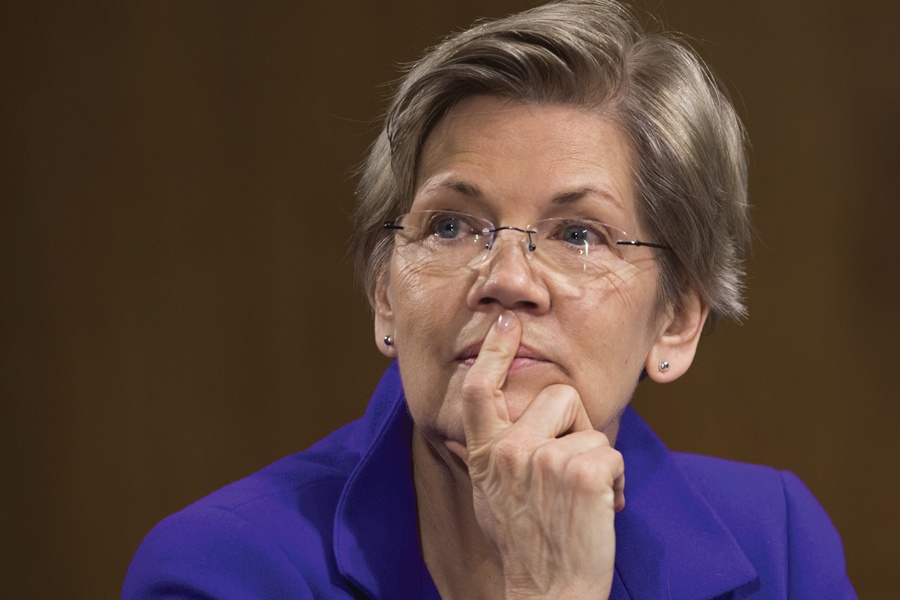
Sen. Elizabeth Warren urged the Federal Reserve to force Wells Fargo & Co. to separate its traditional banking and Wall Street businesses, after the lender was handed fresh regulatory action and a $250 million fine this month.
In a letter to Federal Reserve Chair Jerome Powell, Warren called on the Fed to revoke Wells Fargo’s status as a financial holding company in order to effect a separation. The Fed should order the company to develop a plan to ensure its customers are protected through the transition, the Massachusetts Democrat said.
“Every single day that Wells Fargo continues to maintain these depository accounts is a day that millions of customers remain at risk of additional negligence and willful fraud,” Warren wrote. “The only way these consumers and their bank accounts can be kept safe is through another institution—one whose business model is not dependent on swindling customers for every last penny they can get. The Fed has the power to put consumers first, and it must use it.”
The New York Times earlier reported the contents of the letter. A representative for the Fed confirmed it received the letter and said it planned to respond.
Wells Fargo was fined this month over its lack of progress addressing long-standing problems, the first such sanction under Chief Executive Charlie Scharf. The penalty adds to the more than $5 billion in fines and legal settlements the bank paid over the last five years tied to a series of scandals that began with fake accounts in its branch network.
The latest order, from the Office of the Comptroller of the Currency, cited deficiencies in Wells Fargo’s home-lending loss mitigation practices -- the steps firms take to avoid foreclosure -- that have prevented the bank from being able to “fully and timely remediate harmed customers.”
“Meeting our own expectations for risk management and controls — as well as our regulators’ — remains Wells Fargo’s top priority,” the bank said Tuesday in a statement. “We are a different bank today than we were five years ago because we’ve made significant progress.”
Warren cited the Bank Holding Company Act, which requires that banks are well capitalized and well managed. If a financial holding company falls short of these, the Fed is required to give a notice for the institution to correct its deficiencies. Should the bank fail to remedy those within 180 days, the Fed can ask the company to divest control of any subsidiary depository institution — or the bank can choose to cease to engage in activity that isn’t permissible for a bank holding company.
“This new incident raises fresh questions about whether the company can meet the needs of its customers,” Warren said.

A Nationwide survey finds 47% of GLP-1 users have never discussed the drugs’ financial impact with an advisor, even as many dip into savings.

The hundreds of millions of dollars from a sale of Inspired Healthcare properties does not mean an immediate windfall for investors.

Its SEC filings said one thing - a congressional probe said another.

Sham agreements allegedly padded revenue by 345%.

"Most pre-retirees are uncomfortable making key retirement income decisions without an advisor's help," said Chris Bailey of Cerulli.
Knighthead Life entered the market with a competitive MYGA. A strong launch earned advisor confidence and paved the way for FIAs.
As AI makes financial information more accessible than ever, Lana Hock explains why human judgment, trust, and empathy remain the qualities clients value most in a financial advisor

