
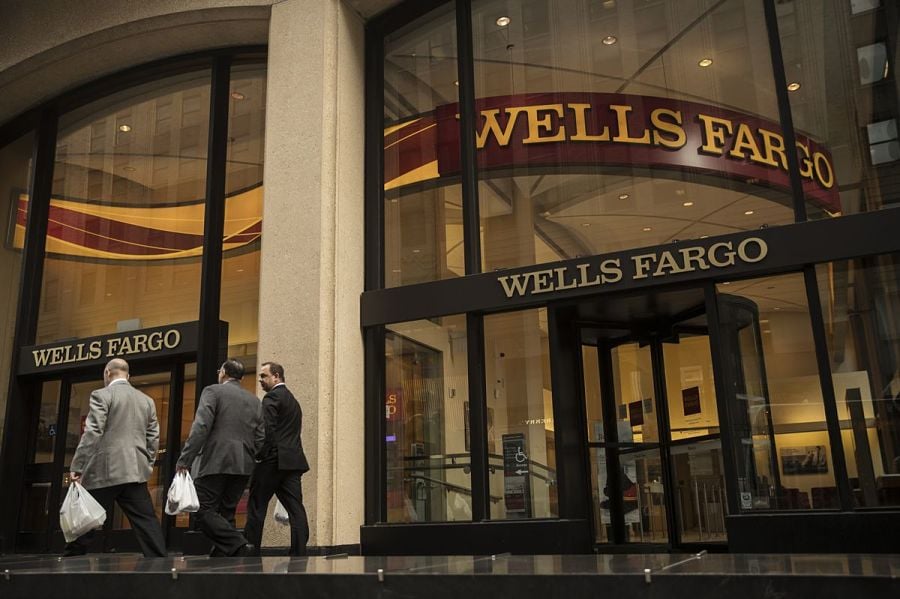
Wells Fargo & Co.'s first-quarter earnings, released Tuesday morning, showed weakness across the board in its wealth and investment management group, which includes Wells Fargo Advisors, with drops in total assets, advisory assets and net interest income when compared to the same quarter in 2019.
Such declines have been widely expected, as the giant brokerage with 13,450 registered reps and financial advisers, along with the rest of the wealth management industry, comes to terms with the impact of the first quarter's sharp decline in stocks as the broad economy grapples with effects of COVID-19.
"We are seeing the start of firms becoming defensive as they do staffing hiring freezes, cut backs on recruiting transition money, and implement product restrictions on investments they perceive having large downside risk going forward, such as real estate investments that are leveraged or illiquid," said Jon Henschen, an industry recruiter.
"We see this trend accelerating at a pace that will match market conditions," he added. "So, hypothetically, if the [Dow Jones Industrial Average] goes down to say 15,000, we would see major cost cutting and layoffs, while if it retreats from current levels to around 20,000, we don't see much change from the current trend."
The Dow early Tuesday afternoon was trading close to 24,000, up 2.4% for the day. For 2020, the Dow is down about 17% through early Tuesday afternoon.
Wells Fargo's wealth and investment management business saw year-over-year declines in total assets to $1.6 trillion, a drop of 12%, and advisory assets in retail brokerage of $499 billion, a drop of 9% when compared to the end of March 2019. In a presentation, the company pointed to lower market valuations and net outflows in its clearing business for other broker-dealers as the drivers for the declines.
Meanwhile, the wealth and investment management group at Wells Fargo also reported a year-over-year drop at the end of March in net interest income of 21% to $867 million for the quarter, primarily due to the lower interest rate environment, but partially offset by higher deposit balances, according to the company.
And advisers will be watching how their firms respond in the coming months, said Jodie Papike, president of Cross-Search, a recruiting firm.
"Advisers will be looking at how well capitalized their broker-dealer is and how well can it support him or her through this difficult time," Papike said. "That’s repeating history. We saw the same thing in 2008 and 2009. Advisers wanted to know if their firms were stable and what was the plan to support their businesses."

Salespeople at the firm often went beyond the matching algorithm to recommend network advisors on its Zoe Wealth platform, according to the regulator.

The Protect College Sports Act would cap school payments and codify NIL rights, with implications for advisors guiding young athletes.

"I know the number that I want to be able to retire on, and now I just want out," says Wilmington Trust's Marguerite Weese, describing a common refrain among business-owner clients.

Bessemer and Brown Brothers Harriman veteran Robert Ludricks III and private markets specialist Olof Akesson join the ultra-high-net-worth push on the East Coast.

765 investors were promised 260% annual returns on truck leases
As AI makes financial information more accessible than ever, Lana Hock explains why human judgment, trust, and empathy remain the qualities clients value most in a financial advisor
Northern Trust’s Ken Lassner shows advisors how to convert volatility into after-tax portfolio gains

