
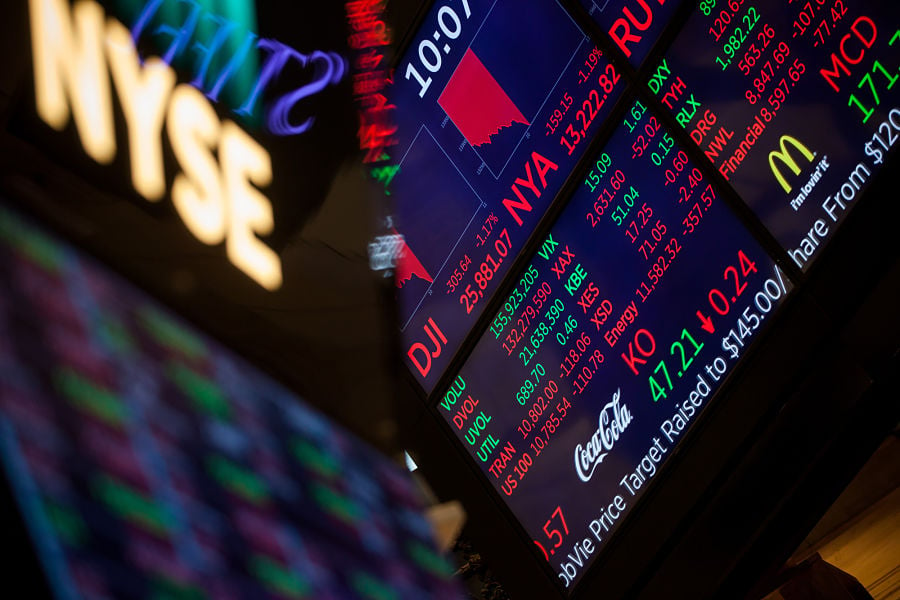
With the fast-spreading COVID-19 virus still gaining momentum across the globe, nobody is yet predicting a near-term end to the economic and stock market carnage. There are signs of hope, however, if financial advisers start realizing stocks are too cheap to ignore.
“Large-cap growth stocks are off 30% from their highs, and large-value is off 35%; it’s really difficult not to buy at these levels,” said Kevin Donohue, partner at Legacy Planning.
Mr. Donohue said he started moving client assets from fixed income to equities when the market decline reached 22%.
“We’re taking a portion of fixed income, the safest stuff that has done the best, and layering it into some of the areas that have gotten crushed,” he said.
For perspective, Mr. Donohue cited the 2008 financial crisis when four of his “most sophisticated and well-read clients wanted to go to cash the week before the market bottomed.”
“We’re not going to get the timing right, but we know the day the bottom comes people are going to feel terrible and not want to do anything,” he added.
Blair duQuesnay, investment adviser representative at Ritholtz Wealth Management, is also promoting the “huge advantage for long-term investors.”
“If you have a target allocation, you’re probably out of balance, so take some cash off the sidelines and rebalance,” she said. “You don’t have to call the bottom of the market, but when it feels this scary it’s probably a good time to invest.”
Andy Panko, owner of Tenon Financial, is putting his money where his mouth is by loading up on equities and fully funding his own retirement account at these market levels.
“When things were down 20%, I got excited, when they got down by 30% from the peak yesterday I invested the full $6,000 limit into my IRA,” he said. “I also just moved another slug of cash into a brokerage account waiting to invest at the next big downturn.”
Recovery efforts
The general mood of advisers moving into stocks at the most dismal of times is borne out of experience and context.
Even though the S&P 500 Index has lost everything it gained over the last three years, it is still coming off an historic 11-year bull market that has illustrated the resilience and upward bias of the stock market.
“It’s fair to assume we could still drop a decent way from here,” Mr. Panko said. “The markets lost more than 50% in the ’08-’09 correction, and the more this plays out, there will be real long-term economic consequences for some businesses. But, I do think once the virus is under control and people start coming out of their houses again, the economy will come steaming back.”
Mike Caligiuri, founder of Caligiuri Financial, is not only buying because things are cheap, he’s also buying to position client portfolios for the potential longer-term fallout of the economic recovery efforts.
“I’m telling clients to buy into assets that will protect them against inflation, which means stocks and precious metals,” he said. “The Fed is printing money and we’re at a point of lunacy, because it means more loans, which will lead to significant inflation of consumer goods and housing.”
Paul Schatz, president of Heritage Capital, said until the markets finally settle down the extreme “panic days” will likely continue.
But the turmoil also represents “golden opportunities,” he added. “When we look back on this, we will see there wasn’t a single amazing moment to buy. There will be rolling opportunities for weeks to come.”

LPL Financial and Raymond James also add independent advisors from Osaic and Edward Jones in Michigan and Arizona.

The SEC-registered RIA advises on more than $1 billion in client assets, with no advisory fee through 2027 and no human financial advisors.

The four wirehouse firms lost 1,449 experienced advisors and recruited 932 in the first six months of the year, according to Diamond Consultants.

Merit's 10th Commonwealth addition deepens its Western New York reach, while another Hightower partner joins its Signature Wealth platform in Michigan.

Report on Climate Action 100+ signals risk for passive managers' 13G status heading into the 2027 proxy season.
Knighthead Life entered the market with a competitive MYGA. A strong launch earned advisor confidence and paved the way for FIAs.
As AI makes financial information more accessible than ever, Lana Hock explains why human judgment, trust, and empathy remain the qualities clients value most in a financial advisor

