
BlackRock’s third-quarter earnings beat Wall Street forecasts on Wednesday, as an AI-driven stock rally kept money flowing into the world’s largest asset manager even as a new Federal Reserve tightening cycle and a rout in long-dated Treasuries cloud the final stretch of the year.
The New York-based firm reported adjusted earnings of $15.93 a share for the quarter ended Sept. 30. Analysts had expected $14.13, according to LSEG data cited by Reuters. The result was up 38% from $11.55 a year earlier, and revenue rose 19% to $7.75 billion.
Clients added a net $205 billion, and assets under management reached $15.49 trillion, up from $13.46 trillion a year earlier. Shares rose 5% in premarket trading.
BlackRock’s iShares exchange-traded fund business gathered $135 billion in the third quarter, bringing year-to-date net inflows to $444 billion – a record, according to the company.
Precision ETFs, the firm’s in-house label for funds that target specific sectors, regions and themes, accounted for $41 billion of the quarter’s net inflows, which could be attributed to AI-linked exposures, including semiconductors and Asian equities.
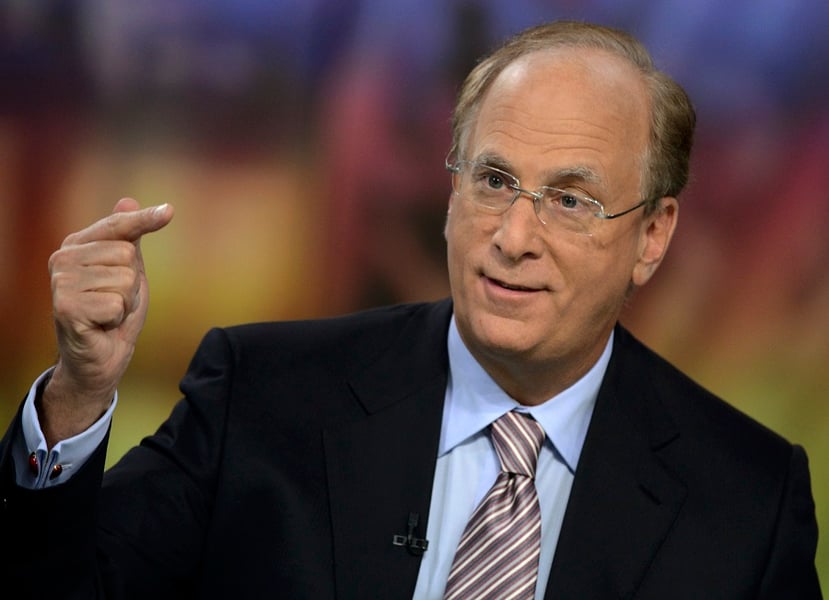
Chairman and CEO Larry Fink tied the market’s strength to the technology cycle. “Market fundamentals are strong and well supported, with higher margins and earnings momentum catalyzed by new technology,” he said in a statement cited by Reuters.
The AI theme also ran through BlackRock’s private markets business. “We’ve raised $68 billion in private markets over the last twelve months, and our AI Infrastructure Partnership made its first deployment this quarter,” Fink said in the company's earnings release.
Movements in equities also lifted asset values. Market gains added roughly $40 billion to BlackRock’s equity assets in the quarter, and technology services and subscription revenue, which includes the firm's flagship Aladdin platform, rose 14% from a year earlier to $588 million.
The results come four weeks after the Fed raised its benchmark rate a quarter point to a range of 3.75% to 4% at its September meeting, marking the first rate hike since July 2023. Minutes released last week showed a majority of the policymakers in attendance thought another increase would likely be appropriate by year-end, leaving Fed watchers with a hawkish bread crumb to chew on in the lead-up to the October meeting.
The prospect of more tightening has unsettled markets that rallied for much of the year. Late last month, a deepening bond selloff sent the 30-year Treasury yield to about 5.44%, its highest level since 2004. Decades-high yield levels are pushing more money out of stocks and into safer assets, and investors' lingering questions over the longevity of the equity rally only adds weight to that decision.
BlackRock’s fixed income products drew $78.2 billion in net inflows during the quarter, with iShares bond ETFs contributing $61 billion. Still, moves in the broader market effectively cut fixed income assets by about $117 billion, leaving the category at $3.35 trillion at quarter-end, below its June level despite the new money.
Private credit, which represents lending that nonbank firms make directly to companies, has been a central pillar in BlackRock’s grander scheme to rely less on low-fee index products. Two issues have made investors leery over the asset class this past year: lenders’ exposure to software companies seen as vulnerable to AI disruption, and how the loans are valued. BlackRock was among the large managers that were forced to cap investor withdrawals earlier this year as requests surged across the sector.
That pressure appears to be easing. Reuters reported that redemption requests at BlackRock’s HPS Corporate Lending Fund fell to roughly 11.5% of shares in the third quarter, from 13.3% in the second. Most large private credit managers reported a similar slowdown.
BlackRock reported $15.3 billion of net inflows into private markets, including $5 billion into private credit, where assets ended the quarter at $152.3 billion. The fee economics explain the push. Private markets made up about 2% of BlackRock’s assets but roughly 11% of its base fees and securities lending revenue in the quarter. The firm’s goal is to hit more than $35 billion in annual revenue by the end of the decade, with over 30% coming from private markets and technology.
“We’re entering our seasonally strongest fourth quarter with accelerating momentum, and a broad pipeline spanning whole portfolio, private markets, retirement, and our international platforms,” Fink said.

Fuel-driven inflation drove the supersized adjustment, but advocates say retirees are still losing ground as trust fund insolvency nears.

State mandates and plan complexity are opening doors for financial advisors in the 401 market.

New LIMRA data reveal a stubborn advice gap that financial professionals are well-positioned to close.

“Today’s actions send a clear message that even the biggest financial institutions are not above the law,” said Treasury Secretary Scott Bessent.

To build a truly self-sustaining practice, enterprising advisors have to start with a vision of what they want to be – and accept the realities that come with building toward it.
Knighthead Life entered the market with a competitive MYGA. A strong launch earned advisor confidence and paved the way for FIAs.
As AI makes financial information more accessible than ever, Lana Hock explains why human judgment, trust, and empathy remain the qualities clients value most in a financial advisor

