
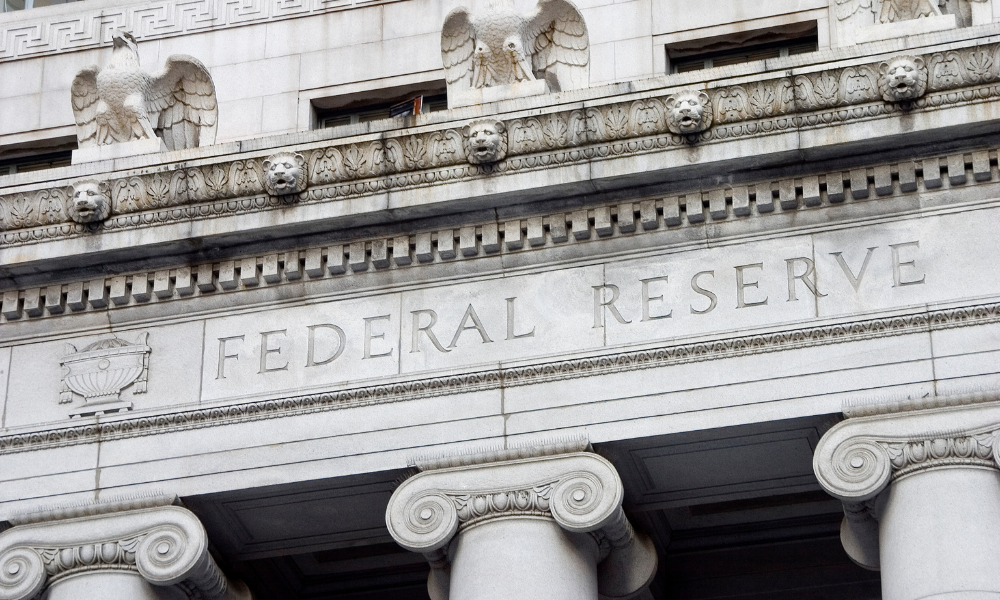
The Federal Reserve stood pat on its holding pattern for interest rates on Wednesday, electing to keep the federal funds rate within the 4.25% to 4.5% range.
The central bank's decision comes against a backdrop of ramped-up pressure from President Donald Trump and other voices raising concerns over leadership and policy setting at the central bank.
The Wednesday decision reiterated previous points about the uncertain economic outlook, while still maintaining the FOMC's commitment to "[monitor] risks to both sides of its dual mandate."
"The Committee decided to maintain the target range for the federal funds rate at 4-1/4 to 4-1/2 percent," the statement read. "The Committee is strongly committed to supporting maximum employment and returning inflation to its 2 percent objective."
Inflation in the US picked up pace in June, with the Bureau of Labor Statistics reporting a 2.7% increase in the consumer price index over the past year. This marks an acceleration from the 2.4% annual rate seen in May, driven by persistent pressures in shelter, food, and certain imported goods. Core inflation, which excludes food and energy, climbed 2.9% over the same period.
Meanwhile, labor market data for June showed steady but slightly slower hiring, with nonfarm payrolls rising by 147,000 and the unemployment rate holding at 4.1%. The figures suggest a labor market expanding at a modest pace, close to its average monthly gain over the past year. However, federal government employment continued to weaken, declining by 7,000 jobs in June and falling by 69,000 since January. Private-sector hiring also showed signs of strain, as a recent report indicated a contraction of 33,000 jobs – the first such decline in more than two years.
Aside from President Donald Trump's consistent calls for Jerome Powell to cut rates, including this morning in reaction to stronger-than-expected economic growth in the second quarter, the Federal Reserve’s decision-making process has also come under legal and political fire.
An investment firm led by a supporter of President Donald Trump recently sued Chair Jerome Powell and other officials, seeking to force the central bank to open its monetary policy meetings to the public.
The firm, Azoria Capital, argued that the Federal Open Market Committee’s closed-door sessions violate transparency laws, stating, “Azoria is deeply concerned that the FOMC, under Chair Jerome Powell, is maintaining high interest rates to undermine President Donald J. Trump and his economic agenda, to the detriment of American citizens and the American economy.”
A federal judge rejected the suit, ruling that the committee is not subject to open meeting requirements and questioning whether the lawsuit was intended to generate publicity for the fund.
Meanwhile, Treasury Secretary Scott Bessent, who's also among those potentially in line to succeed Powell as Fed Chair, has publicly called for a comprehensive review of the Federal Reserve’s performance.
“What we need to do is examine the entire Federal Reserve institution and whether they have been successful,” Bessent said in a televised interview with CNBC. He further criticized the central bank’s approach to inflation, suggesting that its warnings over tariffs had not been borne out by recent data.
This week’s meeting also saw rare dissent among Fed governors, with two Trump appointees – Christopher Waller and Michelle Bowman – casting dissenting votes in today's decision. The two "preferred to lower the target range for the federal funds rate by 1/4 percentage point at this meeting," according to the statement.
Adriana D. Kugler, who was nominated by President Biden from Georgetown University in 2023, was not present in today's vote.

Mercer taps two psychologists to help ultra-wealthy families with succession as half of family offices lack a complete plan

Higher financing costs, slower exits, and growing pressure on asset owners have created opportunities for value investors.

Valerie Bevan joins LPL Financial after more than 30 years in financial services, citing platform flexibility and advisor independence.

A new independent benchmark finds a widening gap between AI leaders and laggards across 30 of the world's largest investment firms.

Jamie Price says LPL shifted its Commonwealth target from advisors to assets, letting 16 months of growth mask departures
Advisors are broadening the conversation beyond savings to help clients prepare for the realities of longer lives
Growing wealth, evolving priorities, and untapped opportunities are reshaping how women approach long-term investing.

