
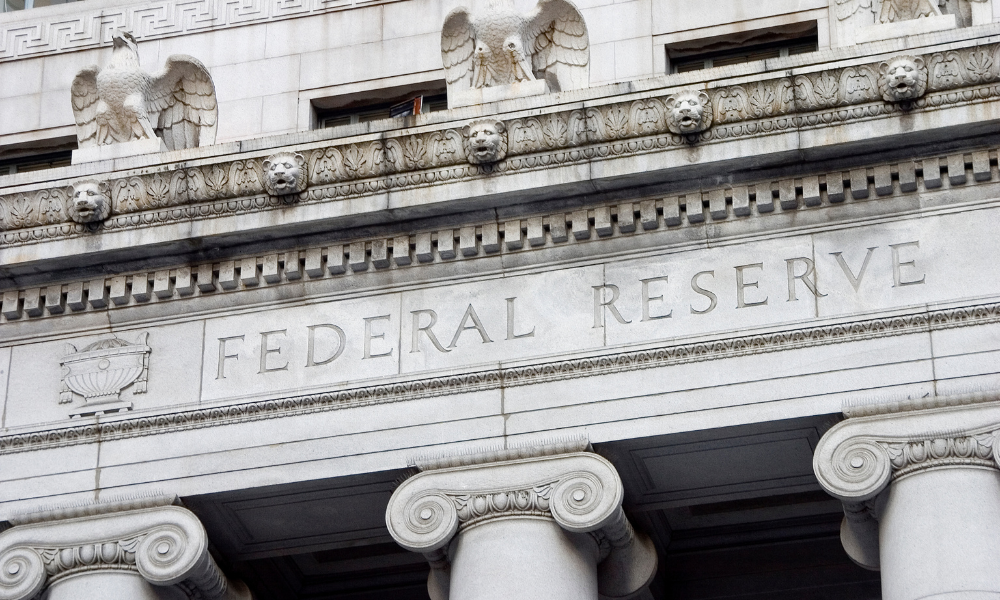
As tariff pressures and geopolitical risks mount, the Federal Reserve has once again decided to keep monetary policy on pause.
In a widely anticipated decision, the central bank kept its policy rate at a range of 4.25% to 4.5%, as officials navigate a murky economic environment defined by cooling inflation, moderate job gains and growing fiscal and geopolitical headwinds.
"In support of its goals, the Committee decided to maintain the target range for the federal funds rate at 4-1/4 to 4-1/2 percent," the Fed said Wednesday, adding that it will "carefully assess incoming data, the evolving outlook, and the balance of risks."
In its last meeting in May, the Federal Open Market Committee also held off on touching the benchmark rate. At the time, Fed Chair Jerome Powell warned that new tariffs imposed by President Donald Trump posed multiple risks.
“There is a risk of a rise in inflation, a slowdown in economic growth, and an increase in unemployment,” Powell said during the May 7 press conference, which followed Trump’s introduction of 145% duties on imports from China. Still, Powell struck a cautiously optimistic tone overall, arguing that "the economy remains in a solid position.”
Since then, new data has bolstered the case for holding rates steady. The core consumer price index – which strips out food and energy – rose just 0.1% month-on-month in May and 2.8% year-over-year, continuing a four-month trend of softer-than-forecast inflation. The Fed’s preferred inflation measure, the core personal consumption expenditures index, also showed the smallest annual gain since early 2020 in April, rising 2.5% from a year earlier.
Several categories, including apparel and used vehicles, saw outright price declines last month. Meanwhile, services inflation decelerated, indicating that companies may still be shielding consumers from higher input costs, or building inventories in advance of further trade measures.
Labor market trends offer a similarly mixed picture. Employers added 139,000 jobs in May – modestly above expectations – while the unemployment rate held at 4.2%. Wage growth remained steady at 3.9% year-over-year. However, prior months’ job gains were revised lower, and job cuts in the federal government sector signal emerging pressure in public employment.
At the broader macro level, first-quarter GDP contracted 0.2%, weighed down by weaker consumer spending and a record drag from net exports. Trade continues to undercut economic momentum, with the updated figures marking the weakest growth in two years.
Complicating the Fed’s position is a renewed political focus on interest rates. Since returning to the White House, Trump has ramped up his demands for rate cuts, citing the rising cost of servicing federal debt. Treasury data shows interest payments reached $776 billion over the past eight months – now outpacing defense spending.
“I would like to get this guy to lower interest rates, because if he doesn’t, we have to pay,” Trump said at a June 12 event, referring to Powell. This morning, he publicly criticized the Fed chair, calling him “stupid” and accusing the central bank of political bias for resisting cuts.
Beyond domestic indicators, markets are also watching for the potential fallout from ongoing tensions in the Middle East. Energy analysts have warned that fighting between Israel and Iran threatens regional oil infrastructure, a concern highlighted by a 13% spike in crude prices last week – the largest intraday gain since 2022.
"The Committee would be prepared to adjust the stance of monetary policy as appropriate if risks emerge ... [from] information including readings on labor market conditions, inflation pressures and inflation expectations, and financial and international developments," the Fed said Wednesday.

Appointment continues a wave of AI leadership hires reshaping wealth management as advisory firms race to build out digital and data infrastructure.

Sentir joins a wave of AI-native launches as RIA firms seek a competitive edge from CRMs and artificial intelligence use.

Advisors gain a direct line to client tax transcripts as new data shows tax services increasingly separate top-performing firms from the pack.

New Fidelity data links parents' own loan burden to record 529 savings and delayed retirement planning.

Transamerica survey of 7,600 Americans reveals debt, inflation, and caregiving demands are derailing retirement security.
Northern Trust’s Ken Lassner shows advisors how to convert volatility into after-tax portfolio gains
Dan Biagini of American Equity says the steady decline of pensions, longer lifespans and a reset in interest rates are rewriting how advisors build retirement income

