
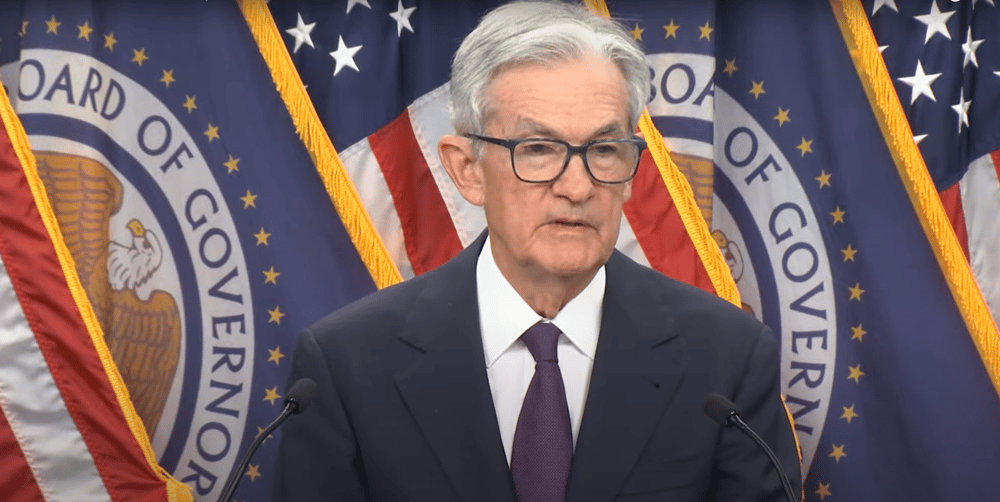
As expected, the Federal Reserve opted to keep interest rates constant this past FOMC meeting, maintaining the target range of 4.25% to 4.5%. This marks the 4th time in a row that the Fed has held rates constant, even as labor markets have improved and inflation has slowed in 2025.
However, Fed Chair Jerome Powell left room for the possibility to cut interest rates twice in the next six months by a total of 50 basis points. The measured approach, Powell indicated, was due in part to a forecasted core PCE index, the Fed's primary inflation rate, of 3.1%, 30 basis points higher than the Fed's 2% goal.
"Following the June FOMC meeting, the Fed remains in no hurry to resume rate cuts after highlighting the underlying strength in the labor market. And they further emphasized that inflation and - more likely - inflation expectations are still too high to start easing policy rates," portfolio manager Jack McIntyre of Brandywine Global wrote in a statement to InvestmentNews. "Through the lens of the Fed, economic conditions appear to have moved away from peak uncertainty but not far enough away to give the Fed enough clarity to shift from wait-and-see mode."
In its press release, the Federal Reserve stated that "economic outlook has diminished but remains elevated. The Committee is attentivee to the risks to both sides of its dual mandate."
Powell received multiple questions during his post-comments Q&A session about the need to cut interest rates. In his responses, he said, "we have to be forward-looking." GDP was revised downward to 1.4% from 1.7% in March. The Fed forecasts 2026 growth of 1.6%, down from a previous 1.8%, and unemployment was raised to a forecast 4.5%. "This tells us the concerns from the Fed around deteriorating economic conditions and rising inflation remain roughly balanced and potentially keeping Fed policy changes in the abyss for the foreseeable future," Charlie Ripley, senior investment strategist for Allianz Investment Management, wrote in a statement to InvestmentNews.
During Powell's post-comments Q&A, he was inevitably asked about President Donald Trump's barbs thrown his way in order to motivate Powell to lower interest rates.
"From my standpoint, it's not complicated. From what everyone wants at the FOMC is a good, solid American economy with a strong labor market and price stability. We think our policy is well-positioned to deliver that and to be able to respond in a timely way as the data lead us around. The economy has been resilient, and that has been our stance ... That's what matters to us.That's all that matters to us," Powell said.

Retiring RIA seller David Laidlaw alleges the Carnegie valued his stake on $11.7 million EBITA while pitching potential buyers on $21.3 million.

New tool gives RIAs and family offices AI help vetting private market deals, with some users reportedly halving review time.

Investors got projected returns dressed up as real ones, SEC says

Parents must still act to get the $1,000 federal seed and employer contributions, giving financial advisors a role in the rollout.

FINRA booted Rudy Anguiano from the industry for “conversion - the intentional and unauthorized taking of another person’s property.”
As AI makes financial information more accessible than ever, Lana Hock explains why human judgment, trust, and empathy remain the qualities clients value most in a financial advisor
Northern Trust’s Ken Lassner shows advisors how to convert volatility into after-tax portfolio gains

