
The S&P 500 has a concentration problem that advisors can no longer sidestep in client conversations. The top 10 stocks in the index now account for approximately 43% of its total market capitalization — a record high and nearly double the historical average of 18 to 23% that held from 1990 to 2015, according to RBC Wealth Management data. The Magnificent 7 alone — Apple, Microsoft, Alphabet, Amazon, Nvidia, Meta, and Tesla — collectively represent roughly 33.8% of the entire index as of June 2026. And the concentration debate just got more complicated: SpaceX went public in June 2026 and joined the Nasdaq-100 immediately, with S&P 500 inclusion widely expected next — meaning billions in passive money will own it before most advisors have made an active decision to allocate. Three chief investment officers who manage client portfolios across this environment offer three distinct views on how to navigate it.
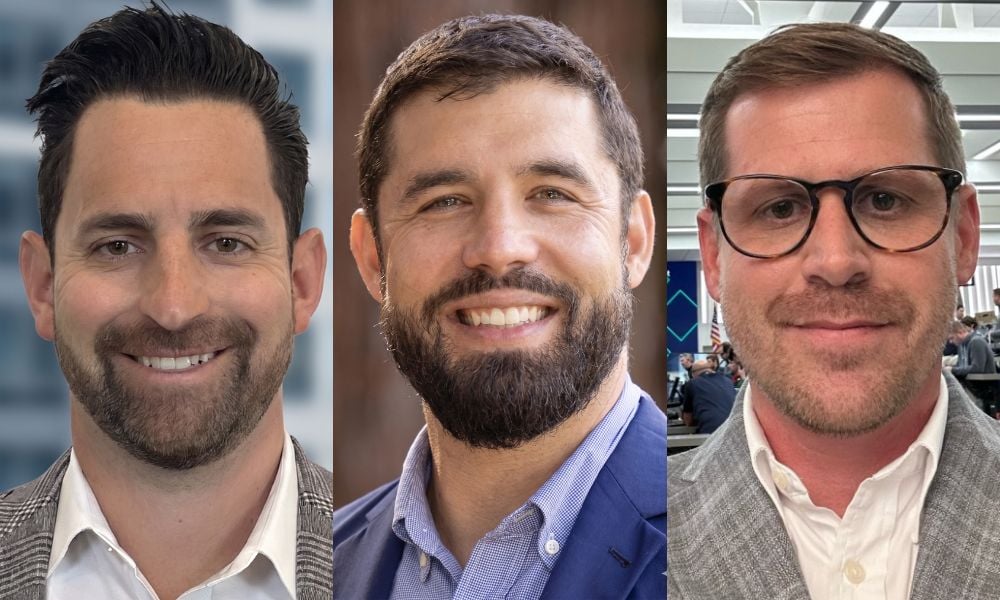
Erik Kratz, chief investment officer and co-head of Wealth at Arena Private Wealth, takes the most measured view of the three on index concentration. In his reading, the S&P 500's drift toward a technology-heavy weighting reflects where earnings and revenue growth have actually occurred, not a distortion of the index's purpose.
"These megacaps are dominating for real reasons: scale, fortress balance sheets and reinforcing flywheels across their offerings. The question isn't whether the index is concentrated — it's whether that concentration is justified by fundamentals. Today, largely, it is," Kratz said. "Our job is to monitor when that stops being true."
On SpaceX specifically, Kratz offers a more technical observation than the headlines have captured. The Nasdaq-100 weights on a free-float-adjusted basis — only shares actually available to trade — rather than total market capitalization. That methodology significantly compresses SpaceX's initial index weight relative to what its roughly $2 trillion total market cap would otherwise imply.
"SpaceX carries a market capitalization of roughly $2 trillion, but the Nasdaq-100 weights on a free-float-adjusted basis — only the shares actually available to trade. That leaves roughly $85 billion of float-adjusted exposure and an initial weight of about 1.3% after Nasdaq rules implement a multiplier, versus the 3–4% a company of that size would otherwise command. Investors get initial exposure sized to what's freely tradable, and the weight grows organically as lockups expire and the market digests the valuation," Kratz said.
Kratz's framework — defending concentration where fundamentals support it, monitoring for when they do not — reflects the position of a growing body of institutional research. Guinness Global Investors published analysis in July 2026 noting that the top 10's earnings growth share had declined from a 2024 peak toward 50%, suggesting the rest of the index has begun contributing again. That broadening, they argue, is healthy even if headline concentration figures remain historically extreme.
Cyrus Amini, partner and chief investment officer at Hyphen Wealth Management, takes a more direct position: the indexes are less diversified now than at any point in the past 20 years, and the arrival of SpaceX will only deepen the problem.
For clients sitting on significant gains from the megacap run-up — a common situation across his practice — Amini's priority is helping them lock in those gains without compounding the concentration risk that already exists inside their index holdings. His preferred mechanism is rotation into international equities and targeted fixed-income sub-sectors, both of which offer geographic and sector diversification that cap-weighted US index exposure no longer provides.
"Rotating gains into international and emerging market equities is a great way to diversify both geographically and across sectors and industries. We've also focused on healthcare and infrastructure as two areas either less exposed to AI competition risks or direct beneficiaries of AI productivity boosts," Amini said.
Amini's concern about SpaceX is structural: it adds aerospace and defense exposure on top of an AI-heavy index, but through a company that Amini views as entangled with the broader hyperscaler narrative. He also flags Tesla as part of what he calls the same "behemoth" — meaning the effective concentration in AI-adjacent names is larger than the Magnificent 7 label implies. Within the AI space itself, Amini singles out Alphabet as his preferred position, citing its proprietary TPU chip infrastructure, DeepMind research capabilities, and YouTube's data advantage as competitive moats that distinguish it from other foundation model players.
Seth Hickle, chief investment officer and managing partner at Mindset Wealth Management, frames the concentration challenge as fundamentally a question of who is making investment decisions on behalf of clients.
In Hickle's view, index investing is genuinely efficient — but that efficiency comes with a specific trade-off: the investor accepts whatever the index committee decides, at whatever weight, at whatever valuation the addition implies. When SpaceX joined the Nasdaq-100 in June 2026, billions in passive money gained exposure to a stock trading at a price-to-revenue ratio of approximately 112 — far above any other megacap — without any active decision on the part of the advisors managing those index portfolios.
"As the largest AI names have grown to dominate major benchmarks, active portfolio construction has become increasingly important. Owning an index today often means making a much bigger bet on a handful of companies than many investors realize. We prefer active portfolio management because it gives us the ability to decide not only what we own, but also how much we own. Owning a stock because an index committee says so isn't the same as owning it because it fits your investment thesis," Hickle said.
Hickle's preferred vehicle for implementing active construction at scale is the separately managed account, which allows intentional control over individual position sizes rather than accepting index weights as given. He is also specific about where he expects the AI trade to move next: away from foundation model competition and toward the infrastructure layer — the companies that supply, power, and maintain the compute capacity that makes AI possible regardless of which model ultimately captures the most market share. He anticipates intermittent volatility through the summer and fall of 2026 as the market recalibrates AI valuations and digests ongoing hyperscaler spending.
Taken together, the three perspectives span the range of reasonable professional positions on an issue that is genuinely unresolved: whether record index concentration reflects durable fundamental dominance that cap-weighting is correctly capturing, or a structural distortion that advisors need to actively manage around. What all three agree on is that the answer requires a deliberate client conversation — one that most advisors have not had yet, and that SpaceX's index debut has made considerably more urgent.

Shorter waits for failed SIE and Series 7 candidates take effect Jan. 19, speeding the path to registration

Raymond James and Cetera also welcomed advisors from UBS and LPL as competition for experienced teams stays fierce

Jim Walesa worked in the securities industry for 39 years before leaving in 2021.

As the market turned from pricing in cuts to betting on hikes this year, the developing reality of a K-shaped economy has had real implications for households and investors alike.

Alleged cash payments, stolen client data, and a court that jumped the gun
Knighthead Life entered the market with a competitive MYGA. A strong launch earned advisor confidence and paved the way for FIAs.
As AI makes financial information more accessible than ever, Lana Hock explains why human judgment, trust, and empathy remain the qualities clients value most in a financial advisor

