
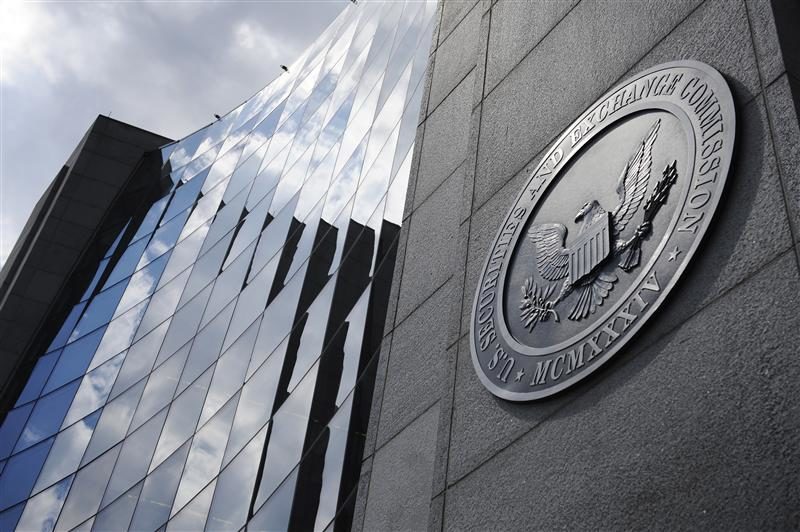
Financial industry trade associations and other interest groups are calling on the Securities and Exchange Commission to put forth a new rule governing mutual fund fees and stop what the groups deem to be regulation by enforcement.
In a rule-making petition filed Wednesday, four organizations said the SEC should promulgate a rule that defines how fees paid by funds to financial advisers should be disclosed. In the petition, they said such a measure would end the agency’s “concerted campaign of subregulatory sabotage” to outlaw 12b-1 fees, which are collected by financial firms for fund marketing and other services.
The groups – the Financial Services Institute, the American Securities Association, the Competitive Enterprise Institute and the New Civil Liberties Alliance – said the SEC’s recently concluded initiative to crack down on disclosure failures surrounding 12b-1 fees is an example of the regulation by enforcement that they are trying to stop.
“Having failed to repeal or seriously refashion Rule 12b-1 through conventional means, the commission has turned to ‘guidance,’ coupled with ‘voluntary’ self-reporting programs for those in violation of the ‘guidance,’ and punitive enforcement actions for those who refuse to turn themselves in,” the petition says. “So with a few speeches, ‘initiatives,’ ‘frequently asked questions,’ and the like, the commission has achieved what, through rulemaking, it could not — the effective repeal of Rule 12b-1. The law, however, does not countenance such guerilla governance.”
An SEC spokesperson declined to comment. In public appearances over the last few months, SEC officials have defended the agency’s share class selection disclosure initiative, which mostly targeted investment advisory firms for failing to disclose that they recommended funds with 12b-1 fees when less expensive share classes of the same fund were available. The program returned about $139 million to investors.
Investor advocates say common sense as well as the Investment Advisers Act make clear that advisory firms should disclose conflicts of interest, such as the receipt of 12b-1 fees.
“It’s ludicrous on its face,” Knut Rostad, president of the Institute for Fiduciary Standard, said of the rule-making petition. “They suggest [investment advisers] should need additional SEC rule-making to know recommending a more expensive product over an identical less expensive product is a fiduciary breach. In one fell swoop, they insult regulators, their own advisers and investors.”
The SEC share-class initiative targeted mostly firms that are dually registered as investment advisers and brokers. Most of the time, brokers receive 12b-1 fees rather than advisers.
But the problem highlighted in the SEC’s share-class program was that dual registrants recommended high-fee funds for clients in advisory accounts, said Barbara Roper, director of investor protection at the Consumer Federation of America.
“There is nothing new about the obligation under the Advisers Act to provide full and fair disclosure of conflicts of interest,” Roper said.
The financial firms represented by FSI and ASA “don’t truly understand what it means to be an adviser,” she said. “They have no intention of cleaning up their act.”
But the industry groups said that SEC policy toward 12b-1 fees has never been clear-cut.
“Over the last year, the SEC has used its enforcement authority, rather than its rulemaking authority, to change longstanding, widespread, and previously uncontroversial business practices in the mutual fund space,” they said in a statement.
The SEC isn’t giving financial firms clear direction for compliance, said Dale Brown, chief executive of FSI.
““It is time for the SEC to stop its troubling, ongoing trend of backdoor regulation, or regulation by enforcement,” Brown said in a statement. “Financial services firms and financial advisers deserve to know the rules of the regulatory road on which they operate and be allowed sufficient time to comply with any changes.”
The SEC isn’t respecting the rule-making process, said Christopher Iacovella, chief executive of the American Securities Association.
“The SEC’s foray into regulation by enforcement has established a dangerous precedent which allows the agency to adopt vague disclosure requirements and then decide on the fly what is and is not acceptable,” Iacovella said in a statement.
A former SEC commissioner, Robert Jackson Jr., used an expletive in characterizing the “regulation by enforcement” argument in a public appearance before he left the agency. The rule-making petition ensures the debate will continue.
The rule-making petition doesn’t bode well for Regulation Best Interest, the SEC’s new investment-advice standard for brokers, Roper said. Reg BI must be implemented by June 30.
“If these firms have their way, we’ll see no meaningful benefits from Reg BI,” she said. “What do you think their disclosures are going to look like under Reg BI?”

Proposition 40 wealth tax could raise $30 billion, not $100 billion, as departures erode the base and voters remain split

Jump is piping FMG marketing content into post-meeting workflows as Zocks opens its platform to more than 32,000 LPL financial advisors

Trevor Uhls pleaded guilty to one count of wire fraud and one count of money laundering.

Osaic and LPL Financial routinely square off in recruiting advisors from other firms as well as from each other.

Meanwhile, Wealthspire's Ground Control business picks up a $1B private wealth firm in London, and Modern Wealth deepens its presence in California.
Knighthead Life entered the market with a competitive MYGA. A strong launch earned advisor confidence and paved the way for FIAs.
As AI makes financial information more accessible than ever, Lana Hock explains why human judgment, trust, and empathy remain the qualities clients value most in a financial advisor

