
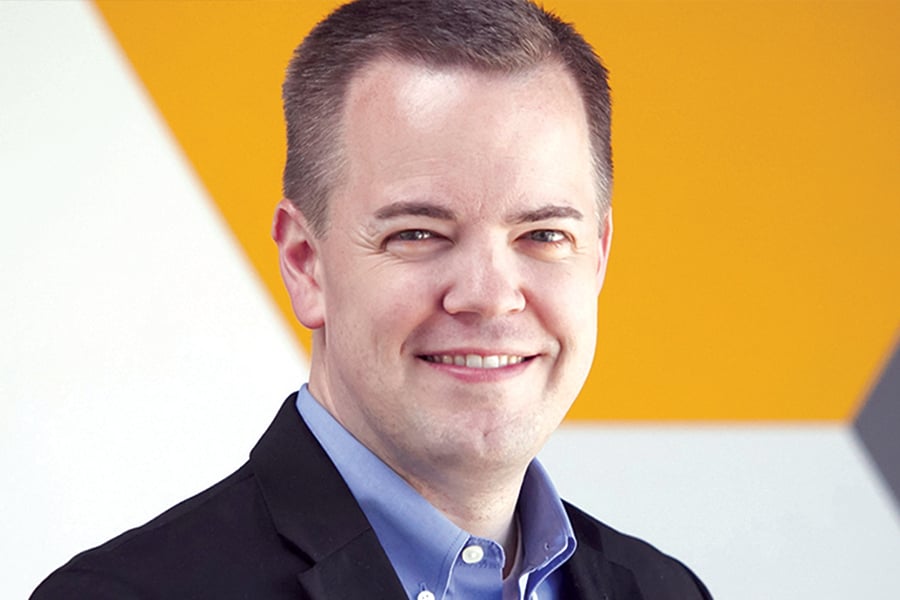
Aaron Klein, founder of Riskalyze – now known as Nitrogen – has announced a new company aimed at solving what he describes as one of the most persistent and existential inefficiencies in financial advice: broken client meetings.
The new venture, Contio, is an AI-powered meeting assistant designed specifically for financial advisors. While still in private beta, the platform is scheduled to launch publicly later this year.
With a team of AI and data experts based in Boise, Idaho, it aims to streamline meeting preparation, real-time note capture, and post-meeting follow-up through AI automation integrated with advisor workflows.
Klein, who served as CEO of Riskalyze for 12 years and led its evolution into Nitrogen, said the idea for Contio stems from a long-standing challenge in the advisory business: too much valuable time lost to unproductive or poorly documented client conversations.
“Advisors are the most human part of the financial advice process, but their time is drained by the workflows surrounding client meetings,” Klein said in the launch announcement. “We believe there's a better way to empower them.”
In a post on LinkedIn, Klein described his own experience spending 70% of his time in meetings at Riskalyze, which added up to 4.8 a day on average. For the average knowledge worker, he said meetings take up 40% of their time.
Contio began operating on January 2, with $5.5 million in financial support gathered from Klein and numerous other investors including Scott Hanson, Ric Edelman, Brian McLaughlin, and more.
The software is designed to capture and categorize meeting content, identify client goals, and generate actionable summaries that sync with CRM systems like Wealthbox, Redtail, and Salesforce. The company says the product is being piloted within wealth management but is ultimately designed to support professionals across several industries where high-stakes meetings are central to the client relationship.
Contio is currently working with a small group of RIAs and enterprise firms during its beta phase. A broader rollout is expected in the fall.
Klein’s move into AI comes after a year of shifting roles. Since stepping down as Nitrogen’s CEO in November 2023, he has joined Ezra Group as an executive-in-residence and remains on Nitrogen’s board. He also sits on the boards of Snappy Kraken and the Mountain States Policy Center.
AI meeting assistants have seen rising adoption across the wealth management sector – as a category, transcription and text capture services have surged from 8.67% market penetration to 15.84%, according to the latest T3/Inside Information Software Survey – with firms seeking to reclaim advisor time from manual meeting documentation and CRM entry.
The incumbent AI notetaking tools including Jump, Zocks, and FinMate AI each boast numbers showing how they reduce administrative work by several hours per week, depending on how many meetings users engage in.
But Klein argues that AI notetakers don't address the root problem of inefficient meetings. With that in mind, Contio plans to compete in that landscape by focusing on tailored functionality for advisors.
“This isn’t a generic notetaker bolted onto advisory meetings,” Klein said. “Contio understands client goals, risk preferences, and action items – all in context.”

The financial advice industry has been facing inquiries into its cash sweep programs for years now.

Investor money allegedly went to strip clubs, exotic cars, and landscaping

Procyon adds $415 million in assets under management in New Jersey while Savant picks up a $213 million Southern California planning firm

With a growing number of real estate-rich Baby Boomers aging into retirement, some advisors may be failing to consider all the options available for those clients' assets.

Cornerstone Advisors study reveals compliance bottlenecks stall campaigns weeks after customer opportunities close.
As AI makes financial information more accessible than ever, Lana Hock explains why human judgment, trust, and empathy remain the qualities clients value most in a financial advisor
Northern Trust’s Ken Lassner shows advisors how to convert volatility into after-tax portfolio gains

