
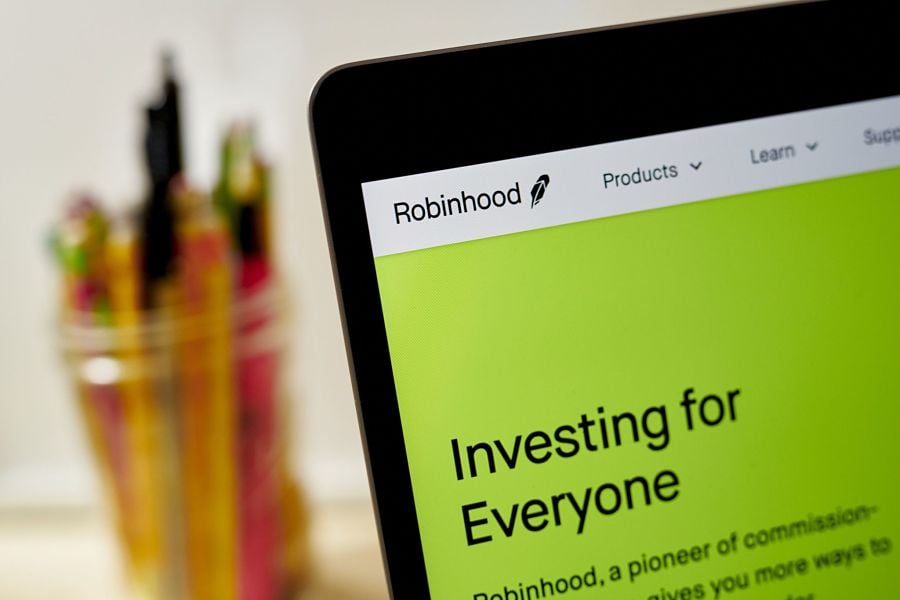
The most highly anticipated IPO of the year occurred Thursday as Robinhood officially started trading on the Nasdaq stock exchange under the ticker HOOD.
On Wednesday, the brokerage announced that its initial public offering of 55 million shares priced at $38 per share, giving the company an expected valuation of $32 billion. Robinhood was trading at $36.75 per share, down 3.29% as of 1 p.m. ET.
The free trading hit the public market after experiencing dramatic growth — from fewer than 500,000 customers in 2015 to more than 31 million today — and heightened scrutiny throughout a pandemic year.
Robinhood announced it set aside 20%-35% of its shares to users of a platform it created, IPO Access, exposing the startup’s public debut to more volatility compared with traditional IPOs where a company typically sets aside 15%-20% of its shares for institutional investors and company insiders, said William Whitt, senior analyst Aite Group.
“From a marketing and PR perspective, it plays right into their whole mantra of democratizing investments,” Whitt said. “Despite the fact that it does make the IPO a bit riskier since the shares are likely to be more volatile than they would otherwise be with a larger retail customer ownership base. But given Robinhood’s brand and history and how they present themselves to the marketplace, it’s a smart decision.”
It’s also perfect timing for Robinhood to go public, Whitt said. The startup has been a huge beneficiary of this year’s market frenzies, like GameStop’s stock surge and cryptocurrencies. The app has also been able to maintain its popularity throughout the year despite some regulatory hiccups.
However, bulls say that Robinhood and its IPO strategy could keep institutional money managers that usually create the stabilizing core investor group of an IPO from participating, said Govinda Quish and Rick Bookstaber, co-founders of risk management fintech Fabric, in a joint statement.
The fundamental risk for retail investors is that there are a lot of professional hedge fund managers that will be tactically trading the stock in the first eight to 24 hours, in turn, retail investors who are inexperienced with volatility are likely to panic and the more experienced hedge fund managers are likely to capitalize on their panic, Quish and Bookstaber said. “Robinhood is trying to do their users a favor by offering them 35% of the IPO, but perhaps they are throwing them into the lion’s den. Time will tell.”
Robinhood’s business risk also lies in the way it has imported the “user as a product” business model of Silicon Valley into retail finance, said Richard Smith, CEO of the Foundation for the Study of Cycles, a nonprofit that studies recurring patterns in economics, social sciences and financial markets.
Still, it is worth giving Robinhood credit for creating a user experience that brought young investors to the market, Smith said. The flip side is that it gives Robinhood incentive to make sure that the next generation of investors doesn't flame out.
In order for Robinhood to keep up that momentum, it must continue to fuel high trading volumes, Smith said. “If some is going to buy Robinhood shares, they should be asking themselves what type of future is Robinhood going to create?” he said. “Do you want markets where Gamestop and Dogecoin frenzies are normalized?”
Robinhood’s influence will likely keep the day trading frenzy going post-pandemic. New investors flocked to online brokerages in 2020, causing day trading to expand as shelter-in-place orders kept investors who were stuck inside and on screens all day looking for new ways to fill their time, according to a survey by Betterment.
Robinhood’s heavy reliance on its payment for order flow is also a cause for concern because it is not a sustainable source of revenue given the increased regulatory eyes on that business model, said Reena Aggarwal, professor of finance and director of the Georgetown Center for Financial Markets and Policy. According to Robinhood's S-1 filing, 81% of its total revenue comes from payment for order flow.
“The big issue is going to be how they address all the regulatory concerns based on their current model, and how quickly they can diversify their sources of revenue,” Aggarwal said. “The capital raised from the IPO provides them the funding to explore new areas.”
While Robinhood has clearly transformed the way retail investors participate in the market, the fintech is going to have to bring that same level of innovation to new revenue streams while meeting regulatory requirements, Aggarwal said. "Then maybe there is potential for Robinhood to keep growing long term," she said.
That time might come soon as new Securities and Exchange Commission Chairman Gary Gensler said in June that questions around payment for order flow and gamification are on his radar.
The trading app’s endless run-ins with regulators have led to its record $70 million settlement with the Financial Industry Regulatory Authority Inc. announced in June. Most recently, filings on Tuesday revealed Finra is probing Robinhood Financial CEO Vlad Tenev and co-founder Baiju Bhatt for not being licensed as registered brokers.

CFP, CFA and CPA holders could gain accredited investor status as regulators weigh wider private market access for advisory clients

DeepVest, Vanilla and Libretto roll out tools to help financial advisors launch firms, close estate plans and sharpen planning skills
“People aren't effectively using their wealth in retirement,” said David Blanchett of Prudential.

Second-generation NFL ref Shawn Hochuli co-founded IWM Partners in Irvine, California, a wealth management practice with more than $500M in client assets
U.S. seniors lose $28.3 billion annually as a result of financial exploitation, according to a 2023 AARP study.
As AI makes financial information more accessible than ever, Lana Hock explains why human judgment, trust, and empathy remain the qualities clients value most in a financial advisor
Northern Trust’s Ken Lassner shows advisors how to convert volatility into after-tax portfolio gains

