
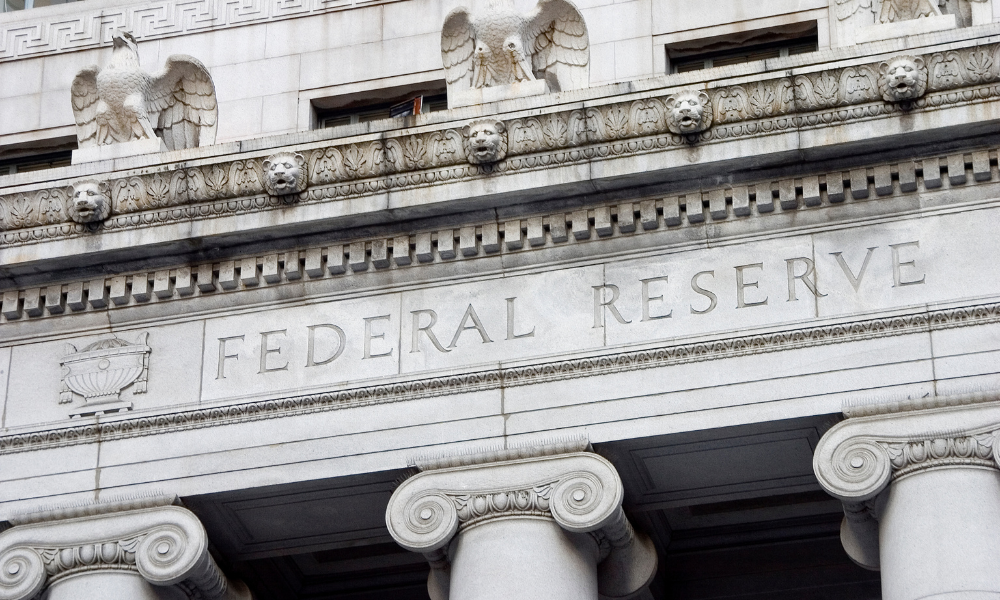
Federal Reserve officials are increasingly at odds over where interest rates should go next, leaving financial advisors to navigate a more uncertain policy path even as inflation cools and the labor market holds up.
Minutes from the Federal Open Market Committee’s January meeting show a central bank unwilling to commit to a clear easing path after three rate cuts late last year that pushed the fed funds target range to 3.5%-3.75%.
Officials broadly agreed to take a breather in January, but sharply diverged on whether the next move should be another cut, a prolonged hold or even a hike if inflation stalls.
On one side, “several” participants indicated they could back more easing if price pressures continue to recede. The minutes note that “further downward adjustments to the target range for the federal funds rate would likely be appropriate if inflation were to decline in line with their expectations.”
Others argued for staying put until a clearer signal comes in that disinflation is firmly back on track. “Some participants commented that it would likely be appropriate to hold the policy rate steady for some time as the Committee carefully assesses incoming data,” with a number of those officials saying additional easing “may not be warranted” without stronger evidence that inflation is moving convincingly back toward 2%.
A third camp wants to keep the option of rate hikes explicitly on the table. Several policymakers favored a “two-sided” description of future moves, highlighting “the possibility that upward adjustments to the target range for the federal funds rate could be appropriate if inflation remains at above-target levels.” Two governors, Christopher Waller and Stephen Miran, dissented in January, preferring another quarter-point cut, underscoring how fractured the committee has become ahead of the expected transition from Jerome Powell to Kevin Warsh as Fed chair in May.
The split comes against a backdrop of still-elevated but improving inflation and a labor market that looks less fragile than it did in 2025. The minutes say “the vast majority of participants judged that labor market conditions had been showing some signs of stabilization and that downside risks to the labor market had diminished,” even as some officials warned that weaker labor demand could still push unemployment meaningfully higher in a low-hiring environment.
Jeffrey Roach, chief economist at LPL, said the Fed’s projections may lean too heavily on a productivity boom from new technologies. “The combination of above‑potential growth with easing inflation is not common in Fed projections and likely reflects a strong assumed boost from productivity and AI‑related investment,” he commented, adding that the central bank “seems to think financial‑stability risks are building under the surface,” including in private credit and highly leveraged hedge funds.
From an asset-allocation perspective, some strategists see the minutes as a warning against betting on rapid or aggressive easing. Charlie Ripley, senior investment strategist at Allianz Investment Management, said the document “highlighted the division of views amongst Fed members as inflation continues to be top of mind,” and that “the minutes support our view that rate cuts are off the table for the foreseeable future.”
Futures markets still imply the next cut could come around June, with another move possible in the fall.

Iowa's Greenwood Wealth Partners exits D.M. Kelly as UBS and Ameriprise win Merrill Lynch recruits in California and Florida

Less than 1% of pool funds went to actual trading, CFTC says

Plus, SEIA builds a governed data foundation for its in-house AI and Snappy Kraken debuts a read-only marketing coworker for advisors.

He owes $364 million but pays $100 a month

Broadridge, Wedbush and Alaris Acquisitions have also filled senior wealth management roles with hires from J.P. Morgan, Osaic and SageView.
As AI makes financial information more accessible than ever, Lana Hock explains why human judgment, trust, and empathy remain the qualities clients value most in a financial advisor
Northern Trust’s Ken Lassner shows advisors how to convert volatility into after-tax portfolio gains

