
Contents
A recession is a significant and widespread decline in economic activity that lasts longer than a few months. Advisors often hear the rule of thumb that two consecutive quarters of negative real GDP signal a downturn. However, the full definition is more nuanced.
The National Bureau of Economic Research reviews several factors, including nonfarm payrolls, industrial production, personal income, and retail sales. It uses these measures to assess whether the economy has peaked and entered a sustained contraction. An economic downturn must be deep, pervasive, and persistent before it qualifies as one.
Recession indicators are used to identify a downturn after it begins but also to understand how those signals shape long-term planning outcomes. For advisors, the goal is to recognize how early signs influence investment positioning and client decisions.
Recession is distinctly different from depression. A depression is far more severe, with deeper declines in output and longer-lasting damage. While a typical recession might reduce GDP by 2 percent to 5 percent, a depression mirrors the extreme conditions of the Great Depression. This is when economic output fell more than 30 percent and unemployment surged to 25 percent. This context is essential when calming fears during periods of uncertainty or when indicators move in different directions.
By basing economic downturn assessments in real data, experts can reinforce long-term planning, strengthen portfolio decisions, and help clients stay focused during economic downturns. Here's a simplified explainer on how economic downturns happen:
Advisors rely on economic indicators to understand where the economy is heading. These indicators fall into three categories:
Each one helps see a different part of the cycle and together they form a clearer picture of recession risks in the US.
Leading indicators shift before the broader economy turns. They give early warning signals that an economic recession may be forming.
There's the inverted yield curve, which signals market expectations of slower growth or future rate cuts. Manufacturing data such as the ISM, PMI and durable goods orders offer insight into production plans and demand conditions. Building permits and housing reveals if businesses and households are confident enough to commit to long-term projects.
These indicators move after the economy has already shifted. They confirm that recession dynamics are firmly underway. The unemployment rate typically rises months after leading indicators weaken. This reflects employer responses to slowing demand. Inflation measures like the CPI show price pressures that have already occurred and help understand how central banks may respond.
Corporate profits indicate how previous conditions affected business performance. Consumer credit growth and the strain on households also reflect late-cycle stress and help evaluate client resilience. Here are also some weird indicators of an economic downturn:
These indicators operate in real time and capture the state of the economy as it unfolds. Industrial production, personal income, and retail sales are some of the most important indicators, especially when leading and lagging measures conflict.
For advisors, the key is not to treat any indicator in isolation. Instead, they must be read in combination to assess whether downturn signals are spreading. A weakening PMI alongside falling building permits may suggest early cracks even if unemployment remains low. An inverted yield curve paired with softening consumer confidence can signal broader vulnerability before real GDP declines. When lagging indicators finally shift, they validate the trend that leading metrics pointed to months earlier.
When an economic downturn takes hold, the slowdown reaches multiple parts of the economy at once. Real GDP contracts, industrial production weakens, and personal income often slows as businesses adjust to softer demand. Consumer spending, which drives most US economic growth, begins to cool as households become more cautious.
Employment is one of the clearest signs that conditions have turned. While job losses lag behind other signals, they eventually rise. Companies scale back hiring, reduce hours, or initiate layoffs. This creates a feedback loop: weaker income leads to weaker spending, which then leads to further declines in output.
Central banks respond by adjusting monetary policy to stabilize the economy. When a downturn emerges, the Federal Reserve may lower interest rates to ease borrowing conditions. These rate cuts influence everything from mortgage rates to business investment decisions. Lenders also become more cautious, and households rely more on savings account reserves.
Understanding how a recession spreads helps with preparation before pressure builds. This includes stress testing portfolios for declines in cyclicals, reviewing liquidity needs, and reinforcing strategies that can withstand economic downturns. Expectations may also be set around how long contractions could last and what indicators will confirm if conditions are worsening or improving.
During an economic downturn, people react emotionally to market swings. The goal is to prevent these panic-driven decisions that can cause long-term damage.
The first mistake is panic selling. Market pullbacks often occur before lagging indicators confirm a recession. Selling into that weakness can lock in losses just as conditions begin to stabilize. Leading indicators such as the yield curve, durable goods orders, or consumer confidence may weaken long before the broader economy contracts. However, that doesn't mean people should abandon their long-term plans.
Another risk is relying too heavily on credit card spending or other short-term borrowing. As downturns progress, households face tighter credit conditions and rising financial stress. Using revolving credit to cover everyday expenses can cause vulnerability if unemployment rises.
People may also want to rewrite their entire investment strategy based on a single indicator or headline. This is where it's important to reinforce the review of the full economic picture. Leading, lagging, and coincident data often move at different speeds. It's important to distinguish whether conditions reflect a temporary slowdown or a broader contraction spread across the economy.
Not every part of the economy weakens at the same pace during a recession. While many sectors feel the pressure of declining output, softer consumer spending, and slower industrial production, some areas tend to hold up better.
Consumer staples and essential services typically benefit the most during downturns. Households continue to buy food, basic goods, personal care items, and other non-discretionary products even when income slows. These companies experience a steadier demand because their products support everyday life rather than optional purchases.
Businesses tied to essential utilities, healthcare, and basic household needs also tend to perform more consistently. Their revenue streams rely less on discretionary spending, which gives them more insulation when consumers pull back on bigger purchases like travel, electronics, or home improvements.
Households with emergency savings and lower leverage also navigate recessions more smoothly. Advisors who act early can also help others benefit from timely adjustments. Monitoring signals like the inverted yield curve can shift exposures before stress becomes obvious.
In short, resilience during an economic downturn often comes from essential-goods sectors, well-prepared households, and advisors who recognize the value of early, data-driven repositioning.
Using economic indicators effectively becomes essential during periods of uncertainty. By understanding how each indicator functions, professionals can translate complex data that supports stronger decisions, steadier emotions, and more resilient portfolios.
Here's a look at how economic signals can be useful:
Begin by separating leading, lagging, and coincident indicators to understand how they interact.
This structure helps frame economic recession risks with clarity even when headline data appears contradictory.
Economic indicators shift over time because many releases are revised after their initial publication. Manage this uncertainty by focusing on the trend rather than reacting to a single print. One strong report does not override months of softening data. One weak release should not trigger an immediate change in strategy. Professionals should be able to filter noise and stay grounded in the broader trajectory.
Economic indicators also help shape practical guidance. When leading indicators soften, you may tilt allocations toward durable sectors like consumer staples or increase cash buffers. When personal income slows or consumer credit stress rises, people can strengthen emergency savings and revise spending expectations.
When the data stabilizes, this is the time to reinforce long-term planning to avoid overreacting to cyclical noise. Done correctly, professionals can plan months in advance and position themselves to withstand the financial storm.
By integrating these signals into everyday advice, advisors can communicate the context behind market movements. Correct interpretation turns raw data into meaningful, actionable insight, which is one of the most valuable services offered during any stage of the economic cycle.
Understanding recession indicators gives a clearer view of the economic cycle and governs how portfolios are adjusted. Knowing how leading signals anticipate change and how lagging data confirms downturns helps advisors guide clients through uncertainty with confidence.
Integrating these indicators into portfolio and planning discussions offers clients what they value most: clarity.

Looking for safe havens; 'lot of hideous things still to come out'
Companies are cutting back on every conceivable employee benefit – except medical coverage for dependents

Ones who get it right really stand out from the pack, say industry watchers
After driving into a ditch during the worldwide economic meltdown, commercial real estate has taken to the comeback trail way too quickly and could end up crashing again, real estate veterans warn
Banks stuck with troubled real-estate-related loans. An economy in the doldrums with high unemployment. No, that isn't a snapshot of today's economy. It is what the United States looked like 30 years ago, as it emerged from the recession of 1980

The Dow dropped as much as 525 points, or 4.6%, in morning trading after Morgan Stanley cut its forecast for global growth and government data showed that jobless claims rose and consumer inflation accelerated more than forecast.

AAA corporate issuers forced to pay higher rates than downgraded U.S. government; Treasuries still 'risk-free benchmark'
Warren E. Buffett's determination that Berkshire Hathaway Inc. (BRK/A) shares are cheap enough to buy back may mean that the S&P 500 also is a bargain.

First share repurchase in four decades taken as sign the Oracle sees stock rally ahead

With developed nation recession 'possible,' Pimco bond king is spreading his wings
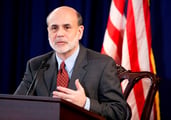
Bernanke says U.S. doesn't need another batch of quantitative easing; that eases concerns on Wall Street

Is the sky falling? No, just stock prices, which seem to be more sensitive to news headlines than in anytime in recent memory. Indeed, experts see a huge disconnect between the market sell-off and what's really going on in the economy. It's 'sell first and ask questions later,' says one portfolio manager.

Fund firm says staying the course works; investors' resolve tested sorely this week
If last week's volatility was a test, go-anywhere funds passed.
