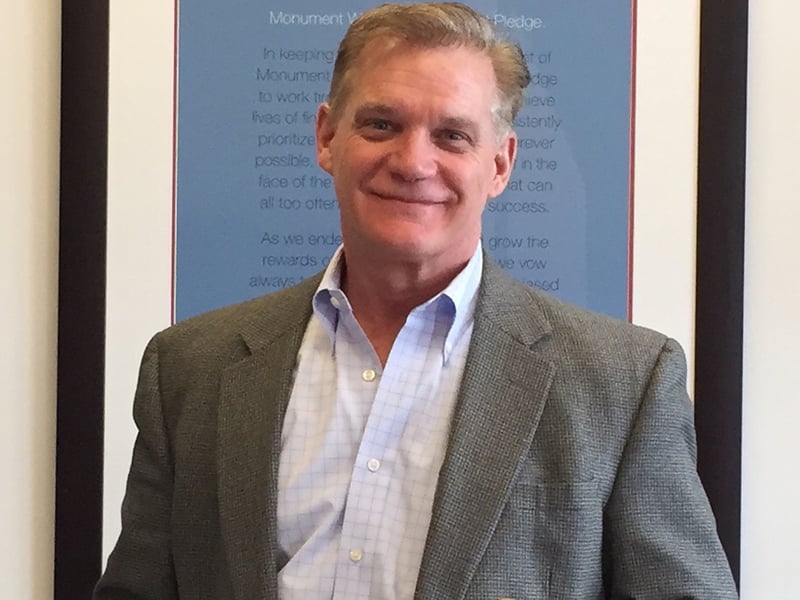
Our first in an ongoing 'Adviser's Consultant' series, featuring successful practice management strategies of advisers.
Monument Wealth Management depends on its "advocates" for 90% of its new business, so president and co-founder Dean Catino spends much of his days keeping investment banking and other professionals up to speed on what his firm has to offer them.
At least every three months, Mr. Catino, or others from the Alexandria, Va.-based advisory firm, meets with the investment bankers, business brokers and estate-planning attorneys who send Monument Wealth Management the business owners and entrepreneurs who are its ideal clients. Most advisers call these professionals "centers of influence," but Mr. Catino refers to them as advocates.
Courting them is not a "set it and forget it" kind of an effort, he said.
"You have to be consistent with it and constantly remind your advocates how great you are," Mr. Catino said. "If they understand what we do, it's not hard. We are a direct benefit to them."
The seven-year-old firm, which manages about $200 million from about 50 family relationships, brings on 10 new clients a year on average. Nine of them come through a referral from another professional.
It's important to show advocates "how you'll help their clients and how you'll help [the advocates] if you take on their clients," Mr. Catino said.
In addition to reciprocally referring clients to advocates, Monument Wealth Management helps these professionals with unrealistic clients who become fixated on getting a certain sky-high price for their business. Mr. Catino and co-founder David Armstrong can help them figure out how much they need in order to have the life they want and how much is "excess," he said.
Business brokers typically deal with these clients through a particular transaction, which usually lasts 12 to 18 months. After that, a client who may have been worth $500,000 before the sale may now have $25 million, Mr. Catino said. And they're looking for help.
"Even if [the client] has been working with 'a guy,' typically that person isn't enough anymore," Mr. Catino said.
Monument Wealth Management hosts signature events for advocates and clients, such as a "Mad Men"-themed March Madness night at a private cigar club. About 45 people came and watched college basketball games and smoked cigars with the firm's 10 employees last week.
Planning events that people will look forward to every year is important, Mr. Catino said. The venue is important and the quality of any speakers should be paramount considerations.
In addition to hosting events several times a year, Monument Wealth Management brings its advocates to the office regularly to show them how they help clients with comprehensive wealth planning.
"We bring them in and let them know about process, and show them we're not running this out of a basement," he said. "People don't want to make a bad referral."
Cultivating referrals from other professionals isn't something that happens overnight, Mr. Catino cautions. It also can take years before the lunches, meetings, events and other personal touches pay off.
One special touch Monument Wealth Management sends to those who refer clients, as well as to clients themselves when they sell firms, is a Louisville Slugger.
"It's unique," Mr. Catino said. "It's not like someone's going to throw away a baseball bat."
While it's important to be consistent and determined in these efforts to draw referrals from other professionals, recognize when such efforts are futile, he said.
For instance, Monument Wealth Management has had disappointing results cultivating new business through relationships with certified public accountants.
The firm knows several good CPAs and recommends clients to them, but doesn't find those referrals are being reciprocated, Mr. Catino said. Therefore, CPAs are not a central focus of the firm's efforts.
Tip sheet
• Find advocates who are in a prime position to refer ideal clients.
• Figure out how your business can help those advocates do their job better.
• Make sure advocates understand what your firm can do to help their clients and how you do it better than the competition.
• Keep your firm top-of-mind with your best advocates through frequent touches, events.
• Plan events that will be memorable by choosing speakers and locations carefully.
• Reach out consistently; it can take years for an advocate relationship to pay off.