
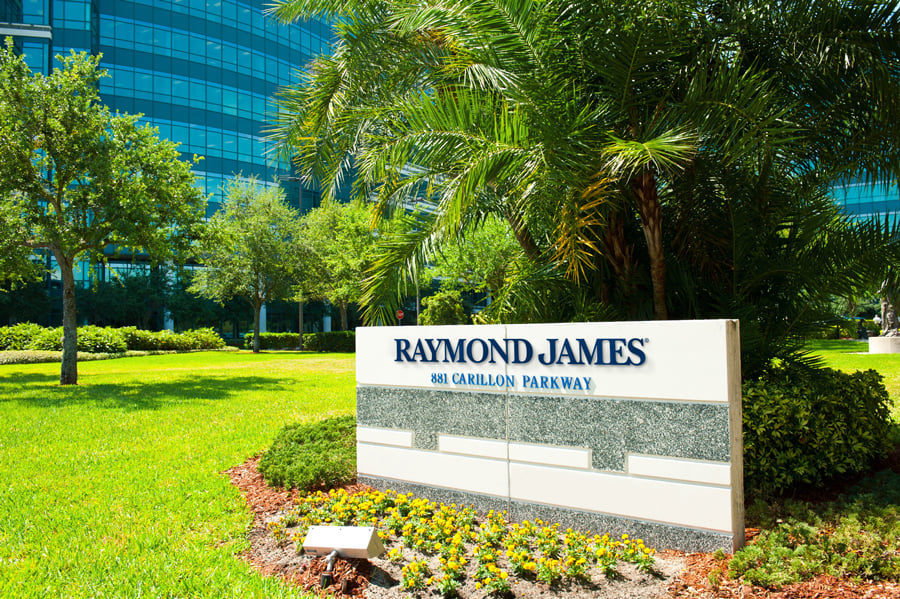
Raymond James has expanded its presence in the East Coast, adding a father-son pair of financial advisors from Edward Jones in Virginia.
On Tuesday, the firm announced the addition of John Murphy and Sean Murphy to its independent advisor channel, Raymond James Financial Services.
The pair, who managed $420 million in client assets at Edward Jones, operate as Forsa Wealth Partners from their base in Chesapeake, Virginia, with a focus on high-net-worth families and business owners.
John Murphy, a veteran of the US Navy who served from 1986 to 1992, spent more than 30 years at Edward Jones, including stints as a regional leader and general partner. Sean, John Murphy's son, joined Edward Jones as a financial advisor in 2018.
The two made the move to Raymond James along with Megan Howell, a financial professional on their team.
"My experience has taught me the value of clear, consistent financial guidance," John Murphy said. "Raymond James' extensive resources enable me to help clients organize retirement, manage risk and plan for succession effectively."
The Murphys' move is part of a recent broader expansion effort by RJFS in the Southeast. Among other additions in the past two weeks, RJFS onboarded advisors in North Carolina, including Matt Kern and Brad Collins from MML Investors Services, who previously managed $120 million in assets with them. Another Edward Jones advisor, David Morgan, also joined the indie advisor arm's North Carolina operations, previously overseeing over $145 million in assets under management.
The advisor additions add to a year of strong recruitment momentum at Raymond James. In its most recent earnings call last month, the firm reported ending its fiscal year with a record 8,943 advisors – a 2% increase year-over-year. Advisors recruited in that period brought in approximately $58 billion in client assets from their previous firms, and the firm said those recruited advisors had trailing 12-month production of $407 million, up 21% from the prior year.
CEO Paul Shoukry attributed the recruitment success to the firm's culture and capabilities. "We had an outstanding year recruiting high-quality advisors onto our platform, a testament to our unique service-first culture, comprehensive capabilities, and strong balance sheet," he said during the earnings call.
Raymond James signaled it expects the recruitment trend to continue, noting it has "healthy pipelines for growth, including strong levels of advisor commitments to join over the coming year."
For its part, Edward Jones' most recent filing with the SEC reflected a 3% year-over-year increase in broker count, though attrition accelerated to 6.1% in the third quarter. Among other efforts to stem the tide of veterans defecting to other firms, it recently announced a new partnership offering, aiming to raise $1.4 billion through an offering of Class B partnership shares to its employees.
To determine eligibility for the partnership, which will take effect next year, Edward Jones said it would be looking at "the participant’s level of responsibility, job performance, branch profitability, potential for growth, years of experience, level and types of compensation," among other factors.

LPL Financial and Raymond James also add independent advisors from Osaic and Edward Jones in Michigan and Arizona.

The SEC-registered RIA advises on more than $1 billion in client assets, with no advisory fee through 2027 and no human financial advisors.

The four wirehouse firms lost 1,449 experienced advisors and recruited 932 in the first six months of the year, according to Diamond Consultants.

Merit's 10th Commonwealth addition deepens its Western New York reach, while another Hightower partner joins its Signature Wealth platform in Michigan.

Report on Climate Action 100+ signals risk for passive managers' 13G status heading into the 2027 proxy season.
Knighthead Life entered the market with a competitive MYGA. A strong launch earned advisor confidence and paved the way for FIAs.
As AI makes financial information more accessible than ever, Lana Hock explains why human judgment, trust, and empathy remain the qualities clients value most in a financial advisor

