
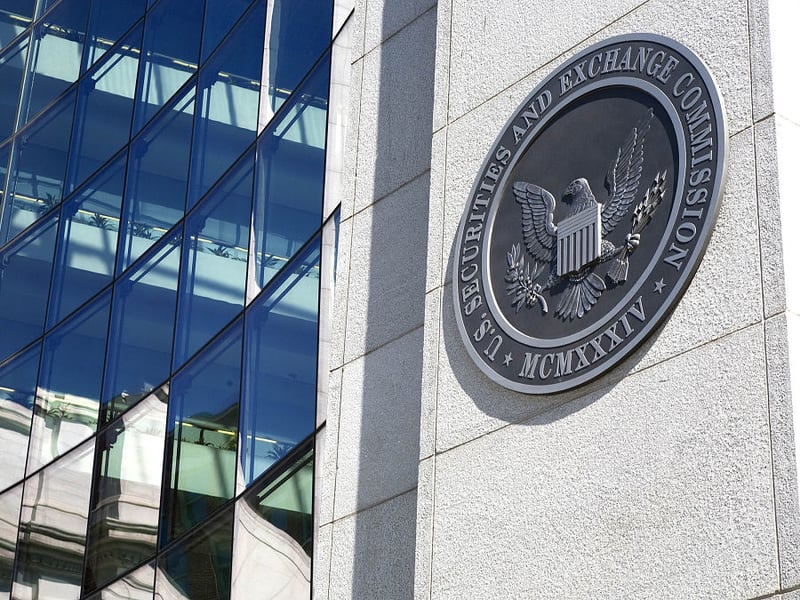
The months long concern over interest rates that broker-dealers pay on cash clients hold in investment advisory accounts took another turn this past week, with Morgan Stanley on Monday revealing that the Securities and Exchange Commission is seeking "information" about certain accounts and Wells Fargo & Co. last week disclosing it is attempting to resolve the SEC's investigation into such cash accounts.
Morgan Stanley and Wells Fargo are not alone facing such questions. "My understanding is that a lot of firms are facing these types of discussions with the SEC," said one Wall Street veteran, who spoke anonymously to InvestmentNews about yields on cash in advisory accounts.
Broker-dealers profit from cash held in client accounts, margin loans used to buy more securities and banking activity in general. And now that interest rates have spiked from near zero at the start of 2022 to more than 5%, the SEC has made several inquiries about whether firms are maximizing returns on client cash in advisory accounts.
Wells Fargo revealed last year that it was facing an “advisory account cash sweep investigation” by SEC, and that the commission “has undertaken an investigation regarding the cash sweep options that the company provides to investment advisory clients at account opening.”
The issue again gained traction last month when banks, wirehouses and brokerage firms informed investors when they released second quarter earnings that they were increasing yields on cash in advisory accounts, sending the share price of many firms tumbling due to fears of lost profits.
"Since April 2024, [Morgan Stanley] has been engaged with and is responding to requests for information from the Enforcement Division of the SEC regarding advisory account cash balances swept to affiliate bank deposit programs and compliance with the Investment Advisers Act of 1940," Morgan Stanley reported in a filing yesterday with the SEC.
A request for information is not a full blown investigation by the SEC into a firm.
The SEC "has undertaken an investigation regarding the cash sweep options that [Wells Fargo] provides to investment advisory clients at account opening," according to a Wells Fargo filing with the SEC from August 1. "The company is in resolution discussions with the SEC, although there can be no assurance as to the outcome of these discussions."
Spokespeople for Morgan Stanley and Wells Fargo both declined to comment about the matter.
It's too early to tell the impact of the SEC's look at Morgan Stanley and client cash, noted one analyst.
"Preliminary investor feedback suggests that the SEC information request will add fuel to concerns that a broader regulatory sweep may be forthcoming," wrote Steven Chubak, managing director of Wolfe Research, in a note Tuesday morning. "On the flipside, others view (Morgan Stanley's) decision more constructively, noting that despite the SEC’s request for information, they were still comfortable applying more modest adjustments to advisory sweep pricing given the strength of the firm’s value prop to advisors."

A Nationwide survey finds 47% of GLP-1 users have never discussed the drugs’ financial impact with an advisor, even as many dip into savings.

The hundreds of millions of dollars from a sale of Inspired Healthcare properties does not mean an immediate windfall for investors.

Its SEC filings said one thing - a congressional probe said another.

Sham agreements allegedly padded revenue by 345%.

"Most pre-retirees are uncomfortable making key retirement income decisions without an advisor's help," said Chris Bailey of Cerulli.
Knighthead Life entered the market with a competitive MYGA. A strong launch earned advisor confidence and paved the way for FIAs.
As AI makes financial information more accessible than ever, Lana Hock explains why human judgment, trust, and empathy remain the qualities clients value most in a financial advisor

