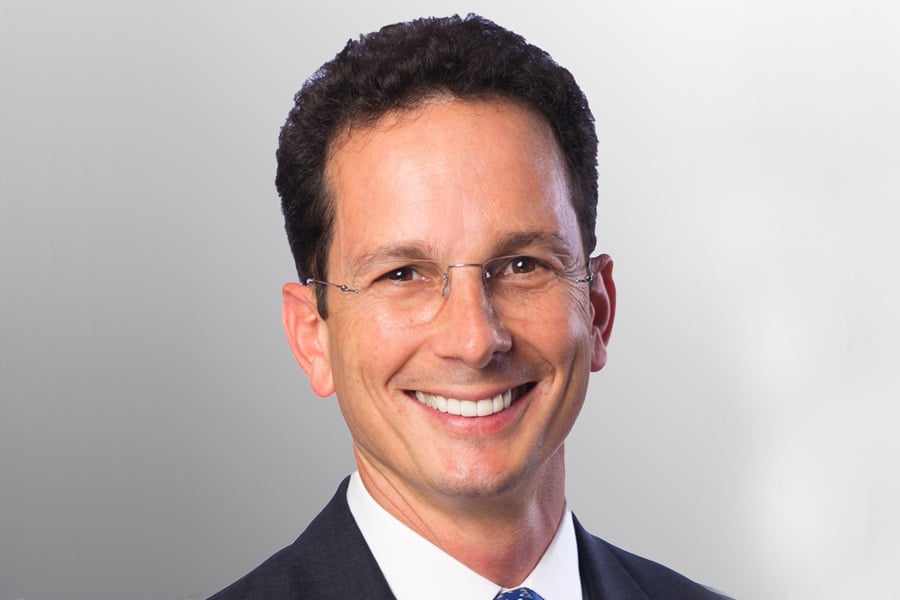
Mark Goldberg, president of investment management at W.P. Carey Inc., has been listening for months to financial advisers' worries about the Department of Labor's new fiduciary rule, which seeks to raise investment advice standards in retirement accounts. Mr. Goldberg — who is also chairman of its wholesaling broker-dealer, Carey Financial — knows of what he speaks: As chairman of the Investment Program Association, he
testified before the Department of Labor in 2015 about the rule, and later followed up with the DOL in two separate meetings.
And he knows the world of independent broker-dealers; last decade, before joining W.P. Carey, he was president and CEO of Royal Alliance Associates Inc., one of the broker-dealers that currently make up the Advisor Group.
Bruce Kelly: What is one of the most confusing aspects of the new rule?
Mark Goldberg: I have a keen sense of the apprehension many financial advisers must feel as they focus on this. Anyone who offers investment advice to an IRA holder — it doesn't matter if the compensation is level-fee, fixed-fee or commission — is a fiduciary.
About half the advisers out there think as long as they charge a fixed fee for a planning service or a level fee for a fee-based model, that they don't have to do anything different and that their accountability and their liability havn't changed. If you are in the business and paid in any way for investment advice and you handle qualified accounts, you are a fiduciary and are accountable.
BK: Some in the industry are pointing to a best-interest contract exemption “lite,” or a part of the rule that will make it easy for advisers to continue to do business the way they always have with little impact or responsibility. Is that accurate?
MG: BICE lite doesn't exist. It was a phrase coined by someone and repeated so often that now people believe it exists. It's loosely derived from the rule that describes additional disclosures and documentation necessary for a fiduciary, fee-based adviser. Somehow it got to be described as a short-form exemption. Nonsense. You are a fiduciary. There is more confusion on this than anything.
BK: Can broker-dealers avoid the fiduciary rule by going fee-based?
MG: Broker-dealers definitely just inherited a whole new level of accountability and liability on their fee-based business, too. They now have to meet the fiduciary standard. A fee-based platform for managing clients' retirement accounts does not equal fiduciary. There are changes coming to fee-based platforms. They have to change in order to comply.
BK: Will there be an impact on fee-based charges in brokerage accounts?
MG: In short order, folks will realize that standardization of fee-based charges is coming too. Gone will be the day where one adviser can charge clients 1% and another 1.5%, unless there is a documented, valued service being delivered for the extra amount. Broker-dealers can't really tolerate much in the way of differential pricing under the reasonable compensation rules. I think the range of fee charges will be narrowed. When that realization hits, you will hear a lot of harrumphing.
The DOL, by taking a principles-based approach to the rule writing, has left little wiggle room. Everyone is searching for it. It isn't there.
BK: What's your outlook for the industry?
MG: I believe the high-quality financial advisers out there do 90% and more of what it takes to be a fiduciary. Now they need the assistance of their broker-dealers to put in the processes and procedures that make compliance to that standard evident. The broker-dealer community will get there. Hopefully soon!
(More: Broker-dealers split on commissions in wake of DOL fiduciary rule )