
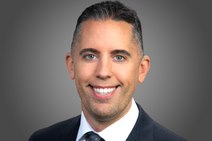
The leadership vacuum created at Strive Asset Management when co-founder Vivek Ramaswamy resigned in February to pursue the Republican nomination for president of the United States has been filled by Matt Cole.
The upstart Columbus, Ohio-based asset manager, which has emerged as a pesky thorn in the side of the ESG investing universe, didn’t make an official announcement when Cole’s title of chief investment officer was expanded to include chief executive officer. The first public reference to Cole, 38, as CEO came in an April 11 press release that touted Strive’s proxy voting service reaching the $5 billion mark.
Cole joined Strive in February from the California Public Employees Retirement System for 15 years as an investment manager and analyst.
He appears very much up to the task of continuing Strive’s mission of promoting shareholder value over the broader concept of stakeholder value — which takes into account a company’s employees, customers, suppliers and even communities in addition to investors — that has gained appeal across the wealth management space.
“Since day one, Strive has been an activist investor,” Cole said. “We’re being an activist to maximize shareholder value.”
In a little over a year, Strive has launched eight ETFs that combine for more than $700 million. The firm’s other business line is a proxy voting service aimed at challenging the status quo of third-party proxy voting firms Glass Lewis and ISS, which combine for a more than 95% share of the market of advising corporate proxy voting.
According to Cole, one of the driving forces behind the creation of Strive Asset Management in early 2022 was to offer an alternative to the trend toward stakeholder capitalism.
“We exist to maximize shareholder value, and that’s why Strive is a better fiduciary,” he said.
When it launched, Strive stated its mission as: “To restore voices of everyday citizens in the American economy by leading companies to focus on excellence over politics.”
That led to a suite of funds that have been dubbed by some as “anti-woke” because of the way they go against the grain of popular ESG mandates.
The flagship Strive US Energy ETF (DRLL), for example, is a passive energy-sector fund that can already be found elsewhere. The difference, according to Cole, is how the fund will vote shareholder proposals.
“We will unlock shareholder value through shareholder advocacy, voice and votes,” he said. “We see what’s happening in the industry through ESG-friendly asset managers.”
Cole cited a 2021 Chevron shareholder vote as an example of the way the largest ETF providers can influence corporate actions. The shareholder resolution required Chevron to monitor and reduce the carbon footprint of every company in its supply chain.
Though Chevron’s board of directors described the proposal as overly burdensome and didn’t support the proposal, it passed after all the major ETF providers with funds that included shares of Chevron stock voted in favor.
“We say U.S. energy companies should evaluate all future and current investments as well as alternative energy projects exclusively based on a financially measurable return on investment, regardless of any other social, political, cultural or environmental goals,” Cole said. “They might be noble and important conversations, but the right place is through the political process, where everybody has one vote.”
While the original mission is still front and center on Strive’s website, Cole said it will soon be replaced by a revised statement that reads: “Our mission is to maximize value for our clients by focusing corporations on excellence.”
In many respects, it boils down to the debate over where corporations rank shareholders among the broader group of stakeholders, which includes anyone involved in a company’s business or business model.
“We would disagree on the purpose of a corporation,” Cole said. “We believe the purpose is first and foremost to provide value to shareholders. Not all stakeholders are created equal. The most important stakeholder are shareholders, but a lot of other asset managers reject that and espouse stakeholder capitalism.”
Cole realizes Strive is swimming into a strong current that favors shareholder capitalism and the ESG movement. But he also believes there's an appetite for what Strive is selling.
“Some companies really want this and some don’t,” he said. “We will continue to bring thought leadership in defense of shareholder primacy across the industry to say that shareholders must be considered before other stakeholders. If you’re a for-profit company, your responsibility is to make money for shareholders over other stakeholders.”

Fake advisors, fake platforms, fake crypto - all on a six-month timer

A new DOL rule restores a clearer two-factor test, giving independent advisors greater certainty over their business status.

Dynasty Advisors brings a multigenerational team and integrated planning model spanning two states.

Advisor360, spun out of Commonwealth in 2019, adds two execs and is ‘excited to support LPL’ after the conversion

The multi-family office says its earliest participating funds invested in Anthropic at a $45 billion valuation, while the vast majority of its access came at $183 billion.
Advisors are broadening the conversation beyond savings to help clients prepare for the realities of longer lives
Growing wealth, evolving priorities, and untapped opportunities are reshaping how women approach long-term investing.

