
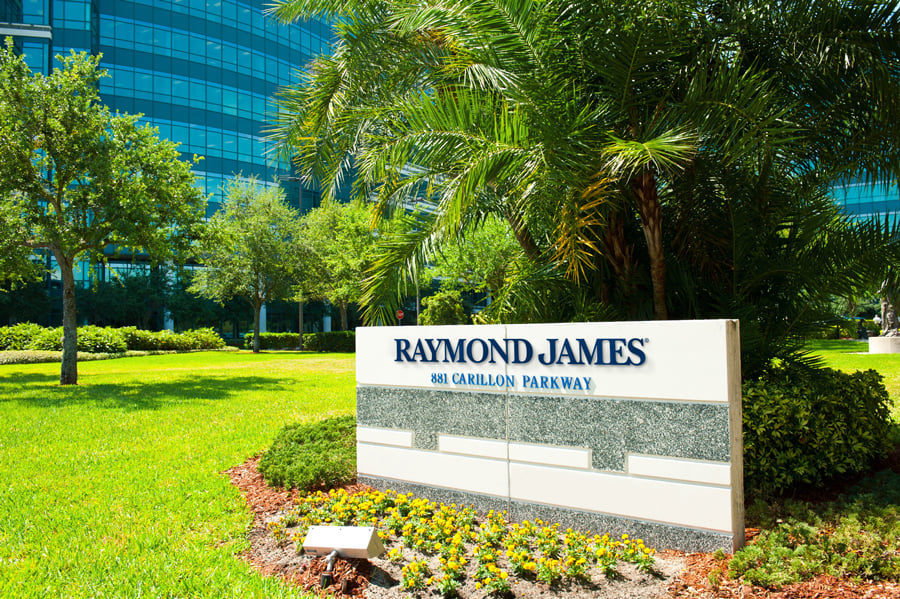
Raymond James Financial was beaten to the punch by rival LPL Financial Holdings this spring for one of the grandest prizes of the financial advice industry, the privately held and culturally cohesive Commonwealth Financial Network.
A handful of senior industry executives over the summer privately told InvestmentNews that Raymond James was second to LPL Financial in the bidding for Commonwealth, with close to 3,000 financial advisors and $300 billion in assets.
LPL emerged the winner, announcing at the end of March it was paying $2.7 billion cash for the privately held firm, which was owned and controlled by Joseph Deitch, who founded the firm in 1979 and led it to being a top rated, service-focused firm for financial advisors over the following forty-six years.
Losing such a prize may have stuck in the collective craw of the senior executives of Raymond James in St. Petersburg, Fla.
So, round one went to LPL, who said at the time of its purchase of Commonwealth it was aiming to hold onto 90% of Commonwealth’s assets once the deal was completed.
The competition between LPL and Raymond James is turning into a slugfest, a financial advice version of Joe Frasier vs. Muhammad Ali in 1971, billed at the time as the Fight of the Century.
In 2025, two top industry heavyweights are duking it out for Commonwealth’s advisors, with Raymond James making inroads over the summer in recruiting Commonwealth veterans.
Round two looks like it may go to Raymond James, scoring plenty of points against its competitor. From August 5 to September 5, Raymond James issued nine press releases announcing it had recruited the same number of teams to its independent broker-dealer group, Raymond James Financial Services, and those advisors worked with more than $2.4 billion in client assets.
A spokesperson for LPL declined to comment about the competition for Commonwealth financial advisors. A spokesperson for Raymond James also did not respond to messages for comment.
It was clear that Raymond James was husbanding cash earlier this year in preparation for a potential acquisition, saying over the winter it was cutting back on the pace of stock buybacks as it focused on acquisitions.
“Outside of organic growth, we have been front-footed and looking for acquisitions,” said Raymond James’ Paul Shoukry during a conference call with analysts on January 29 to discuss quarterly earnings. “We can’t say much about that topic other than, there has been a lot of activity there. And, the last thing we want to do, yes, we don’t know whether or not we will close any of them or we’ll get to the finish line.”
At the time, Shoukry was president of the firm and days later assumed the CEO mantle.
Once the deal did not go Raymond James’ way, it appears the firm used that money instead to recruit Commonwealth advisors, who on average generate the most annual revenue - $1 million per year per advisor.
Raymond James' bonus offer went up almost overnight, one recruiter noted.
A week after the LPL and Commonwealth deal was announced on March 31, “we saw Raymond James, the independent contractor division, their broker-dealer side, really increase their deal, specifically to attract Commonwealth advisors,” said Louis Diamond, CEO of the eponymous recruiting firm on a recent podcast. “In some cases, there is almost a 50% increase in the deals they were paying just a week or so before.”
Mergers are tough, and LPL has plenty of experience with buying broker-dealers.
Indeed, LPL has worked overtime, trying to keep Commonwealth's financial advisors happy. The firm has said it would keep the Commonwealth name for those advisors, for instance, and senior management has gone out of its way to meet with top Commonwelath advisors and hear their concerns.
Meanwhile, plenty of other top tier broker-dealers and registered investment advisors have joined the skirmish for Commonwealth advisors, turning a toe-to-toe boxing match into more of an industry wide scrum. And unlike Raymond James, some firms do not publicize their success in recruiting advisors and keep it quiet.
There’s no doubt, however, that Raymond James is fighting hard to recruit Commonwealth’s advisors. Let’s see who wins round three.

House-passed measure would let fraud victims deduct losses and waive early-withdrawal penalties on stolen retirement funds.

Anthropic's Enterprise plan offers advisors stronger data controls — but smaller RIAs may struggle with the cost.

Partnership with DPL adds Jackson and Protective to insurance marketplace as fee-based annuities gain traction with fiduciary advisors.

Morgan Stanley is one of the leading wealth management companies in the country.

South Carolina and Bay Area advisory teams join the WPCG-backed national platform as RIA dealmaking hits new highs.
Northern Trust’s Ken Lassner shows advisors how to convert volatility into after-tax portfolio gains
Dan Biagini of American Equity says the steady decline of pensions, longer lifespans and a reset in interest rates are rewriting how advisors build retirement income

