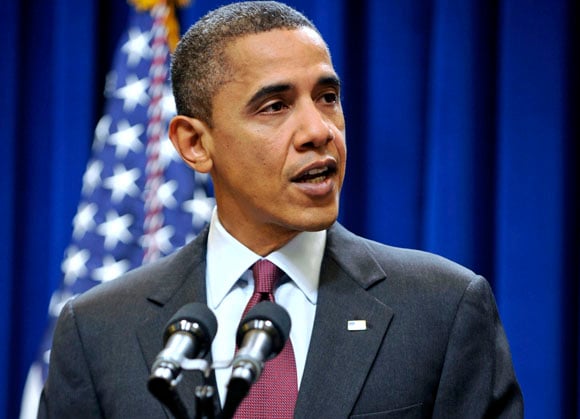
It seems financial advisers are feeling a little conflicted these days. They concede that clients are better off financially than they were three years ago — but they still want President Barack Obama out of the White House.
The latest quarterly survey of advisers by Brinker Capital Inc. found that 64% of the respondents believe their clients are better off than they were at the start of the Obama presidency. But 56% of the 427 advisers surveyed in October said a second term for the president is their biggest fear for the 2012 election.
According to Brinker president John Coyne, the resounding message is that the adviser community wants the leadership in Washington to focus on a stronger U.S. economy. In fact, 92% of the survey respondents said that if they could tell their favorite candidate to focus on one issue, it would be to improve the economy through job growth.
“Financial advisers are an incredible proxy for investors,” Mr. Coyne said. “They continue to see doom and gloom, and their big anxiety right now is four more years of the current president.”
When advisers were asked which candidate they believe is most qualified to lead the U.S. toward recovery and growth, 32% chose Mitt Romney. (Click on the following link to see
how all the candidates stacked up. “Better than 50% said they want a business person in the White House,” Mr. Coyne said. “And they want less regulation.”
In terms of what is most responsible for stifling economic growth, the Obama administration was cited most at 34%, followed by partisan politics (24%), and government over-regulation (17%).
While advisers have appreciated the strength of the markets coming off the low of early 2009, only 32% of the respondents believe the markets will perform better next year than they did during Mr. Obama's first three years in office.
When the same question was asked in April, 62% of the respondents said they thought the markets would do better during Mr. Obama's fourth year in office. Historically, the third year of a president's term is strongest for the stock market. According to the Stock Trader's Almanac, the Dow Jones Industrial Average hasn't finished with a decline in a pre-presidential election year since 1939, when it was down 2.9%.
Prior to today's 400-point rally by midday, the Dow was down less than 1% from the start of the year.
In terms of President Obama's greatest achievements while in office, 81% of respondents selected the killing of Osama bin Laden and other top Al-Qaeda operatives. Economic stimulus and healthcare each received 7% in the survey.
As for disappointments with the Administration, the lack of job creation was selected by 46% of respondents, followed by the inability to reduce the deficit (33%), and in ability to compromise with Congress (12%).