
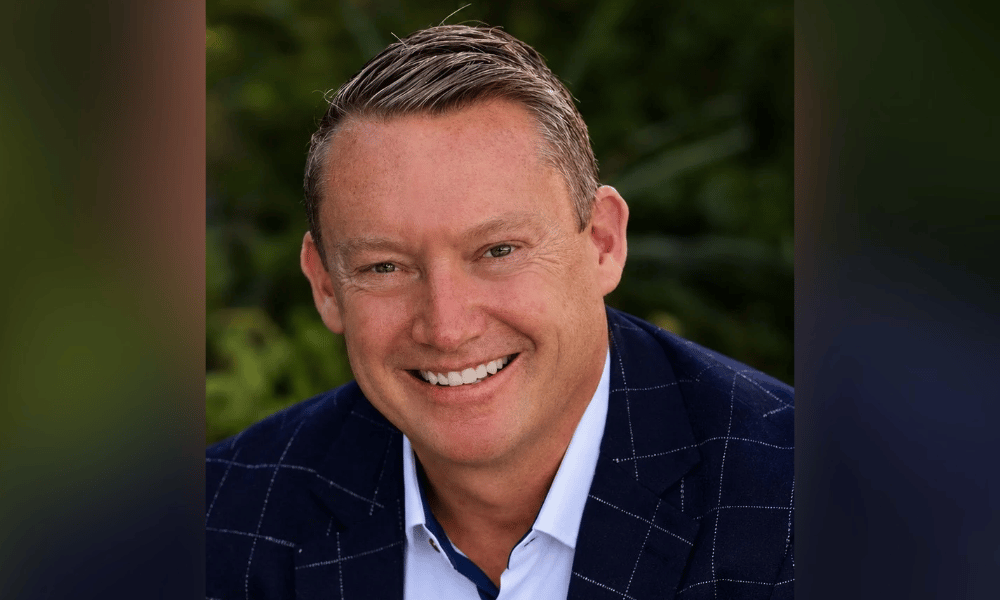
Wealth firm executives aren’t short on growth ideas or the capital to chase them. What they lack is the bandwidth to execute – and a flood of artificial intelligence tools that's making it harder instead of easier.
That's according to Eddie Brown of Bridge Operating Partners, a self-described executive AI platform which officially launched Tuesday with a team of Schwab, LPL and Fidelity veterans.
In an interview with InvestmentNews, the Bridge founder and CEO said growth and AI came up in nearly every conversation he had with RIA and family office leaders before forming the Scottsdale, Arizona-based firm.
"I think there’s a shortage of being able to have really a unified [growth] strategy across the firm, one strategy, and being able to execute on that because of the volume and the demands of the day-to-day that happen in these firms," Brown told InvestmentNews.
While executives are trying to keep pace with fast-moving capabilities presented from AI, he also described a "leadership swirl" arising from leaders having to weigh whether the tools are safe, how hard they should push adoption and what those tools will cost over the long term.
"In some way, [AI is] supposed to be an enabler, but it became a kind of a distractor from focusing at the core capabilities around growth,” he said.
Brown, who previously headed Schwab Advisor Family Office and served as Pathstone’s first chief growth officer before launching his own consultancy firm, said the first wave of AI mostly delivered tools for advisor efficiency. On the flip side, the tsunami of new platforms and upgrades is also creating a change management challenge for already-stretched technology chiefs at wealth firms, with only a small number of org charts having dedicated AI roles.
Industry data show independent firms already see AI as a growth lever, not just a back-office add-on. In Schwab's 2026 Independent Advisor Outlook Study, 49% of respondents cited integrating AI tools into the firm's workflow as a top investment priority to support growth over the next three years, and 38% said they expect AI’s greatest impact to be improving firm scalability. Beyond that, 60% said they plan to use AI for strategic planning within three years.
An earlier Schwab survey found just one in 10 firms had embedded AI into their core business strategy, and its most recent RIA benchmarking found a third of firms prioritizing AI by communicating an AI vision (34%), having senior leaders that model AI usage (33%), and identifying AI champions (33%).
Before striking out to form his own solo advisory practice in January, Brown said he held hundreds of conversations with sitting leaders, peers and mentors. Working with national firms as a consultant was challenging, he said, because company restrictions on enterprise AI model use required him to work with firm-issued hardware or credentials.
“I either had to get a laptop or I had to get an email. So I needed a solution,” Brown said.
His answer, a private system running on an open-source model, eventually became the Bridge Operating Sovereign System (BOSS), which the company announced alongside its proprietary Bridge Embedded AI Lab solution. The engineers behind BOSS are now working as part of the firm's Embedded AI Lab partners.
As more AI tools join the ever-expanding map of wealth tech solutions, Brown sees a growing challenge for firms looking to create systems for responsible adoption.
"It’s hard to have the right governance and policies and procedures in place,” he said.
In Schwab’s outlook study, AI regulation and guidance topped the list of issues where advisors want more industry advocacy, cited by 38%. More than two-thirds (68%) said they prefer AI standards and guidelines that are clear and easy to understand over all-encompassing mandates.
Bridge is looking to provide its operating expertise to executives at family offices and wealth firms in the ultra-high-net-worth space, seizing on what Brown sees as an industry-wide trend of firms "trying to go upstream."
"They’re trying to build in more capabilities, more services ... if you can focus on a higher net worth client, the multiples are better on revenue," he said.

Independent advisors in Colorado, Texas and Arkansas join larger wealth management platforms through acquisitions and partnerships

The enforcement division wanted a full bar - the Commission went lighter

Welch brothers’ 93 Financial Group gives the Osaic-owned RIA a fifth greater Boston office, days after a $1.6B triple acquisition

The hedge fund group allegedly held a financing 'vice grip' over the company

New wealth, evolving donor expectations, and responsible AI are reshaping charitable planning for advisors.
Advisors are broadening the conversation beyond savings to help clients prepare for the realities of longer lives
Growing wealth, evolving priorities, and untapped opportunities are reshaping how women approach long-term investing.

