
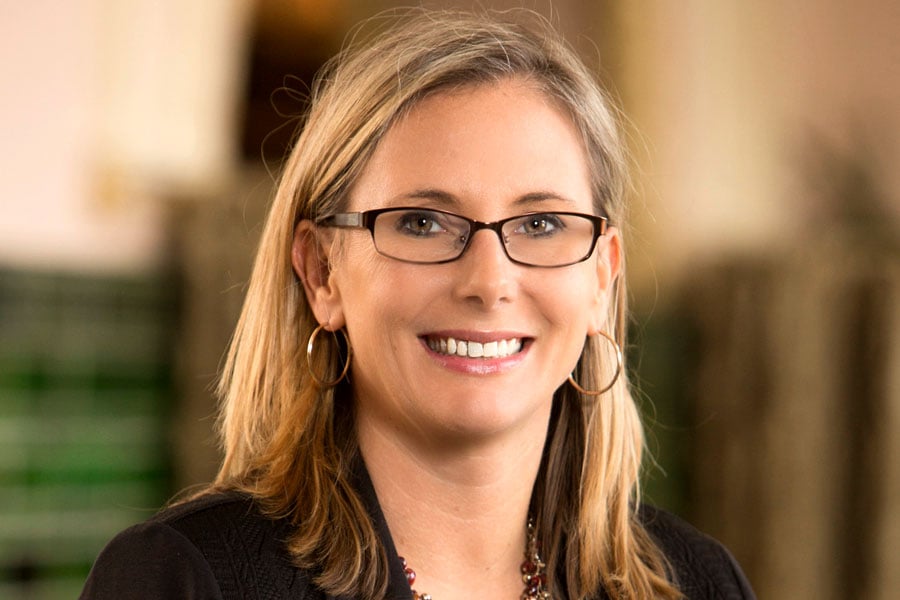
As president of Buckingham Strategic Wealth, Wendy Hartman has learned a lot over the past year about herself, her company and the overall financial services industry.
Kicking off the opening session at the InvestmentNews Women Adviser Summit on Thursday morning, Hartman described 2020 as a “transformative year,” while admitting that the ongoing fallout from the global pandemic still represents a moving target for the financial planning industry.
On the now familiar concept of working from home, Hartman said Buckingham’s policies are in a near constant state of change and are an extreme contrast from just a year ago.
“Working from home is an ever-evolving topic,” she said. “We’re looking at what a hybrid approach looks like, whether we might need a different office space, and whether we can be location-agnostic.”
Hartman said her $16.2 billion Clayton, Missouri-based advisory firm, which has more than 40 offices, could consider an “expanded talent pool” if location was not a factor.
However, considering her own experiences, Hartman recognizes that working remotely will not be a selling point for all potential hires. With two school-age children at home, Hartman said she had to initially set up her home office in a closet, which she referred to as a “cloffice.”
In terms of hiring during the pandemic in an industry that has long experienced a dearth of qualified talent, Hartman said, “We’ve been fortunate in finding quality and quantity for the positions where we’re looking to hire.”
“Some cities might find it harder to find that talent, but we’ve had good retention,” she added. “We have associates with us that have never stepped foot into the office, and it’s amazing to see people rise to the occasion to help them out.”
One of the downsides Hartman cited about the companywide work-from-home experience is the increased risk of burnout.
“You have to find the right boundaries and identify your work hours,” she said. “Encourage people to take PTOs, even if they just end up being staycations.”
Because business must go on, even during a global economic shutdown, Hartman said it is a mistake to assume clients are doing all right just because you might not be hearing from them. For starters, there’s the potential technology gap, especially among some older clients.
“The client experience is evolving and different, so we conducted a client survey at the end of last year to learn from clients about what was on their minds,” she said. “When you think about what it will look like when we return to the office, you have to also think of that from the client experience.”
At Buckingham, that meant using technology to ramp up education and communication efforts.
“For some clients, the technology was brand-new,” Hartman said. “We did a webinar on cybersecurity because we know there are fraudsters out there that want to use Covid-19.”
Hartman declined to make a specific prediction on when she expects to get back to anything like the kind of normalcy that includes in-person meetings and industry conferences.
“There are lots of different variables to consider,” she said. “But I feel like we’re getting closer.”

Wall Street banks expand wealth services as ultra-high-net-worth client demands extend further above and beyond investment management.

The acquisition of $2 billion Gilbert & Cook extends a buying spree for the ultra-high-net-worth firm that has already touched six states this year.

After years of encouraging sacrifice and delayed gratification, advisors have to do the next emotional lift: helping clients let go of a potentially harmful scarcity mindset.

A new JPMorganChase Institute report reveals how deeply stock market wealth now drives everyday American spending, especially for retirees.

A survey of 507 solo agers finds most lack confidence in their plans and that systems, not just individuals, need to change.
Northern Trust’s Ken Lassner shows advisors how to convert volatility into after-tax portfolio gains
Dan Biagini of American Equity says the steady decline of pensions, longer lifespans and a reset in interest rates are rewriting how advisors build retirement income

