
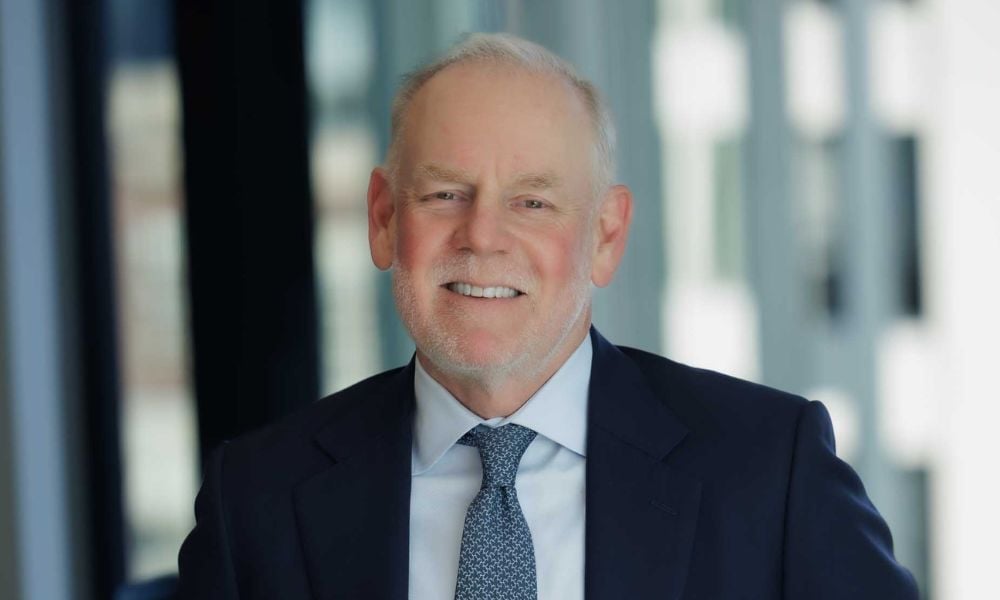
Adam Spector started as CEO of Fiduciary Trust International in October 2025. By now, he has had more than enough time to chart a path for the iconic $112 billion AUMA wealth manager.
So, with a brand-new calendar year in front of him and a century-old organization officially under his captaincy, where does the industry veteran Spector seek to steer Fiduciary Trust International in 2026?
“My priority is straightforward,” he says. “To preserve what has made Fiduciary Trust International successful for nearly a century, while ensuring we continue to evolve in thoughtful and disciplined ways. Our clients come to us at the most critical moments in their lives, often with significant complexity, and our responsibility is to listen first, understand what matters most to them, and then build plans that serve those goals across generations.”
More specifically, says Spector, that means investing in the people, expertise, and culture that define the long-running firm, while also making targeted investments in technology intended to enhance – not replace – the human relationships at the core of its business. In his view, technology should simplify complexity, reduce friction, and allow Fiduciary Trust International’s professionals to spend more time advising clients, not managing processes.
In other words, Spector will not cede to faceless bots the white-gloved, human touch that has defined Fiduciary Trust International since well before his birth.
“Above all, my goal is execution, and to continue what has allowed the organization to thrive for 95 years – consistent leadership, disciplined growth, and an unwavering commitment to putting clients’ interests first,” Spector says.
FROM GENERATION TO GENERATION
Perhaps it should be no surprise that Spector has little intention of shaking things up too much at Fiduciary Trust International. He’s spent the last five years as executive vice president and head of global distribution at parent company Franklin Templeton, learning up close that Fiduciary Trust International is first and foremost a business run for families.
“Our clients want their wealth to endure for generations, and the first thing they often look for is a firm that has demonstrated the same durability. Fiduciary Trust International has navigated decades of market cycles, geopolitical shocks, and economic change, and we intend to be here for generations to come,” Spector says.
Put simply, he does not believe in change for its own sake. And while Spector views innovation as essential to an organization’s competitive development, he demands that it be purposeful.
“We evolve how we serve clients, how we use technology, and how we manage complexity, while never losing sight of what has always differentiated us: trust, stability, and a relentless focus on our clients’ best interests,” Spector says.
INVESTMENT VERSUS WEALTH MANAGEMENT
Not that Spector won’t be sprinkling into the mix a few new ideas from his own professional background, despite having spent the majority of it outside the traditional wealth management industry. Prior to joining Franklin Templeton, Spector spent over three decades at global asset managers Brandywine and SEI Investments.
Nevertheless, he views investment management and wealth management as “sharing a foundation,” with the latter ultimately proving more complex, primarily because, well, there are people and emotions involved in managing a family’s wealth.
“It’s like playing chess in three dimensions,” Spector says. “Many assume that managing massive institutional pools of capital is more challenging, but in reality, advising families often involves far more constraints – tax considerations are of paramount importance, and certain family dynamics make the politics of a sovereign wealth firm look tame.”
When it comes to the current investing environment, the former asset management executive turned wealth management CEO expects 2026 to be a more normalized environment with modest growth, easing inflation pressures, and financial conditions that are no longer restrictive.
“Market leadership has been narrow, valuations are elevated in some areas, and selectivity matters. This is a market that rewards discipline, diversification, and attention to after tax outcomes rather than momentum-driven strategies,” Spector says.
NOT EXACTLY YOUR FATHER’S FAMILY OFFICE
The value of the client−advisor relationship may remain timeless, but a lot has changed in the wealth management business since Fiduciary Trust International was founded in 1931. And it’s not merely that there have been technological advances like AI note-takers being added to Zoom meetings.
The recent flood of PE money has transformed the once staid financial advisory industry into Wall Street’s version of Survivor, with vulnerable financial advisors seeking alliances to remain viable.
And while Spector won’t comment on specific acquisition plans, he won’t deny that he is evaluating M&A opportunities. Of course, Fiduciary Trust International’s backing by a Fortune 500 company with a strong balance sheet certainly offers him plenty of options.
“The fact that Franklin Templeton’s founding family still controls the firm means that we are in no need to make forced purchases, nor are we managing the firm for an eventual ‘flip’ like many private equity owners do. Any acquisition opportunity we consider has to enhance our ability to serve clients and fit with who we are as a firm,” Spector says.
Oh, and when it comes to AI, he’s actively implementing those tools across the firm too. “AI should empower our professionals, not replace them. By automating routine tasks and surfacing better insights, we free our teams to focus on what matters most: advising clients through complex financial and personal decisions,” Spector says
WILL THE REAL ‘FAMILY OFFICE’ STAND UP?
Fiduciary Trust International is one of the longest operating family offices, and as a result, its professionals know what it takes to properly address the financial needs of high-net worth clients. That said, more wealth managers are, on their websites, professing to be “family offices,” even if they don’t understand what that description truly entails.
Don’t be fooled by their false advertising, warns Spector.
“A true family office must be able to integrate investment management, tax planning, trust and estate services, philanthropy, and family governance into a cohesive strategy tailored to each family’s goals. That level of integration requires scale, expertise, and a team-based approach. We then go above and beyond that foundation for our family office clients, adding in specific services like tax preparation or bill-pay services based on their particular circumstances,” Spector says.
Stressing that “leadership in this space is earned through execution and trust, not labels,” Spector adds that the depth of that leadership is what keeps families engaged across generations.
“Our strong asset retention – our five-year client asset retention rate is 98 percent – reflects the strength of those relationships and the trust clients place in us,” Spector says.

House-passed measure would let fraud victims deduct losses and waive early-withdrawal penalties on stolen retirement funds.

Anthropic's Enterprise plan offers advisors stronger data controls — but smaller RIAs may struggle with the cost.

Partnership with DPL adds Jackson and Protective to insurance marketplace as fee-based annuities gain traction with fiduciary advisors.

Morgan Stanley is one of the leading wealth management companies in the country.

South Carolina and Bay Area advisory teams join the WPCG-backed national platform as RIA dealmaking hits new highs.
Northern Trust’s Ken Lassner shows advisors how to convert volatility into after-tax portfolio gains
Dan Biagini of American Equity says the steady decline of pensions, longer lifespans and a reset in interest rates are rewriting how advisors build retirement income

