
AI is taking over much of the manual work that once filled a junior advisor's first years – but independent RIAs are still hiring them anyway as next-gen talent becomes more important for many firms stuck between a succession cliff and a generational wealth transfer.
A recent survey by Cerulli Associates, in partnership with Vista Equity Partners, found nearly two-thirds (64%) of RIAs reporting that AI has reduced manual and administrative work, yet 73% are most likely to add junior advisors over the next two years.
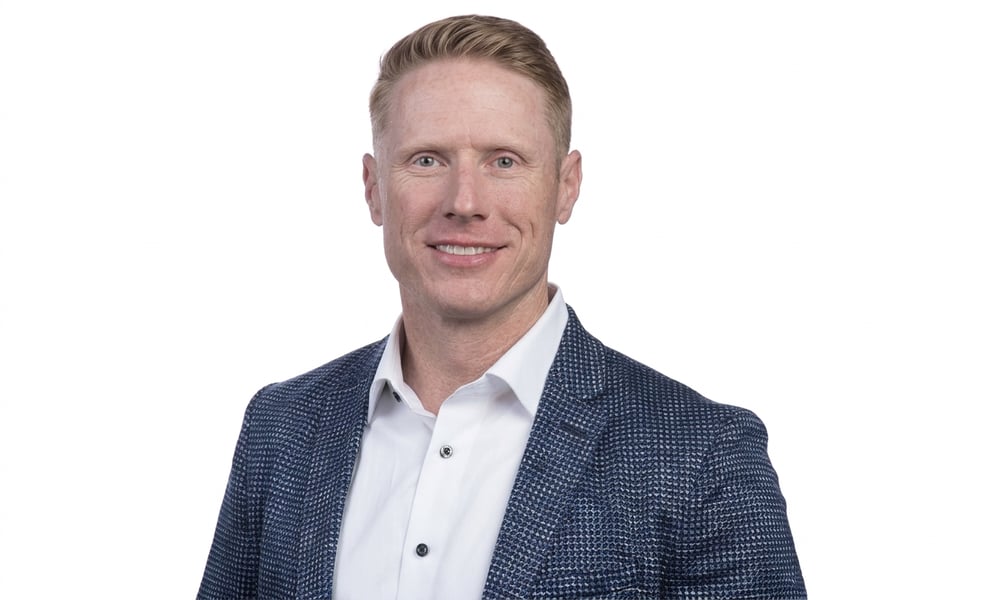
For Sean Clancy, a wealth advisor and managing director who has spent 21 years at Prime Capital Financial and runs its Denver office, those two stats make perfect sense.
"We have an older advisor base in this country," Clancy told InvestmentNews in a recent interview. "A lot of these advisors are looking for a succession plan. So I think part of it is having a smooth transition to a junior advisor where you're not flat out selling your book to a stranger."
On the client side, he pointed to the ongoing demographic shift that's putting "a lot of wealth in the younger generation.
"We know there's this massive wealth transfer, and I think it's hard to assume that a 30, 35-year-old is going to resonate with a 65 or 70-year-old advisor," he said.
Prime Capital's biggest talent pipeline is its internship program, which hosted 22 or 23 interns last summer. The firm has more than 200 advisors and brings in roughly 10 younger advisors a year, Clancy said. Training at the firm still largely follows the traditional blueprint, starting with shadowing senior advisors in client meetings and building financial plans and transitioning to portfolio management over time.
"At the end of the day, most junior advisors want to build a book of business, and to do that, you have to know financial planning," he said. "That's a must at this point."
What's starting to change is the technology layer of the process. New hires have to learn the ropes on platforms such as Schwab, Orion and Wealth.com; on top of that, they must know how to use AI to connect them.
"AI is essentially on top of the tech stack that allows all these other platforms to speak to each other," he said. "But the junior advisor still has to know the individual intricacies of those individual softwares so that they know what output they want AI to provide them."
In many ways, advances in technology have effectively flipped the script on advisor training. As Clancy tells it, junior advisors often turn out to be more fluent with the AI-enhanced tech stack than their senior colleagues.
"My guess is that the next-generation advisor is going to adopt it [AI] with more enthusiasm than legacy advisors," he said.
Firms are still building the support for that learning curve. Schwab's 2026 RIA Benchmarking Study, which looked at firms with $250 million or more in assets, found 83% are using some form of AI, but just 28% said they had provided AI training to staff.
Among many obstacles to bringing on and developing rookie talent, recent survey research by Cerulli pointed to the high cost of employing junior advisors, with 80% of practice management professionals citing it as a challenge. An even bigger hurdle is a perception that young guns don't gather new assets fast enough, which 100% of respondents agreed was an issue, including 40% who said it's a "major challenge" and the rest saying it's a "moderate challenge."
But from Clancy's point of view, the broad industry shift toward recurring, fee-based revenue has made junior talent easier to justify.
"Now that the entire industry is primarily fee-based, and it's recurring revenue, it's easy for a senior advisor to siphon off a portion of their revenue, which is a known number at this point," he explained. "[They can] say 'I'm willing to invest in a junior advisor [and] make my business more efficient, free up time for me to do what I'm best at, which is usually running meetings."
Clancy also weighed in on Anthropic's Claude for Financial Advisors, which made a huge splash this month at the Future Proof Festival in Huntington Beach, California. While some argue it feeds into broader fears of human soft skills being left by the wayside, he was quick to offer a different take.
"I think it's an overall net positive. No doubt about it," Clancy said. "I'm not in the camp that believes that AI is going to replace face-to-face relationships and advisors. Money is an emotional conversation."
Students entering the field seem to share Clancy's view. In a joint survey of aspiring financial professionals, FP Transitions and the FinServ Foundation found nearly 40% agreed evolving technology makes the profession more appealing. Still, 47% flagged job displacement as a concern, and one respondent worried AI "will be a tool people choose to utilize instead of paying a younger and less experienced advisor."
For Clancy, the way to AI-proof the next generation lies in skills AI can't replicate, which RIA firms must be ready to help develop.
"This business is still completely centered on relationships and communication," he said. "Learning behavioral finance, how people approach money, and understanding that this is an emotional business is paramount. As long as you can do that, there's a lot of room for the next generation to be wildly successful."

Salespeople at the firm often went beyond the matching algorithm to recommend network advisors on its Zoe Wealth platform, according to the regulator.

The Protect College Sports Act would cap school payments and codify NIL rights, with implications for advisors guiding young athletes.

"I know the number that I want to be able to retire on, and now I just want out," says Wilmington Trust's Marguerite Weese, describing a common refrain among business-owner clients.

Bessemer and Brown Brothers Harriman veteran Robert Ludricks III and private markets specialist Olof Akesson join the ultra-high-net-worth push on the East Coast.

765 investors were promised 260% annual returns on truck leases
As AI makes financial information more accessible than ever, Lana Hock explains why human judgment, trust, and empathy remain the qualities clients value most in a financial advisor
Northern Trust’s Ken Lassner shows advisors how to convert volatility into after-tax portfolio gains

