
Dealing with multigenerational wealth can be a tricky business for even the most seasoned investor. Understanding the key components that make up each family, what’s important to them, and their ultimate goals, and then crafting a unique strategy that aligns with them, is more complicated than it sounds.
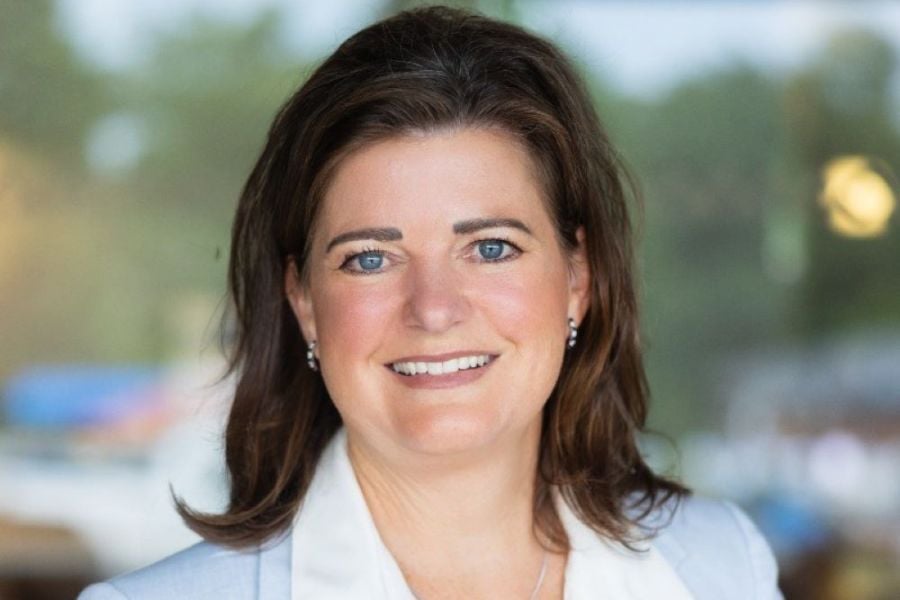
For Diane Compardo, founding partner of Compardo Wienstroer & Janes at Moneta, it’s all in a day’s work. She explains that the process begins with recognizing that every family is different – that’s the most important part.
“I always say if you’ve seen one family office client, then you’ve only seen one family office client – because they’re different in so many ways. I think we do a great job of trying to understand that keeping the family together is just as important as transferring the wealth. It takes a lot of understanding of what those clients’ visions and missions are, what kind of legacy they want to leave, and what concerns they have. [Then it’s about] sitting back, listening, and making sure we’re addressing all of those [concerns].”
And this doesn’t just include financial concerns – it’s an inherently emotional process, too.
“This can include psychological [concerns] – it’s making sure that we serve as that cornerstone for the family, as their first point of contact for anything even well beyond the financial side of things.”
Staying ahead of industry changes is also a core component at Moneta – something that Compardo and her team pride themselves on. In past years, she’s witnessed significant industry shifts, especially in client expectations and the sector’s emphasis on serving as a fiduciary. Because, as Compardo explains, a few years ago the concept of a fiduciary, someone who acts with no conflicts of interest and always places clients’ interests first, wasn’t as widely recognized as it is today.
“Our business, in general, has evolved to where clients are expecting more – they're expecting a more holistic approach,” she adds. “I've always served in a fiduciary capacity for clients, which means we have no conflict of interest whatsoever. So I can be on the same side of the table with the client. I think awareness around that has become very prominent. Ten years ago, I could have said ‘fiduciary,’ and a client wouldn’t have known that word – so that’s changed.”
These changes have also affected the multigenerational wealth sector – with client expectations becoming deeper and more intrinsic.
“They simply want support in a lot of different ways,” Compardo said. “Some of our industry might [think] the family office side is just a slightly higher level than somebody who doesn't sit in this space. But I believe the support around it is much more complex than that. Again, it’s leaning back to not just the financial aspects, but a lot of the emotional things. I think the struggle they have is families want to stay together – it’s not just the money that binds them. It has to be the communication and the continued trust among the generations – understanding the patriarch and matriarch, where the money came from, and how they want it to see it evolve.”
Looking at further industry changes and challenges, Compardo cites the rise of the conflict-free, fee-only model.
“It's a really big trend,” she says. “We’re seeing movement to the registered investment advisor industry at greater levels than we’ve seen in the past because it’s a model that can provide a conflict-free structure, which a lot of clients are seeking today.”
Another trend Compardo points to is the emphasis on holistic planning, which involves providing clients with comprehensive resources for all their financial needs. And she cites the need to support clients in an age of data overload and rising tech.
“There's a lot of information out there today,” Compardo said. “Our clients lean on us to help them decipher that. From AI to robo-advisors, [clients] are inundated with financial information, [so they] still need that touch point. I usually self-diagnose, but I still go to my doctor. It’s no different in the financial world because information can be so vast – it can lead you in so many different directions – so you still need that cornerstone of a person to actually decipher and interpret [the data].”
Furthermore, the impending generational wealth transfer has prompted a focus on educating the younger generation about financial management. Compardo and her colleagues at Moneta are dedicated to ensuring that children and young adults receive the support they need to make informed financial decisions early in life.
“We’re seeing a lot of emphasis on making sure that kids have support for learning at all levels,” she tells InvestmentNews. “We’re being mindful to build that out, making sure that we’re reaching the kids very early in their life – giving them the support they need to make better financial decisions or whatever other decisions [down the line].”

Iowa's Greenwood Wealth Partners exits D.M. Kelly as UBS and Ameriprise win Merrill Lynch recruits in California and Florida

Less than 1% of pool funds went to actual trading, CFTC says

Plus, SEIA builds a governed data foundation for its in-house AI and Snappy Kraken debuts a read-only marketing coworker for advisors.

He owes $364 million but pays $100 a month

Broadridge, Wedbush and Alaris Acquisitions have also filled senior wealth management roles with hires from J.P. Morgan, Osaic and SageView.
As AI makes financial information more accessible than ever, Lana Hock explains why human judgment, trust, and empathy remain the qualities clients value most in a financial advisor
Northern Trust’s Ken Lassner shows advisors how to convert volatility into after-tax portfolio gains

